Home Daylight Saving Time: Four tips for commuters to avoid fatigue with time change
Local

Daylight Saving Time: Four tips for commuters to avoid fatigue with time change

Crystal Graham
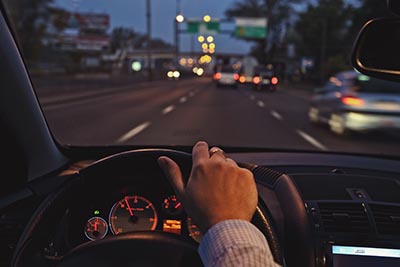
driving car at night
(© ambrozinio – stock.adobe.com)

As most Americans get ready to push their clocks forward for daylight saving time, it’s also time for commuters to face driver fatigue and hazards on the road, said Virginia Tech Transportation Institute expert Matt Camden.

Camden says that any time change can exacerbate drowsiness and your body may need a few days to adjust accordingly.

He offers the following advice for drivers to avoid fatigue:

  • Avoid driving during rush hour and from 2-4 a.m. Crash risk increases during rush hours and from 2-4 a.m. Driving between 2-4 a.m. is particularly dangerous because a person’s circadian rhythm is at its lowest during this timeframe. And when a driver is already sleep-deprived, the desire to sleep during the circadian low is even greater.
  • Get a full night’s sleep. Drivers should try to sleep at least seven to eight hours in order to avoid drowsiness. However, one night’s rest may not be enough for someone who has experienced several sleepless nights. In those cases, the driver will need several days of restful sleep to compensate for the sleep debt.
  • Pay attention to signs of drowsy driving. Signs of drowsy driving include: slow eyelid closures, yawning, gentle swaying of the head, seat fidgeting, difficulty staying in your lane, difficulty maintaining speed, and delayed reactions.
  • Be aware of other factors impacting drowsy driving. Situations that increase drowsiness are driving alone, monotonous road conditions, such as long straightaways with limited changes in the environment, long drives, and extended periods of heavy traffic.

Camden is a senior research associate and program leader of the Research to Practice & Outreach Program in VTTI’s Division of Freight, Transit, and Heavy Vehicle Safety. He’s an expert in occupational driving safety with 14 years of experience solving complex challenges to improve vehicle and driver safety.




Featured Video


Crystal Graham

Crystal Graham

A 1999 graduate of Virginia Tech, Crystal Graham has worked for 25 years as a reporter and editor for several Virginia publications, written a book, and garnered more than a dozen Virginia Press Association awards for writing and graphic design. She was the co-host of "Viewpoints," a weekly TV news show, and co-host of "Virginia Tonight," a nightly TV news show, both broadcast on PBS. Her work on "Virginia Tonight" earned her a national Telly award for excellence in television. You can reach her at [email protected]. Support AFP by signing up for our newsletter and/or powering our work with a one-time or monthly contribution.

Latest News

football grades
Football, Go 'Hoos

UVA Football: Two plays that changed the way the loss at SMU played out

measles illustration
Region

Virginia Department of Health confirms measles case in Harrisonburg

The Virginia Department of Health reported a confirmed case of measles in Harrisonburg, and has listed a potential exposure site – a local business.

uva football
Football, Go 'Hoos

UVA Football: The product is not worth the emotional investment anymore

I’m not going to be overly critical here, after the Virginia offense was, again, underwhelming, putting up less than 300 yards for the third straight game, this week leading to a 23-13 loss at #24 SMU.

uva football
Football, Go 'Hoos

UVA Football: Anemic ‘Hoos offense underwhelms again in 23-13 loss at SMU

staunton
Local

Staunton: Why was the EDA talking at length last week about a data center?

newspaper online news AFP mobile phone newsfeed
Local

Media Beat: The little mom-and-pop taking on the corporate giant, and winning

soccer sunset football gloves match
Go 'Hoos

Women’s Soccer: #18 Virginia scores in 86th minute, downs Virginia Tech, 1-0