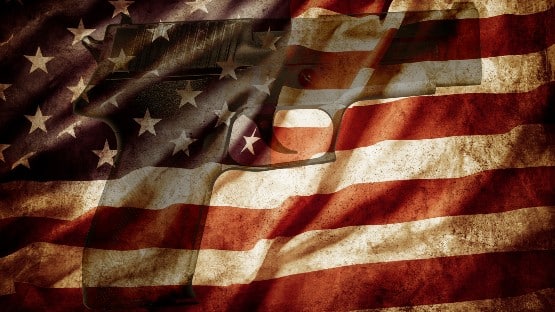
Here’s an anniversary no one wants to celebrate: The Columbine school shooting — April 20, 1999 — just passed its 25th anniversary. Fifteen dead (including the two shooters), 21 injured. A new era begins . . .
Why, why, why bring up such a horrific event? Perhaps because it hasn’t stopped.
Even though I sit here in the comfort of my study, feeling perfectly safe, I can’t emotionally disentangle myself from the news, which is always, in one way or another, about the human need to kill itself — or rather, the human assumption that it’s divided from itself, and “the other,” whomever that other is, either needs to be killed or is, at best, expendable. For instance:
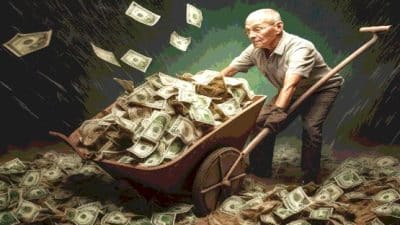
“The Senate has passed $95 billion in war aid to Ukraine, Israel and Taiwan, sending the legislation to President Joe Biden after months of delays and contentious debate over how involved the United States should be in foreign wars.”
So AP informs us, and immediately scenarios of screaming children, bombed aid workers, home and hospitals reduced to rubble, flash before me. No, these are not abstract scenarios! Part of me and part of you lie trapped in that rubble, or stunned and grieving over the sudden loss of your whole family. And all we seem to do is continue funding the process that makes this happen, as though a larger understanding of our existence is not available — certainly not at the level of global politics.
What is power? Is it simply and sheerly us vs. them, good vs. evil? Every war on Planet Earth is sold with this advertising slogan. Perhaps this is why I find myself thinking about the Columbine shootings — and all the mass shootings since then. Define an enemy, then kill it. This is what we learn in history class — but would-be mass shooters, caged in their own isolation, cross a line. They take this lesson personally.
And there’s a world of possibility that welcomes them, oh so ironically. In this world, the sword is mightier than the pen (or anything else). Power means power over. . . something. So if you’re a lost or wounded soul, imagining an enemy that needs to be destroyed is probably enormously tempting. If the world is going on without you, maybe you should do something to stop it. And the “world of possibility” — by which I mean far more than merely the “gun culture,” but the entirety of our culture of scripted violence, from global politics to the media to the entertainment industry — makes the loner’s imagined and insane solution, defining and killing an enemy, an actual possibility.
At the time of the Columbine shootings, I had begun writing poetry. This was in the wake of my wife’s death, in 1998, from pancreatic cancer. Poetry allowed me to deal with the shattered narrative of my life, and pretty soon I had expanded the terrain of my poetry beyond my personal grief to, well, life itself, including the horrific strangeness of the news. And I happened to read, after Columbine, a news account of President Clinton visiting the school and meeting with students in the gymnasium. And outside the school, gun-rights advocates held what they called a vigil, holding signs that declared “Gun Control Kills Kids” and “We Will Never Give Up Our Guns.”
What struck me about it the most was the idea that this was a “vigil,” which implied something more than simply a protest — an expression of anger and disagreement. A vigil dug deeper, seemingly entering the soul. Guns were a source of power and power was the source of one’s humanity, so stripping away the right to own one had a deep, spiritual impact.
I wrote a poem in response to the vigil — I called it “Vigil” — attempting to address my feelings about the total scenario: the shooting itself, Americans’ deeply desired availability of guns, the impact of that availability on society’s lost souls. Here’s part of the poem, focusing on the lost souls:
. . . The violent seed/in a boy’s soul/must sprout.
It is meant to ripen/into courage,/endurance and grace.
But when it bursts open/in another dream
—the dream of permanent armament/and the grandeur of self-defense —what happens to the boy?
What happens when soft,/immature fingers/find their way
around the deadly toys/of grown men, and
the desperate possible/co-opts the reverie?
The unimaginable/is suddenly commonplace:
burst lesson plans,/bookbags abandoned/in terrified heaps
and young lives frozen/in their yearbook photos.
This is our nightmare.
I acknowledge that the sword is probably mightier than the poem, but a poem can ask questions that the sword can’t: Why? Where are we headed? What world comes next? Does armed defense — whether of home or country — ever go wrong, ever turn into poison?
All humans have a dark side; is killing it in the other guy our only option, and what are the consequences of doing so? Can power be with others, even those with whom we are in serious conflict, rather than simply over them? And if so, how can we begin reorganizing the world’s relationship with itself? What’s stopping us?
Robert Koehler ([email protected]), syndicated by PeaceVoice, is a Chicago award-winning journalist and editor. He is the author of Courage Grows Strong at the Wound, and his newly released album of recorded poetry and art work, Soul Fragments.


 Share
Share