Dear EarthTalk: Is global warming creating the increase in turbulence on airplane flights? – Ginny C., Prescott, AZ
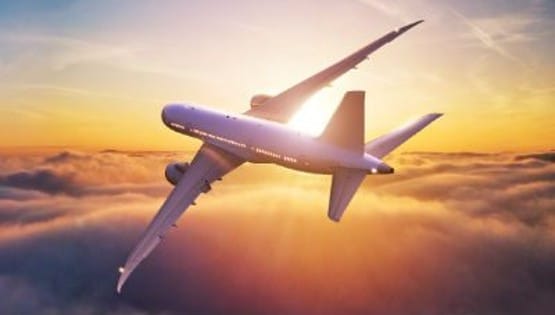
Air turbulence is defined as a sudden change in the speed, direction or air pressure in the atmosphere. Turbulence can cause abrupt changes in the motion of an airplane, ranging from small bumps to violent jolts that cause significant damage to aircrafts and injury to passengers. Air turbulence has increased rapidly in the last few decades. It is now the main cause of in-flight injuries and is estimated to cost the airline industry over $500 million annually.
The main causes of air turbulence are storms, jet streams—the bands of strong winds in the upper atmosphere—and mountains. In such cases, pilots can anticipate turbulence from pre-flight weather reports, sophisticated radar equipment and warnings from other pilots. But there is another kind of turbulence pilots have to contend with known as “clear-air turbulence,” which has no visible cause and cannot be detected by radars. This makes clear-air turbulence very perilous since pilots cannot warn passengers to buckle up and avoid injury. Clear-air turbulence is becoming more frequent; scientists and meteorologists predict that it will double in frequency between 2050 and 2080.
At the source of the rise in clear-air turbulence is global warming. As carbon emissions increase, greenhouse gases trap more heat in the troposphere (the layer closest to the Earth’s surface) instead of letting it rise into the stratosphere. This is causing a rising temperature difference between the two atmospheric layers, which in turn is causing large disruptions in the circulation patterns of atmospheric winds. These abrupt changes in the speed and direction of winds—known as “wind shear”—play a big role in creating the atmospheric disturbances that cause clear-air turbulence.
Although clear-air turbulence can occur at all levels of the troposphere in which airplanes cruise, they are most likely at the altitudes where the jet streams flow. Meteorologists have found that jet streams are experiencing 15 percent more wind shear than they did 40 years ago.
Can anything be done to avoid clear-air turbulence? Pilots could avoid flying in the four jet streams that circle the earth, and could limit flying through regions known to have high clear-air turbulence. The industry could invest in aircraft designs that improve aircraft stability and develop technology to detect clear-air turbulence. But pilots fly in the jet stream to shorten flight times and use less fuel. Thus, taking these steps will lead to longer flights, higher costs, more fuel consumption and carbon emissions, further increases in global warming and more turbulence, not less.
A better solution is to tackle rising clear-air turbulence at its source: by reducing global warming. Among other things, governments should accelerate policies that mitigate climate change such as carbon taxation, and provide incentives for clean energy adoption. Businesses should speed up investment in clean-energy products, services and infrastructure. And ordinary people should reduce their consumption of fossil-fuels by conserving energy, using public transit, recycling and participating in citizen science projects that mitigate climate change.
CONTACTS: Professor Paul Williams, International expert on air turbulence and climate change, www.port.ac.uk/school-of-biological-sciences/staff/john-mcgeehan.html; Petition to Stop Global Warming, preserve.nature.org/page/81465/petition/1?locale=en-US.
EarthTalk® is produced by Roddy Scheer & Doug Moss for the 501(c)3 nonprofit EarthTalk. See more at emagazine.com. To donate, visit earthtalk.org. Send questions to: [email protected].



 Share
Share