Dear EarthTalk: Has there been any backlash against the installation of rooftop solar panels or the development of big solar farms across the U.S.?
– B. Jackson, Longmeadow, MA
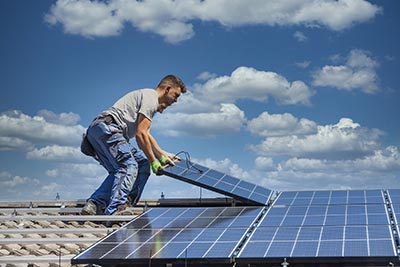
Incentives like the Solar Investment Tax Credit and increased affordability in the cost of solar panel installation over the past decade have given renewable solar energy the option of becoming a more mainstream power source. Solar energy’s growing edge has amplified its share of total U.S. electrical generation from just 0.1 percent in 2010 to 2.3 percent in 2020.
The expansion of solar beyond just panels on rooftops, however, is sparking debate. Farmers and other landowners who agree to large-scale solar leasing on their property are frequently met with resistance from surrounding homeowners who question whether the development of a solar plant or “farm” will decrease the value of their homes, ruin scenic views or be detrimental to wildlife or the environment. Organized groups like Virginia-based Citizens for Responsible Solar (CRS) also rally against the development of solar panels on rural or agricultural land. They argue that thousands of acres of land need to be cleared for solar panels to produce the equivalent amount of energy of a coal, nuclear or natural gas plant, and the resulting deforestation will contribute to global warming. The group instead encourages installation of solar panels solely on rooftops, contaminated land, parking lots and industrial zoned land.
Conservationists have also raised concerns over the large number of birds being killed at large-scale photovoltaic solar facilities. In an attempt to combat these deaths, researchers at Argonne National Laboratory in Illinois were granted a $1.3 million contract by the Department of Energy last year to collect data on what happens when birds fly by, perch on or collide with solar panels. “There is speculation about how solar energy infrastructure affects bird populations, but we need more data to scientifically understand what is happening,” says Yuki Hamada, Argonne’s lead scientist in the project.
One theory is the “lake effect,” which proposes that birds mistake the reflective blue expanse of solar panels for bodies of water and crash land on them. According to the Audubon Society, water birds in particular are in danger of this fatal effect as some species can’t take off from the ground; they require a running start on the water’s surface. Concentrated solar “tower” plants, including Tonopah, Nevada’s Crescent Dunes and California’s Ivanpah in the Mojave Desert, have also come under scrutiny due to bird deaths. These plants use heliostats, or mirrors, to focus sunlight onto a molten salt-filled receiver located at the top of a collector tower that converts heat into steam. The steam then powers a turbine to generate clean electricity. Unfortunately, the tremendously hot beams of light traveling via the mirrors to the tower incinerate passing birds, as well as bats and insects.
There’s also the issue of disposal after a solar panel’s operative life of approximately 20 to 30 years. The International Renewable Energy Agency estimates that solar panel waste could total nearly 80 million metric tons by 2050, and the establishment of effective recycling or repurposing regulation is imperative. Encouraging approaches include Washington State’s Photovoltaic Module Stewardship and Takeback Program, which requires manufacturers of solar panels to provide the public with a convenient and environmentally sound way to recycle all panels purchased after July 2017.
CONTACTS: CRS, citizensforresponsiblesolar.org; “Deep learning system will monitor birds at solar facilities,” anl.gov/article/deep-learning-system-will-monitor-birds-at-solar-facilities.
EarthTalk® is produced by Roddy Scheer & Doug Moss for the 501(c)3 nonprofit EarthTalk. See more at emagazine.com. To donate, visit https://earthtalk.org. Send questions to: [email protected].



 Share
Share