International conferences almost always fall well short of meeting ambitious reform goals because the large number and variety of participants ensure hard bargaining over policy ideas and details. The annual COP28 meetings in Dubai, UAE, are no different, but their chances of breaking new ground for dealing with climate change are further reduced by the conference’s leadership.
The chairman, Sultan Al Jaber, heads the UAE’s state oil and gas company. His comment at the conference that “there is no science out there . . . that says the phaseout of fossil fuel is what’s going to achieve 1.5 degrees C.,” showed where he stands—and where the fossil fuel industry as a whole wants to center discussion. Days after he said that, news media carried the story that the 1.5 degree threshold, beyond which climate catastrophes loom, will probably be passed this year.
COP28 follows the script of previous conferences.
The UN, represented by Secretary-General António Guterres, opens with a plea for saving the planet from an immediate threat. Everyone present professes worry, but when the parties get down to outlining agreements, the goodwill fades, replaced by self-interested demands.
Thus, when Guterres, in response to Al Jaber, said that phasing out fossil fuels, “with a clear time frame,” is essential to fighting climate change, he could expect no support from industry, much less from individual governments. In fact, OPEC declared during the conference that its members will block any proposal aimed at reducing fossil fuel use.
As the New York Times is reporting, Saudi Arabia and Aramco, the state-owned oil company, are the leading obstructionists at COP28, refusing to entertain any discussion about phasing out fossil fuels. They see “phasing out” as a death wish for their revenue stream.
A Bit of Progress, Maybe
COP28 has had a few redeeming features. Reportedly, the 50 biggest fossil fuel companies have together agreed to eliminate methane emissions from their drilling and production work. If they fulfill that pledge, it will be a big deal, since methane is far more destructive to the environment than carbon dioxide.
Fred Krupp, president of the Environmental Defense Fund, says:
“If those promises are met, it’s got the potential to cut temperatures we would otherwise see within the next decade … more than anything agreed to at prior COPs, more than anything I’ve seen in my entire career over 30 years. There’ve been a lot of pledges made at COP that have never been fulfilled. We feel like we have to set up a robust accountability system.”
We’ll see.
Also potentially important is a new fund set up specifically to address loss and damage to developing countries from climate change. This took years of negotiations. Rich countries have pledged $655.9 million into the fund so far, although hundreds of billions of dollars are needed per year. The value of the fund will depend on whether or not local communities, not just central governments, actually receive the money. After all, the damage to economies is mostly at the local level, where homes have been wiped out and residents have no way to rebuild.
The Unavoidable Necessity
The central problem remains governments that don’t meet their responsibilities and fossil fuel companies that don’t fulfill their promises. Carbon dioxide released from burning fossil fuels is expected to rise by 1.1 percent in 2023 compared with 2022, scientists found in a new study.
Researchers from the Global Carbon Project, which produces the study annually, announced the results at COP28. “Just supporting renewables alone is not going to solve the climate problem,” said Glen Peters, a senior researcher at the CICERO Center for International Climate Research in Oslo and one of the 121 authors of the report. “You have to have policies that are ensuring that fossil fuels actually go down,” just as Secretary-General Guterres said.
The COVID years produced a measurable decrease in carbon emissions, but that has proved to be misleading. Rising carbon emissions is the rule, led by China (more than four percent increase expected this year) and India (more than eight percent).
Fossil fuel use has declined in the US, Japan, Brazil, and the European Union, but those countries together represent only 28 percent of carbon emissions from fossil fuel use. Unless all countries are decarbonizing together, experts say, we’ll never stop the carbon buildup. (BTW, the US has nothing to crow about; It is now second only to Saudi Arabia as an oil exporter and producer.)
Among the measures proposed for dealing with the problem is an old one: Give developing countries the resources to adopt renewable energy counterweights to climate change. But that leaves China out, since it really isn’t a poor developing country and has plenty of money to move away from fossil fuels.
China is doing that to some degree, but it remains heavily reliant on coal. And new coal-firing plants are still being built, contrary to Xi Jinping’s assurances. (In fact, a new report points out that China’s coal mines are an important source of methane.)
When 118 governments pledged at Dubai to triple renewable energy and double energy efficiency worldwide while reducing fossil fuel use, China (and India) abstained. These moves by China undermine another promise Xi made: that China would achieve net-zero in carbon emissions by 2060. No way—and no wonder Xi just said that China would not release its national carbon emission targets for 2030 and 2035 until 2025.
COP28 will no doubt end with a common statement of intent to do more, using language designed mainly to obscure serious differences. But again, as in past conferences, mechanisms will not be put in place to hold the parties to their pledges and provide oversight of actual carbon-fighting efforts.
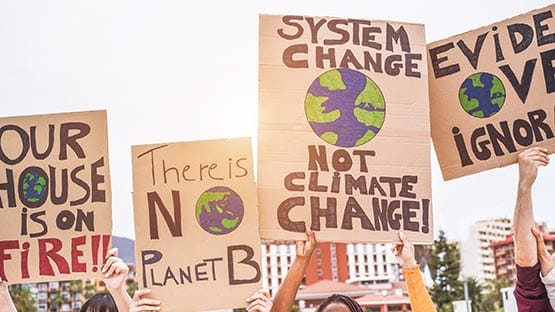
That’s why we rely so heavily on environmental activist groups and individuals; they are doing the job others refuse to take on.
Mel Gurtov, syndicated by PeaceVoice, is Professor Emeritus of Political Science at Portland State University and blogs at In the Human Interest.


 Share
Share