The sensation was like “pouring warm water starting from the top of my head all the way down to my toes on the left side.” And it scared Chris DeWald, but not the doctor who treated him initially.
“They said, Oh, you must be having a migraine headache, and sent me home, and didn’t do any tests,” said DeWald, who was about to turn 50, had just been nominated for a regional award for his work in the Public Works Department in the city of Staunton, and whose life was about to change forever.
DeWald had had a stroke that day, it would be discovered, when he landed back in the hospital after collapsing at home following a second stroke three days later. That was in May 2006. That he’s here three years later is a miracle. “They told me I should have died,” DeWald said, counting himself among the lucky ones, along with Karen Bess of Fishersville, who is four years into her post-stroke new life. Her experience was similar in some ways to that of DeWald – she suffered a series of four strokes that she said she wrote off at first as being headaches caused by stress from a move and then had written off like DeWald by a doctor who misdiagnosed what was happening.
The Virginia Department of Health is launching a pilot program here in the Central Shenandoah Valley aimed at increasing awareness of the symptoms of a stroke that officials hope will create more survivor tales like those of Bess and DeWald.
“Only one person in four in this area can correctly identify the symptoms of a stoke. That’s why we’re initiating this campaign. People need to be knowledgeable about the signs so we can have an impact on reducing the damage given the time constraints that we’re under when a person begins to have the first symptoms,” said Dr. Doug Larsen, the executive director of the Central Shenandoah Health District, which is heading up the pilot program, a nine-week effort designed to get information out into the public domain about the five signs of stroke and the importance of seeking immediate medical attention at the first onset of stroke symptoms.
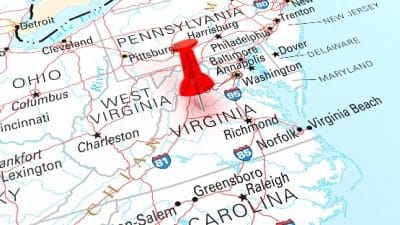
The Valley was chosen for the program because the stroke mortality rate here is the highest in the state, by an order of 5 percent higher than the state average. The warning signs can be confusing. Balance and vision issues, slurred speech, weakness on one side of the body, a severe headache, any and all can and often are misread as fatigue or dehydration or a severe or migraine headache, even by medical professionals.
“I get so mad when people are talking about this and doctors say, People just don’t call or come in in time. Really what it is is most people don’t have a clue what’s going on. Your brain is not functioning correctly. So it’s not a matter of delaying. Your brain is not thinking right,” Bess said.
So some education for health-care providers, both primary physicians and emergency-room doctors, appears to be in order as well.
“When you think of the issue here, you think of two words – brain and time. If you have a brain cell that dies, it’s not coming back. If you have a brain cell that’s dying, it may be revived if the person can seek help soon enough and we can give what we call clot-busting drugs up to three hours after the first sign of the stroke and have some effect in reducing the damage,” Larsen said.
Time truly is of the essence. “Most of the time people will say, Oh, this headache will go away in a few minutes, even though it’s the worst headache I’ve ever had, I’m sure it’s just something, I’ll take some Tylenol, I’ll be fine. Or it could be a numbness, and they say, I’ve sort of felt things like this before, it’ll go away,” Larsen said. “We say if you have one of the five signs, not two, not three, because one is enough, seek immediate medical attention. And by that we don’t mean lay down for 30 minutes to see if it gets better. One of the main reasons people don’t seek medical attention is they think it’s probably nothing, and they’ll be embarrassed. Well, big deal. You might be embarrassed, and it might be nothing, but it might also be the trip that you made to the hospital that was life-saving.”
The stories of DeWald and Bess both have about as happy a set of endings as can be imagined given what they had to endure to that end. When Bess returned home, “I was in a wheelchair. I could not open my left hand, and I had a brace on my leg,” said Bess, who can now walk again, with a limp, and does all the cooking and all the housework that she used to do and couldn’t do for a time after her strokes.
“I’ve had a miraculous recovery,” Bess said.
DeWald has as well. He was not able to return to his job with the city, but he’s not “sitting around and doing nothing.” “When it hit, I didn’t want to believe it. There was a lot of denial. There was a lot of depression. You’re faced with being 50 years old, and your life is, like, gone, and you’ve got to start something new,” said DeWald, who writes for an internationally distributed stroke-victims magazine and serves as the vice chairman of the local Crossroads to Brain Injury advocacy group.
“It took me nine months to a year to get to where I am now, but every day you recover. It’s like a new journey. They had to teach me how to talk. They had to teach me how to walk, how to dress myself. It was like starting off in infancy,” DeWald said.
“You have to look at life as what you have, not what you don’t have. Life for me, having this stroke, it changed me, but in a positive direction,” DeWald said.
– Story by Chris Graham

 Share
Share

AFP