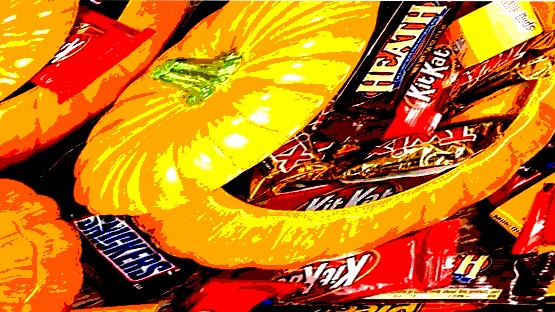
You can’t go to Target, Walmart or the grocery store, it seems, without having Halloween stare you in the face, which is odd, given that, you know, Halloween is two and a half months away.
What’s going on with that?
Jadrian Wooten, an economics professor at Virginia Tech, explains what drives these early holiday displays.
Q: From an economics standpoint, why are we seeing Halloween appear in the stores as early as July?
“This is a great example of game theory in action. Retailers compete with each other to capture as much consumer spending as possible. By being the first to roll out their Halloween products, they’re trying to grab the early-bird shoppers and secure a bigger share of holiday spending. It’s a classic game of strategic timing — if one store puts stuff out earlier, others will likely follow to avoid losing out on those initial sales. If they’re late this year, they’ll be sure to make up for it next year.”
Q: Why is Halloween such big business?
“It’s a holiday that combines retail and entertainment — the ultimate spending combination. The National Retail Federation estimates that Americans spend around $10 billion on Halloween. It comes in just ahead of Fourth of July, Super Bowl, and St. Patrick’s Day. People love to dress up, throw parties, and decorate their homes. Spending is practically built into this tradition and retailers are happy to offer shoppers everything from costumes and decorations to spooky-themed snacks. If retailers can have the holiday last for weeks, it gives businesses more time in those profits.”
Q: What role does spending on major holidays like Halloween play in the economy?
“Major holidays like Halloween, Thanksgiving, and Christmas are like mini-economic booms. They create spikes in consumer spending that are spaced out in regular intervals and can easily be tracked year-to-year. That’s incredibly helpful for the retail and hospitality sectors. The spending also creates a ripple effect to other adjacent industries. As holiday sales increase, businesses hire more employees who also spend more on stuff. There are also all the secondary industries impacted, like transportation, packaging, and advertising.”
Q: What about consumers who really go all out for Halloween?
“Holiday spending can provide excellent examples of the economic concept of conspicuous consumption — like that neighbor who’s always driving the newest car. In the context of Halloween, it’s really easy to see this with things like pet costumes: people like dressing their dogs up as superheroes and pumpkins. It’s a classic example of people spending money on things that showcase their social status or make a statement about having disposable income. It’s a reminder that our spending isn’t always about practicality. Sometimes people do things just to have fun and show off.”
Q: Is this sort of spending good or bad for the economy?
“It’s like a double-edged sword. Holiday spending can help various industries and create seasonal jobs. It can boost consumer confidence — when people are out and about spending, it shows they’re feeling optimistic about their financial situations. If we’re looking at it from a consumerism angle, though, the downside is that increased holiday spending can take away from other important financial decisions like savings and investment. Also, I would argue that a bigger negative issue is that a lot of holiday-related products aren’t exactly environmentally friendly, which can have long-term consequences.”
Jadrian Wooten is collegiate associate professor with the Virginia Tech Department of Economics and is the author of Parks and Recreation and Economics. He has been featured in USA Today, Inside Higher Ed, WJLA ABC 7 Washington, D.C., and NBC News, among scores of other media outlets.


 Share
Share

Chris Graham