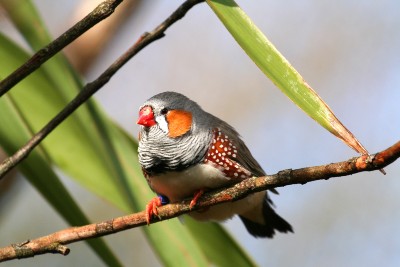
Dear EarthTalk: How are bird populations faring in the U.S. and around the world? What are some ways to help them?
– Mark Johnson, Butte, MT
Not surprisingly, given the myriad environmental threats they are facing, bird numbers continue to decline rapidly today across North America and beyond. Researchers at Cornell’s Lab of Ornithology and Canada’s National Wildlife Research Centre found in a 2019 analysis that wild bird populations in the continental U.S. and Canada have declined by 29 percent—or a total net loss of around three billion birds—since 1970. Their landmark study is the first ever to perform a comprehensive assessment of wild bird net population changes across the continent.
The study found that population decline was not limited to a few species but a wide range of species across every biome (a large naturally occurring community of flora and fauna occupying a major habitat). Population loss in each biome ranged from Grassland bird populations suffering the greatest loss at 53 percent to eastern forest birds with the lowest loss at 17 percent. Researchers also found that common birds from just 12 families, such as blackbirds, sparrows and finches, account for over 90 percent—or over 2.5 billion birds—of total population decline. Experts believe that habitat loss due to agricultural development and intensification is most likely the driving factor.
Amid this concerning data, hope remains for the birds of our world. Over the past few years, organizations such as Ducks Unlimited, Pheasants Forever, the National Audubon Society, and the California Waterfowl Association have collaborated to conserve waterfowl habitat (though critics point out that in some cases it is motivated by the self-fulfilling desire to provide more targets for their hunter members). Under the North American Wetlands Conservation Act, these organizations have raised billions of dollars in funds to restore and preserve waterfowl habitat, especially wetlands.
Readers can also help protect birds by taking a few simple actions. An easy one is to install window screens or eliminate window reflections with film or paint. (A 2014 U.S. Fish and Wildlife Service and Smithsonian study found that between 365 million and one billion birds die each year across the U.S. as a result of window strikes.) If you’re a cat owner, another way to cut down on bird kills is to keep Fluffy from roaming freely outside. The U.S North American Bird Conservation Initiative estimates that our pet felines kill some 2.6 billion birds annually in the U.S. alone.
Yet another way to help our avian friends is to provide shelter and nesting areas in your backyard. Planting native plants (instead of grass) will give both local and migratory birds a reason to hang out. Likewise, avoid synthetic pesticides and fertilizers on your land: They not only indirectly harm birds and the insects they like to eat, but can also poison wildlife directly. Shopping organic at the grocery store is another way to reduce the overall load of pesticides and synthetic fertilizer that birds encounter.
One additional way to be part of the solution is to join the Audubon’s Christmas Bird Count, whether you’re a beginner birder or expert. From December 14 through January 5, the initiative promotes counting instead of hunting birds, a fun and simple way to get outdoors while also helping to protect your favorite backyard birds. Audubon has been running the count for 122 years, and collates the data collected by its “citizen scientists” into an annual report on the state of the birds across the U.S.
CONTACTS: Decline of the North American avifauna, science.org/doi/10.1126/science.aaw1313; Join The Christmas Bird Count, audubon.org/conservation/join-christmas-bird-count.
EarthTalk® is produced by Roddy Scheer & Doug Moss for the 501(c)3 nonprofit EarthTalk. See more at emagazine.com. To donate, visit earthtalk.org. Send questions to: [email protected].


 Share
Share