Dear EarthTalk: Is compostable plastic too good to be true? – Peter C., Pittsburgh, PA
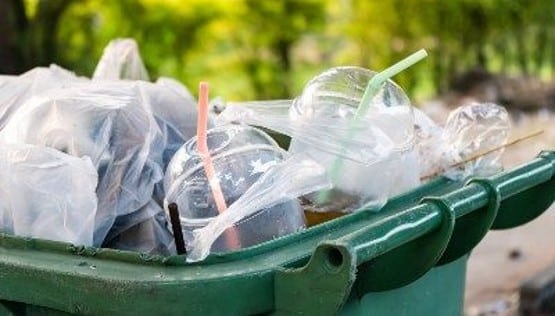
In recent years there has been a global movement to pressure corporations into becoming more eco-friendly. One of the most frequent measures taken by these companies is limiting the use of single-use plastics and replacing them with so-called compostable plastics. Compostable plastics are frequently confused with biodegradable plastics. Biodegradable plastics are defined by their ability to degrade completely into biomass within a given time frame; compostable plastics aredesigned to be processed in industrial composting facilities. Many of the alleged “100% compostable,” plastic-like materials are made from polylactic acid (PLA), a polymer derived from the fermentation of various types of starch.
Of the 6.3 billion tons of plastic that have been discarded since the wonder material started being mass-produced in the 1950s, only around 600 million tons has been recycled. Almost five billion tons have been either sent to landfills or left in the natural environment. Plastic production also contributes immensely to greenhouse gas emissions. Aside from the disastrous effects plastic has on the environment, it can also be extremely dangerous to human health. Microplastics from air or water can cause significant damage to cells in the body, causing cancers, lung disease and birth defects. Residents of “Cancer Alley” in Louisiana face the highest rates of cancer in the U.S., largely as a result of the plastic production plants along the lower Mississippi River.
Compostable plastic—which would theoretically leave no trace on the environment—sounds like a great solution. However, it isn’t as simple as it sounds. While plastic-like materials like PLA will decompose in the right conditions, it’s rare that PLA is disposed of correctly. Putting a cup made of PLA in your home compost won’t break it down as it requires a specific set of microorganisms used in industrial composting that need temperatures well above what most home composts can reach. A UK-based science experiment from 2022, “The Big Compost Experiment,” had citizens carry out home compost experiments to test the performance of compostable plastics. The public was generally very confused about what was compostable and what wasn’t, and many of the objects labeled as “home compostable” did not fully disintegrate into their compost bins.
What needs to change to make compostable plastics a more viable option for the future? First off, there are very few facilities in the U.S. that are set up to handle the disposal of PLA products. Research by BioCycle magazine found that only 49 out of 4,700 composters nationwide accepted compostable plastic products. The good intentions of using compostable plastic don’t make a difference if the waste system isn’t set up to process it. Because so few facilities accept PLA, much of it ends up in landfills. It is also difficult to distinguish between regular and compostable plastic. When regular plastic gets into composts it can cause soil and waterway pollution. So, yes—compostable plastic is too good to be true. However, improvements in waste system infrastructure could enable them to play a more effective role in the future.
CONTACTS: Home Compostable Plastics Are Too Good to Be True, www.treehugger.com/home-compostable-plastics-too-good-true-7096891; Your compostable cups and containers aren’t reversing the plastic problem, www.popsci.com/environment/truth-about-compostable-cups/; Why biodegradables won’t solve the plastic crisis, www.bbc.com/future/article/20191030-why-biodegradables-wont-solve-the-plastic-crisis.
EarthTalk® is produced by Roddy Scheer & Doug Moss for the 501(c)3 nonprofit EarthTalk. See more at emagazine.com. To donate, visit earthtalk.org. Send questions to: [email protected].
Support AFP


 Share