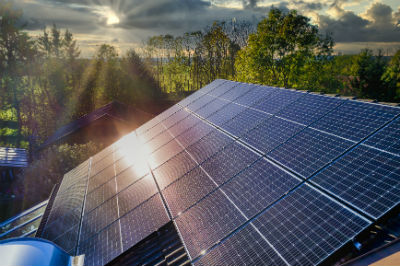
Solar power manufacturing and installation is moving at a rapid pace, making opportunities—and pressures—from solar developers top-of-mind for Virginia farmers and landowners.
And, as Virginia’s solar utilities work to meet renewable energy standards outlined in Gov. Ralph Northam’s Executive Order 43 and the Virginia Clean Economy Act, solar expansion shows no signs of slowing.
To discuss the implications of solar expansion in Central Virginia, Orange County Farm Bureau hosted an informational meeting at the county fairgrounds on June 18. Andrew Smith, associate director of governmental relations at Virginia Farm Bureau Federation, spoke about solar power issues pertaining to land use. Specifically, he addressed how solar development can affect the viability of agricultural land, and how landowners can protect themselves in lease agreements.
“There’s a lot that goes into putting these facilities in place—putting pedestals, concrete and steel into the ground and changing the contours of the land,” Smith said. “We all think about decommissioning, and that’s a really important part of solar. At the end of the contract, how is the landowner protected? And, if they want to go back to farming or forestry, will the land be suited for that?
“These are the types of things that we try to discuss and make sure are part of the conversations with policymakers.”
Given the nature of solar projects and how they can affect farmland and rural communities, Smith implored interested parties to seek legal advice when considering signing a lease for development on their properties.
At minimum, signed leases should include a decommissioning plan that requires the removal of solar infrastructure at the contract’s expiration, and they should require developers return the land to its original state.
Working with an attorney, Smith said, helps ensure farmers’ interests are covered across the length of a project, and that farmland is preserved for future use.
“One of our main focuses we’ve been working on the last few years is making sure the landowner is pushed toward the right information before they put their signature on a lease,” he said. “They need to make sure they understand the implications, whether it affects their property taxes or their future ability to do things with that property. It’s a long-term commitment.”


 Share
Share

AFP