Dear EarthTalk: Is the recent lifting of quota restrictions on wolf hunting in Montana north of Yellowstone National Park a threat to the reintroduced wolf population there?
– J. W., Bend, OR
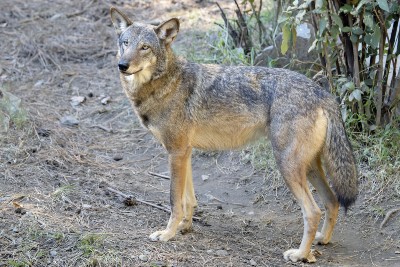
When the last gray wolf in Yellowstone National Park was gunned down in 1926, park managers and ranchers on neighboring lands alike rejoiced together that the dark predator of the range would no longer torment them. Wolves were blamed for poaching livestock as well as wreaking havoc on populations of traditional “game” animals like elk and deer. But a funny thing happened once the wolves were gone. Elk numbers started to skyrocket. In essence, without the wolf around to keep its population numbers in check, the elk were eating everything in sight, including the new young shoots of willow, aspen and other trees key to keeping Yellowstone’s ecosystems in balance.
By the 1990s biologists managed to convince the federal government that these predators are essential to the health of the ecosystem, and gray wolves were famously reintroduced back into Yellowstone. The results have been nothing short of amazing with regard to ecosystem recovery and the return of various species of wildlife that used to be common there a century ago.
But ranchers on the periphery of the park (Wyoming, Idaho and Montana all border Yellowstone) have maintained their antipathy toward wolves given the primal canids’ predilection for killing domesticated cows outside of the park for a quick and easy meal. Such situations are rare given that there is plenty of wild game for the wolves to hunt within their home base inside of Yellowstone’s borders. Nevertheless, anti-environmentalists and otherwise conservative pundits have joined forces with ranchers to politicize the wolf reintroduction issue. No doubt, there is a lot of political pressure from those who make their living outside of the national park to lift all hunting restrictions on wolves that stray onto state lands.
So, it comes as no surprise that Montana would lift quotas limiting hunters and trappers to just two gray wolf kills each in regions bordering Yellowstone. A similar move in Idaho months earlier means Yellowstone’s wolves are now getting it from all angles.
And, indeed, with more than 15 wolf kills in the Montana borderlands alone so far this winter, it remains to be seen whether or not the easing of the state’s wolf hunting restrictions is such a good idea after all. Back in 1995-1997, 42 gray wolves were relocated from Western Canada and northwestern Montana to Yellowstone; today 123 gray wolves spread themselves across nine different packs free-roaming within the national park. While the population has grown nicely and remained stable for the last decade or so, increased hunting could send these packs into dangerous territory when it comes to their ability to reproduce themselves.
Sadly, for the wolves (and for us), a false dichotomy persists that we can’t have successful livestock agriculture and preserve the ecological integrity of the world’s first national park at the same time. But the fact remains that we can, especially with programs to reimburse ranchers for their rarely occurring losses to wolf predation. In the meantime, the states are likely to make it easier and easier to shoot or trap wolves that unwittingly cross over into state lands, and politics will continue to be behind it all.
CONTACTS: 15 wolves hunted directly north of Yellowstone National Park this winter, bozemandailychronicle.com/news/environment/fwp-15-wolves-hunted-directly-north-of-yellowstone-national-park-this-winter/article_3ef839fe-9bf5-5748-9a95-c52e677ad70e.html; NRDC’S Save the Wolves, nrdc.org/save-wolves.
EarthTalk® is produced by Roddy Scheer & Doug Moss for the 501(c)3 nonprofit EarthTalk. See more at emagazine.com. To donate, visit earthtalk.org. Send questions to: [email protected].


 Share
Share