Virginia Environmental News
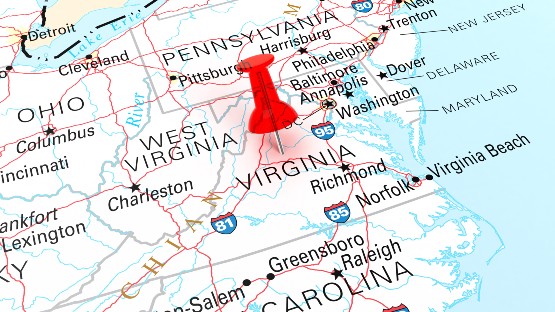
Dominion Energy and Florida-based NextEra Energy plan to merge to form the largest utility in the U.S. Clean Virginia, a nonprofit advocacy organization, urges extreme caution that this mega-merger does not put corporate profits ahead of customers. The deal is all about supplying the gigantic energy needs of data centers that run AI.
Virginia farmers are finding that, not only sheep, but cattle also thrive among solar panels. That’s good news because our state has 15 times as many cattle as sheep, many of them in small herds on family farms. It’s a way to save our family farms and provide our state with low-cost solar energy.
The State Corporation Commission has denied Dominion Energy’s request to slash rooftop solar reimbursements for excess energy they send to the grid. Known as net-metering, customers now get a one-on-one credit for such energy. Dominion wants them to receive less credit for the energy they send to the grid than what they pay for the energy they pull from the grid.
The Virginia Department of Environmental Quality has begun to monitor air pollution connected to data centers in Loudoun County, which has the largest concentration of data centers in the world. Most of the pollution is created by diesel generators.
The Blue Ridge Power Agency, which serves a string of nonprofit utilities in central and western Virginia, is set to come online this summer with a collection of five small grid batteries of about 5 megawatts each.
The Virginia Department of Energy has announced a new round of funding for EV charging infrastructure in underserved communities.
Dominion Energy has announced plans to build a new 3-gigawatt gas plant in Cumberland County. If permits are approved, they anticipate the plant will come online in 2033 or 2034.
Dominion Energy has converted a closed landfill in Albemarle County into a 7,000 panel solar farm. They see this as the first of many such projects utilizing degraded land.
Our Climate Crisis
A massive heat wave in the Pacific Ocean is alarming scientists because it could set off a particularly powerful super El Niño weather pattern later this year, amplifying wildfire risk, heat waves, and flooding worldwide as global temperatures continue to rise. It would have significant impacts on food security in vulnerable regions.
New Orleans should immediately start the process of relocating people. A new study shows that ongoing sea-level rise and the rampant erosion of wetlands in southern Louisiana will swallow up the area surrounding the city within a few generations.
Record flooding pushed Michigan’s dams to the brink of disaster last month. The near miss reflects the national problem of infrastructure that is not suited to the challenges of a warming world.
Politics and Policy
Despite many frustrating obstacles, especially the freezing of federal funding, the public-private program to build EV charging stations increased its reach and accomplishments last year. States have more than doubled their investments.
More than 150 onshore wind farms across the U.S. are on hold because the Trump administration has delayed military reviews that were once considered routine.
Nations are back on track to adopt a framework for curbing global shipping emissions, following the latest International Maritime Organization meeting. Last year the Trump administration had pressured other countries to stall the agreement.
Ocean Winds took a Trump administration payout to abandon two U.S. offshore wind leases, even as it’s staying the course on large projects in Europe.
As part of efforts to relieve the energy bill pressure, some Democrats are planning to slash energy-efficiency programs because utilities pass along the costs to customers. The irony is that those programs are meant to lower people’s energy use, and thus reduce their bills.
The Trump administration forced a Canadian-backed renewable energy company to abandon its landmark wind power project in U.S. waters. It is now demanding an equivalent investment in U.S. fossil fuel development if it wants to recoup the $120 million it paid in offshore wind leases.
As electricity rates continue climbing across West Virginia, lawmakers have failed to deliver relief while voting to grow data centers and support coal.
The Trump administration is easing restrictions on hydrofluorocarbons, the potent planet-warming chemicals used in air-conditioners and refrigerators.
The American epoch of oil is collapsing, while China is dominating the transition to clean energy with astonishing results.
Energy
Hydropower in the U.S. needs a refresh. The average dam in the U.S. is 65 years old and operators will have to choose between spending millions of dollars on infrastructure upgrades or simply shut down. Upgrades involve huge challenges including necessary federal funding.
Vineyard Wind — Massachusetts’ first utility-scale offshore wind project — will stabilize prices for 20 years and cut a projected $1.4 billion from customer electricity bills over that period.
Electric vehicles and plug-in hybrids displaced 2.3 million barrels of oil consumption per day in 2025. That should more than double by 2030 as sales of battery-powered cars continue to climb globally.
Solar energy is booming in the industrial U.S. Midwest as the energy crisis persists. Electricity has become one of the most important commodities in the region thanks to demand from datacenters, the Iran war, and rising utility costs.
Nuclear power is back. After years of no new construction in the U.S., two companies broke ground on nuclear reactors last month. Other projects are also moving ahead.
California’s grid battery array is now as powerful as 12 nuclear power plants. Those batteries can produce as much as 40% of the peak capacity requirements during evening hours.
Fervo Energy, a Houston-based geothermal company, netted about $1.9 billion as it went public, valuing it at roughly $7.7 billion. That signals investor confidence that the technology can be scaled up to help meet rising electricity demand.
Some states are considering using abandoned oil and gas wells and repurposing them for geothermal energy or underground energy storage. At present these abandoned wells are a huge financial and environmental liability.
Solar is set to overtake coal on the Texas grid for the first time ever this year.
Wind and solar hit a major global milestone as, for the first time ever, they generated more electricity than gas did in the month of April.
India, the world’s most populous nation is on the verge of becoming the first major country to power its rapid industrialization predominantly with solar energy.
Land, Food, and Agriculture

Because of surging concentrations of carbon in the atmosphere many of our most important food crops — including wheat, potatoes, beans, chickpeas, and rice — are less nutritious and contain fewer vitamins and minerals than they did a generation ago.
American farmers and ranchers are diversifying their income with renewable energy projects. Revenue from rural solar and wind energy has become significant in some states, and at the national level is approaching the scale of major agricultural commodities.
The world needs far more protein and far less pollution. A new study on integrated aquaculture suggests that seaweed and fish, grown together, can deliver both.
Indonesia wants to rehabilitate 30 million acres of degraded land and potentially integrate new tree-planting efforts with carbon offset projects.
Ecojustice
The scramble for precious metals — including lithium, cobalt and nickel — is deepening poverty and creating public health crises in some of the world’s most vulnerable communities.
Mercury emissions from coal-burning electric plants in the U.S. increased by roughly 9% last year. Mercury is a potent neurotoxin that settles into waterways and accumulates in the food chain, particularly in fish, and can cause severe health problems for both adults and children.
In a geoengineering gambit, an Israeli company hopes to spray tiny particles of silica into the atmosphere to cool the planet. Scientists and academics are calling for a ban because it could tamper with weather patterns, damaging food production and local economies.
New Mexico is the second largest oil producing state in the U.S. and prices are surging from the war with Iran. The money flooding into the state treasury is creating an uncomfortable situation for state Democrats who oppose the war and would rather reduce their reliance on fossil fuels.
The Trump administration’s cut of nearly all of USAID’s food aid has devastated many of the world’s most food-insecure and climate-besieged regions — leading to hunger, forced migration, and increased violence.
Ecological and Climate Action
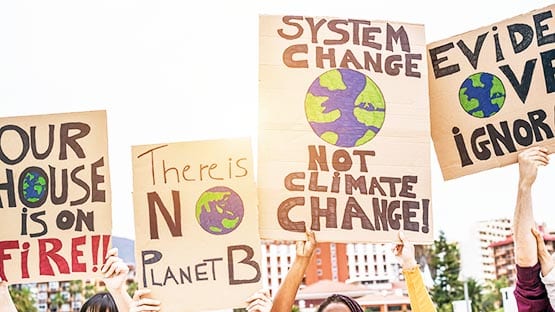
The first-of-its-kind international conference on moving away from fossil fuels wrapped up in Colombia last month. Each of the 56 participating countries was tasked with creating its own roadmap to phase out oil, gas and coal. Financing emerged as one of the biggest challenges.
Simply planting more trees in urban areas can provide huge temperature benefits, not to mention how the additional plant life boosts biodiversity and improves mental health.
A Princeton University team erected a cottage made from straw, which they said is more sustainable than bricks or concrete. They used compressed straw bales to create sturdy building blocks that do not require a house frame or a plaster coating.
Use of EVs in Africa is surging as soaring prices and fuel shortages compel countries to opt for cleaner and cheaper transport. Ethiopia is leading the way with more than 115,000 EVs now on its roads, accounting for about 8% of the national fleet.
U.S. politicians across the political spectrum want more housing. Building more apartments is a great answer because they also slash carbon emissions in a big way. A typical high-rise apartment emits only one-third as much greenhouse gases as a detached house.
A lab experiment shows that making Portland cement from silicate rocks instead of limestone could cut its carbon emissions by 30%.
The African country of Uganda is targeting completely fossil-free electric transit by 2030.

 Share
Share