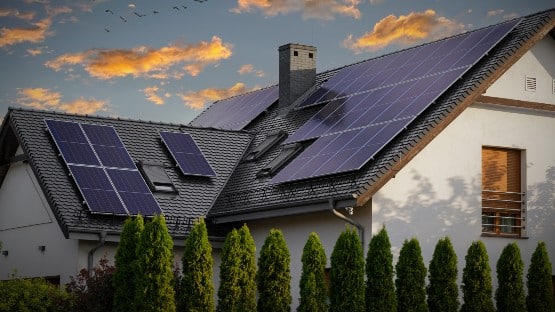
Dominion Energy asked the State Corporation Commission to cut compensation rates for rooftop solar customers who send excess energy to the grid.
The SCC’s verdict: a thumb pointed downward.
“Dominion’s proposal would have pulled the rug out from under thousands of Virginians who want to lower their bills and generate their own clean energy,” said Shawn Kelly, managing director for state regulatory policy at Advanced Energy United.
Rooftop solar is photovoltaic panels installed on the roofs of residential, commercial and industrial buildings to capture sunlight and convert it into electricity.
Net energy metering allows customers to receive credit for the electricity they generate and send back to the grid.
The SCC ruling denied Dominion’s attempt to slash the current 1:1 net metering credit that environmental advocates point to as the key to making rooftop solar pay for itself over time nearly in half.
According to the latest Solar Market Insight report from the Solar Energy Industries Association, Virginia currently has 7.6 GW of installed solar capacity, enough to power over 850,000 Virginians homes.
More than 64,000 Virginia homes have installed solar.
“Smart net metering policy is good for solar customers, grid reliability, electricity prices and the clean energy economy,” said Kevin Lucas, the vice president of policy analysis at SEIA. “The State Corporation Commission was right to reject Dominion’s request that would have made it much harder for Virginians to lower their electricity bills and contribute to grid reliability by investing in rooftop solar.
“We’ve always known that the benefits of net metering extend far beyond any one home that has rooftop solar, and it is great to see regulators affirm the widespread benefits of rooftop solar in their ruling,” Lucas said.


 Share
Share

Chris Graham