Something random from the Friday news release from the governor’s office announcing board appointments got my attention: an appointment to the Virginia Manufactured Housing Board.
Nothing specific about the appointee – Jesse Scott Yates, who the release identified as the owner of Yates Home Sales, a modular home sales business located in Blairs, which is north of Danville in Pittsylvania County.
I’m sure Mr. Yates is a nice enough person.
The line about the appointment got me to look at this Virginia Manufactured Housing Board, with suspicion.
My suspicion: that the board would be stacked with industry representatives, and no one representing the residential side of manufactured housing.
Upon checking the roster of board members, suspicions: confirmed.
From the Virginia Department of Housing and Community Development website:
The Virginia Manufactured Housing Board has nine members appointed by the governor representing specific groups designated in the enabling legislation. Two members must be manufactured home manufacturers, two must be manufactured home dealers or retailers, four members should have knowledge of the industry and represent the public, and the ninth member is the director of DHCD or their designee.
So, two manufacturers, two dealers/retailers, five others with “knowledge of the industry” to represent the public.
I looked up the bios of the five representing the public:
- one local elected official.
- a mortgage banker.
- a real-estate developer.
- a doctor.
- a corporate vice president.
You see what’s missing.
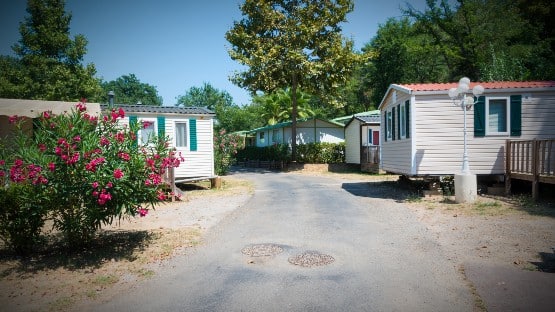
Why this is an issue to me: I grew up in a trailer park, excuse me, ahem, a manufactured home community.
Also: a little secret here, but AFP was launched in a trailer park.
(In a 12’X’70’ trailer, tucked into a corner lot. No, we weren’t independently wealthy.)
With that experience, man, do I know how the deck is stacked against people who live in trailer parks.
An estimated 200,000 Virginians live in mobile homes, the vast majority on parcels of land that they rent.
That’s where the issue is.
Owners of manufactured homes live on the margins.
Per data from The Pew Charitable Trust:
- the median annual household income for manufactured homeowners is $35,000.
- 25 percent earn less than $20,000 annually.
- two-thirds earn less than $50,000 annually.
If you can see where I’m going with this, people at those household income levels don’t have a lot of options.
Maybe my experience is unique, but the landlords that my family dealt with when I was a kid growing up, and then when I was an adult, exploited the hell out of their economic advantage.
For instance: my parents, when I was 4, had actually worked themselves into a position to be able to buy a house.
The holdup: they needed to be able to sell the trailer, to use that money for the down payment.
The owner of the trailer park had the advantage here: he’d sold them the trailer, and he used the legal loophole that gave him the right to refuse to rent to a purchaser to keep us under his thumb.
Lacking the ability to sell to a buyer who could just move right in, either the buyer or my parents would have to pay thousands of dollars to have the trailer moved to a new location – either another trailer park or another parcel of land.
This is why I didn’t live in a house that didn’t have wheels until I was in my mid-30s.
Crystal and I had a similar experience when we were finally in a position to buy a home.
The only difference between 35-year-old me and 4-year-old me was, I was able to use the power of AFP to my advantage.
Basically, the slumlord got tired of the bad press.
Best I can tell, nobody on the Virginia Manufactured Housing Board has this lived experience.
It’s plainly obvious from my review of the meeting agendas for the board for the past several years that the whole thing is just a formality.
Somebody in the General Assembly years ago had a great idea, to have a board oversee the industry, and successive governors since have followed suit, filling out the board roster mainly to dot the i’s and cross the t’s.
That’s a shame, because, if done right, this Virginia Manufactured Housing Board could be a vehicle for helping us better address our affordable-housing crisis, crucially, by ensuring that the rights of low-income residents are taken into account.
The deck is already stacked against trailer-park residents in the Code of Virginia; that not one of the nine positions on the Virginia Manufactured Housing Board is held by a current or former trailer-park resident just reinforces the inequality.

 Share
Share

Chris Graham