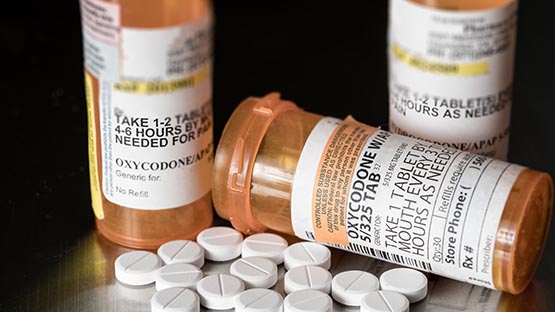
If you wanted a doctor’s prescription for fentanyl, oxymorphone, oxycodone or hydromorphone, there was one doctor’s office in Virginia that would give it to you, provided you paid in cash.
The Martinsville doctor prescribed the controlled substances to every patient in his practice, according to court records, further fueling an opioid crisis in the U.S.
On Tuesday, Joel Smithers, 42, was sentenced to four decades in prison.
Smithers was found guilty of one count of maintaining a place for the purpose of illegally distributing controlled substances and 466 counts of illegally prescribing Schedule II controlled substances.
The three-week jury trial concluded in December; sentencing was on Sept. 2.
The state attorney general characterized Smithers as a “drug dealer with a prescription pad.”
According to court records, Smithers opened an office in Martinsville in 2015 and prescribed controlled substances to every patient in his practice resulting in more than 500,000 Schedule II controlled substance prescriptions. The drugs included oxymorphone, oxycodone, hydromorphone and fentanyl.
A majority of those receiving prescriptions from Smithers traveled hundreds of miles, one-way, to receive the drugs.
Smithers did not accept insurance and took in more than $700,000 in cash and credit card payments prior to a search warrant being executed at his office on March 7, 2017.
ICYMI
- Opioid use, death due to drug overdoses appears to be on the decline
- National settlement funds available to SAW region to address opioid addiction, misuse
In 2019, Smithers DEA registration number was revoked.
Smithers was previously convicted in 2019 of these charges. However, after his conviction, the U.S. Supreme Court changed the law concerning jury instructions in cases involving illegal distribution of controlled substances by healthcare providers. Therefore, a new trial was ordered.
“This defendant’s actions betrayed his oath to his patients, his community and the healthcare system at large,” said Robert N. Tracci, acting U.S. attorney. “Today’s sentence reflects the seriousness of these crimes, and the destruction wrought by the opioid epidemic in our communities.”



 Share
Share
Crystal Graham