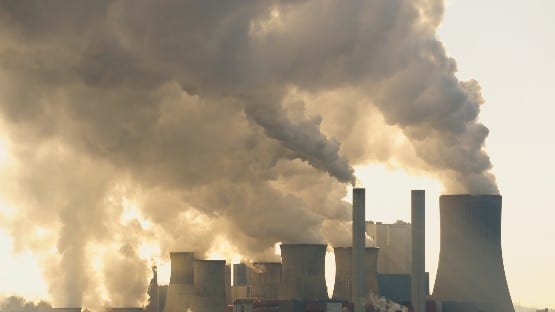
The Environmental Protection Agency has abdicated its duty to protect Americans and the environment from dirty air.
On Feb. 12, the EPA published its final rule to repeal the Endangerment Finding of 2009. According to Margo T. Oge, a former director of the EPA, that finding was “the Magna Carta of the nation’s climate policies.” The Magna Carta gave us constitutional law. The Endangerment Finding gave us climate pollution law.
President Donald Trump called the repeal rule “the single largest deregulatory action in American history.” I call it the single largest environmental blunder in American history. This action demonstrates once again this administration’s repudiation of science and the rule of law. Can its quagmire of incompetence get any deeper?
Let’s get real
Scientific research over decades has made clear that fumes from the exhaust pipes of cars and trucks are harmful to human health and significantly contribute to air pollution and climate change. Emissions from motor vehicles are the second largest contributor, a whopping 23 percent of greenhouse gases in the United States, exceeded only by the power sector generating electricity from the burning of fossil fuels.
Motor vehicle emissions contain carbon dioxide, methane, nitrous oxide, hydrofluorocarbons, perfluorocarbons and sulfur hexafluoride. All of these are greenhouse gases. All are harmful to human health and the environment. These pollutants significantly contribute to smog and nitrogen deposition in the Chesapeake Bay.
The Clean Air Act clearly mandates that the EPA regulate those emissions to protect human health and welfare.
The Clean Air Act, Section 202(a)(1): “The [EPA] Administrator shall by regulation prescribe (and from time to time revise) in accordance with the provisions of this section, standards applicable to the emission of any air pollutant from any class or classes of new motor vehicles or new motor vehicle engines, which in his judgment cause, or contribute to, air pollution which may reasonably be anticipated to endanger public health or welfare … .”
Put more concisely, the EPA administrator SHALL regulate ANY air pollutant from ANY new motor vehicle which MAY REASONABLY BE ANTICIPATED to endanger public health or welfare.
About the Author
Robert “Bobby” Whitescarver is a farmer, educator and award-winning author residing in Churchville. He can be reached through his website at www.gettingmoreontheground.com
That’s what the Clean Air Act states. So, what is the Endangerment Finding? It has quite a story. It began in 2003, when Massachusetts, 11 other states, three cities and 14 environmental groups sued the EPA for not regulating harmful tailpipe pollution from cars and trucks.
Ten states and the Alliance of Automobile Manufacturers, the National Automobile Dealers Association, the Engine Manufacturers Association and the Truck Manufacturers Association filed with the court in favor of the EPA not regulating greenhouse gases from motor vehicles.
Four years later, the Supreme Court of the United States ruled in Massachusetts v. EPA that the EPA administrator has the authority to regulate greenhouse gas emissions from motor vehicles and ordered the EPA to provide scientific evidence to determine whether greenhouse gases endanger human health and welfare.
In 2009, the EPA administrator signed two distinct findings.
- The Endangerment Finding: “The Administrator finds that the current and projected concentrations of the six key well-mixed greenhouse gases—carbon dioxide (CO2), methane (CH4), nitrous oxide (N2O), hydrofluorocarbons (HFCs), perfluorocarbons (PFCs), and sulfur hexafluoride (SF6)—in the atmosphere threaten the public health and welfare of current and future generations.”
- Cause or Contribute Finding: “The Administrator finds that the combined emissions of these well-mixed greenhouse gases from new motor vehicles and new motor vehicle engines contribute to the greenhouse gas pollution that threatens public health and welfare.”
Those findings forced the auto industry to make cars less polluting, and now we have cleaner air, fewer deaths, healthier people and a cleaner Chesapeake Bay.
Back to court
On Sept. 23, 2025, the attorneys general of West Virginia and Kentucky led a coalition of 26 states (including Virginia under Republican governor Glenn Youngkin) requesting the administrator of the EPA to repeal the Endangerment Finding. Gah. West Virginia again! Recall that this state led the legal fight in West Virginia v. EPA in 2022 to stop the EPA from regulating greenhouse gases from coal-fired power plants.
On Feb. 12, the EPA concluded that greenhouse gas emissions from motor vehicles do not contribute to dangerous air pollution and repealed the Endangerment Finding.
Six days later, environmental and health groups filed a lawsuit against the EPA and its administrator, Lee Zeldin, for repealing the Endangerment Finding. These groups include Earthjustice, the Natural Resources Defense Council, the Sierra Club, the Center for Biological Diversity, the American Lung Association, the American Public Health Association, the Alliance of Nurses for a Healthy Environment and the Union of Concerned Scientists.
On March 12, 24 states, including all of the states in the Chesapeake Bay watershed except West Virginia, filed a lawsuit against the Trump administration for repealing the Endangerment Finding.
The battle for clean air
It’s the polluters verses the greenies. A showdown of epic proportion. Twenty-six states, including king of coal West Virginia versus 24 states, including Virginia (now led by the Democratic governor Abigail Spanberger). Corporations versus nurses. Conservatives versus liberals.
I have no doubt this will go to the highest court of our land. Chief Justice John Roberts wrote the dissent in Massachusetts v. EPA and was joined by Justices Clarence Thomas and Samuel Alito, who still sit on the bench. I don’t have a good feeling about the fate of the Endangerment Finding in the Supreme Court.
The result
Congress will have to write a clearer law (I don’t know how it could be any clearer) to combat climate pollution, and states will once again have to make up for the lack of federal protections. And we the people will have to vote, not only with our ballots but also with our pocketbooks and wallets.

 Share
Share