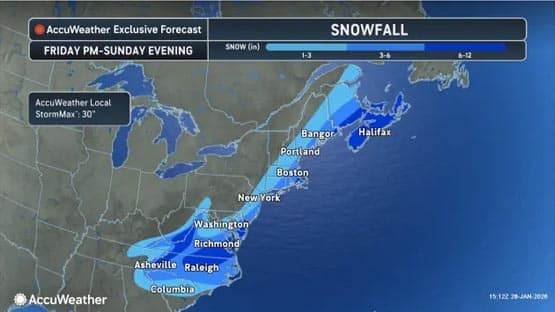
One to three inches of snow is possible in the Shenandoah Valley starting on Friday night, according to AccuWeather.
The snow is expected to fall through late Saturday night in Virginia and much of North Carolina. Some areas, including southeastern Virginia, could see six inches or more of snow.
Blizzard conditions are possible along the coast, including in Newport News and Virginia Beach, due to strong winds and low visibility.
Many people in the Valley are still digging out from the snow and sleet event last weekend. While snow totals were not as large as predicted for most areas, the heavy sleet on top of the snow has made shoveling sidewalks and driveways difficult.
Those who are outside shoveling and heaving large ice chunks have also been met with extremely frigid temperatures.
ICYMI
There is a Cold Weather Advisory in place with dangerous temperatures that could cause hypothermia and frostbite.
“While the storm has moved through our region, prolonged cold temperatures continue to pose serious health risks,” says Xavier Crockett, health director for the Central Shenandoah Health District. “Taking simple precautions can prevent injuries and keep our communities safe.”
Hypothermia occurs most commonly at very cold environmental temperatures but can occur even at cool temperatures if a person becomes chilled from rain, sweat or submersion in cold water.
Signs to look out for include shivering, exhaustion or fatigue, confusion, fumbling hands, memory loss, slurred speech and/or drowsiness. In babies, look for bright red, cold skin and very low energy.
Frostbite is a type of injury caused by freezing. If you notice redness or pain in any skin area, get out of the cold. The skin will feel numb, unusually firm or waxy and may also appear white or grayish yellow. If you have frostbite, you may not know until someone else points it out because the frozen parts of your body are numb.
For a list of warming centers, call 2-1-1 or visit 211virginia.org
CSHD: Tips for staying warm
- Stay indoors and limit your exposure to the cold.
- Bring your pets indoors and ensure they have water.
- Eating healthy meals will help to keep your body temperature warm.
- Stay hydrated even during the cold to prevent hypothermia. Avoid alcohol and caffeine. They cause your body to lose heat faster. Drink warm beverages or broth.
- Keep extra blankets, sleeping bags and warm winter coats on hand for use in cold rooms.
- Charge all your devices (medical equipment, phone, computer, tablet, radio, etc.).
- Check on neighbors, friends and family.
Related stories
- Virginia Department of Health: Tips for staying warm if the power goes out
- Blue Ridge Poison Center warns of dangers of carbon monoxide during storm


 Share
Share

Crystal Graham