Virginia Environmental News
Solar can save Virginia farms if state and local government gets out of the way. In a tough economic environment, farmers who lease part of their land for solar can earn a guaranteed, stable income for 25 or 30 years and keep their property in the family.
Prospect Power, under contract to Dominion Energy, is building a huge 150 megawatt battery storage project in Rockingham County that is expected to enter operation this summer.
Some legislators, in support of the Virginia Clean Economy Act, are aiming to ramp up the state’s investment in grid battery storage and are proposing bills to that effect to be debated in the 2026 legislative session.
Clean energy will take center stage in Virginia’s legislature this year as lawmakers consider bills that tap clean energy to alleviate data center and affordability challenges. Advocates say that the most affordable assets on the commercial market today are solar, onshore wind, and battery storage.
The Virginia Department of Environmental Quality granted Dominion Energy an air permit for its $1.47 billion Chesterfield gas power plant. The Virginia State Corporation Commission, however, suspended its previous approval due to significant community opposition.
A federal judge ruled that Dominion Energy can continue work on its massive offshore wind farm off the coast of Virginia.
Our Climate Crisis
A warming Arctic is counter-intuitively pushing the U.S. into a deep freeze. Meteorologists blame warm Arctic waters and a corresponding stretched polar vortex for the dangerous winter blast with subzero temperatures and heavy snow throughout a large swath of the country.
The world’s oceans absorbed record amounts of heat in 2025, fueling more extreme weather. The extra heat makes the hurricanes and typhoons more intense and causes heavier downpours of rain and greater flooding.
Rock samples collected from the Greenland ice sheet show it completely melted a little more than 7,000 years ago. This shows that it could happen today, raising average sea levels anywhere from 7.5 inches to 2.4 feet.
Planet-warming carbon emissions rose an estimated 2.4% in the U.S. last year after nearly two decades of relative decline.
Climate change, pollution and decades of overuse have pushed the world into a state of “water bankruptcy” according to a UN report. More than half of the world’s large lakes are shrinking and roughly 70% of underground aquifers are in long-term decline. Some 4.4 billion people face water scarcity for at least one month a year.
Politics and Policy

Republican worries about energy affordability and reliability didn’t deter the Trump administration from halting five major offshore wind projects, capable of powering nearly 2.7 million homes along the East Coast that had already begun construction.
Trump appears to be losing his war on wind power as his administration suffered three court losses. Now a fourth judge ruled that construction can restart on the wind farm off Martha’s Vineyard.
European countries have agreed to jointly develop a vast offshore wind network, a pivotal step in the region’s push to trim its dependence on U.S. LNG gas imports. President Trump’s transactional diplomacy and his pursuit of “energy dominance” have sharpened such concerns.
Is the U.S. headed toward an electricity crisis of its own making? Trump administration policies against clean energy in the midst of increasing AI needs are fueling a growing mismatch between energy supply and demand.
Despite Trump’s efforts, oil executives are reluctant to invest the billions needed to pump more oil from Venezuela’s large reserves given its murky political future, failing infrastructure, and hard to process heavy oil.
The Trump administration’s must-run orders are putting broken-down coal electric plants in a bind. Repairing them could take months and cost tens of millions of dollars—all just to comply with legally questionable stay-open mandates that last only 90 days at a time.
Wall Street has turned its back on climate change. Six years after the financial industry pledged to use trillions to fight climate change and reshape finance, its efforts have largely collapsed in the present political environment.
Energy
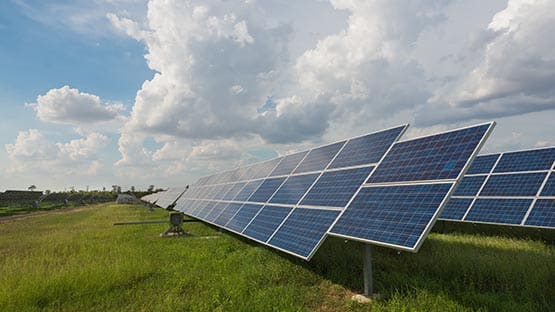
The abrupt U-turn in federal energy notwithstanding, the demand for solar power in the U.S. persists because it’s the fastest, most economical way to add more kilowatts to the grid.
Ending our dependence on fossil fuels and adopting new, greener technology requires a whole lot of metal, particularly lithium, cobalt, nickel and rare earth elements. Just as the 20th century was defined by competition for oil, the 21st century could be defined by competition for metal.
Last year was a roller coaster for clean energy, particularly in the U.S. Even so, solar, wind, and storage accounted for 92% of new power capacity added to the U.S. grid. Globally, clean energy investments doubled fossil fuel investments—a huge shift from a decade ago.
The voracious energy appetite of AI and the huge build-out of data centers forced an energy reckoning in 2025. This will require all hands on deck to not break the grid, not spike household electricity bills, and not derail the clean energy transition.
Cheap solar is now transforming lives and economies across Africa. Chinese solar panels are now so affordable that businesses and families are snapping them up, slashing their bills and challenging decrepit and expensive electric utilities.
Brazil is well positioned to leap-frog to EVs with its low-carbon electricity grid, abundant battery mineral resources, and a strong domestic automotive industry. An accelerated transition could save the country up to a quarter trillion in cumulative fossil fuel import costs through 2050.
A small company in Finland has announced the world’s first production solid-state battery. The 400kw batteries, incorporated into motorcycles, will have up to 360 miles of range and an 80% charge in less than 10 minutes.
Electric car sales were up 23.9% in the UK in 2025. Pure battery EVs made up 23.4% of the market, up from 19.6% in 2024.
A University of Oxford study found that a shift to renewable energy by 2050 could save the global economy at least $12 trillion in energy system costs. A rapid transition would provide more savings because the more that’s being made, the cheaper it gets.
New England’s clean-energy transmission line is bringing 1.2 GW of Canadian hydropower into the region after nearly a decade of work.
Even as electric vehicle sales slump, the U.S. fast-charging network grew over 30% last year.
Sales of EVs overtook petrol cars for the first time in the EU in December and EV sales grew by 30% year-on-year in 2025.
Land, Food, and Agriculture

A Brazilian agronomist is leading a scientific breakthrough in using helpful bacteria in the place of chemicals to fertilize soybeans and other crops. It is helping to fight hunger, slash pollution, and keep struggling farmers out of bankruptcy.
A worker-owned cooperative in Kenya is producing biochar made from agricultural waste such as husks and stalks. This is a low-cost way to capture carbon that improves yields when applied to fields.
Researchers at the University of Illinois Urbana-Champaign found that certain crops can grow remarkably well in the shade of solar panels, potentially allowing us to grow food and generate clean energy simultaneously in an agrivoltaic system.
Climate Justice
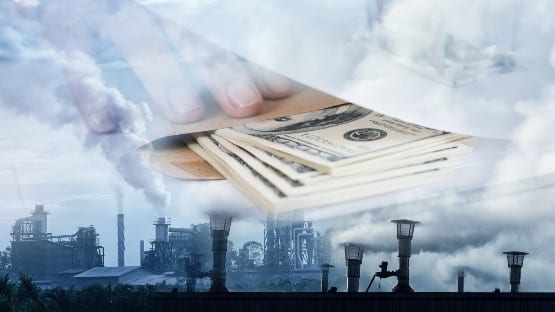
Every U.S. household spent an average of $5,530 on energy in 2024, with more than half going to pay for gasoline. And for lower-income families, energy can make up more than 10% of household spending.
Americans have seen their electricity bills rise by 10% between 2022 and 2024. Commercial users, however, including giant, energy-sucking data centers, have seen rates increase just 3%. And even bigger industrial users actually saw prices fall by 2% during the same period.
Iran’s ecological and water crisis lies beneath the headlines of currency devaluations and street clashes. The water crisis is so severe that Tehran’s residents may eventually have to evacuate the capital city.
Just 32 fossil fuel companies were responsible for half the global carbon dioxide emissions driving the climate crisis in 2024. Saudi Aramco was the biggest state-controlled polluter and ExxonMobil was the largest investor-owned polluter.
Climate Action
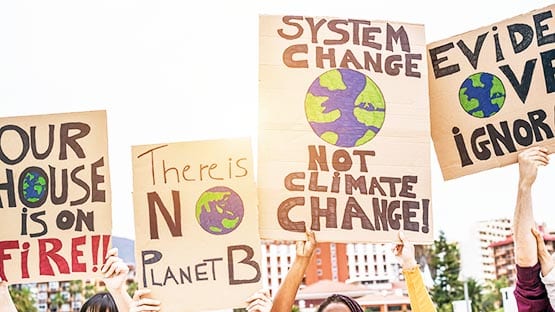
Choosing the “least expensive” healthy food options can cut dietary emissions by one-third. Food groups that are low in both cost and emissions include legumes, nuts and seeds, as well as oils and fats. It includes widely consumed foods such as wheat, corn, beans, various fruits and vegetables, and small fish.
The Amish are well known for shunning technology such as cars when it undermines their close-knit community. Many Amish communities have recently expanded their allowance of bicycles to include e-bikes.
A piece of good news is that coal power generation fell in both China and India in 2025, the first simultaneous drop in half a century, after each nation added record amounts of clean energy. Electricity generation from coal in India fell by 3.0% year-on-year and in China by 1.6%.
More new EVs now feature “vehicle-to-grid,” capabilities, meaning they can send power to the grid as needed. Others are experimenting with active managed charging in which algorithms stagger when EVs charge, enabling them to charge during times of low demand.
Germany is building a 100 megawatt heated brick battery to replace gas-fired industrial boilers. It charges up when there’s a surplus of cheap renewable electricity on the grid, stores that energy as heat and then delivers steady, high‑temperature steam around the clock.
A large, start-up Swedish green-steel mill has recently hit a rough patch as it faced increasing project costs and construction delays. It recently shared the brighter news that is has landed a major new German corporate customer.


 Share
Share