Virginia Environmental News
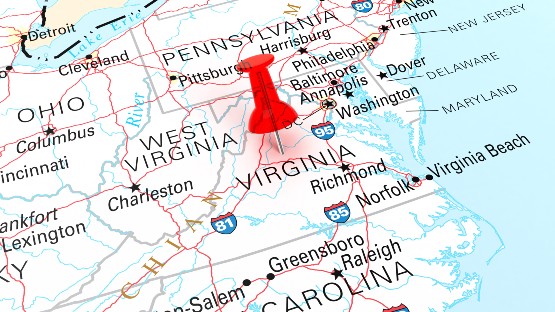
The Virginia General Assembly passed a bill to extend the EnergyShare program of Dominion Energy to 2038 and increase its budget. The program helps with energy bills during emergencies and also provides weatherization upgrades such as sealing and insulation.
Virginia is poised to reenter the Regional Greenhouse Gas Initiative this summer, and Dominion Energy is petitioning to have the cost charged to electricity customers’ bills as utilities resume buying carbon credits.
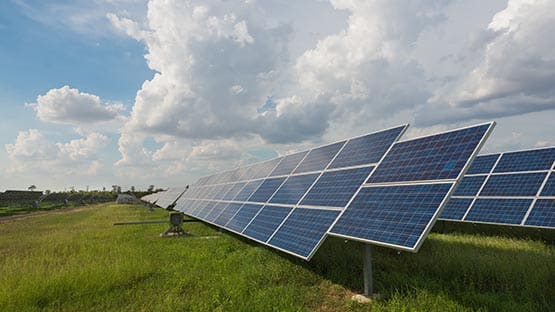
The Virginia General Assembly passed a new law that voids community-wide prohibitions on solar fields and establishes new siting guidelines for the facilities. Counties can still bar individual projects but need to justify such decisions.
Trees are becoming Virginia’s frontline defense against urban heat. A bill passed by the General Assembly will give localities new authority to require tree planting as part of development plans, setting long-term canopy targets based on zoning density.
Gov. Abigail Spanberger has signed several bills into law aimed at encouraging clean energy development by streamlining residential solar permitting and boosting distributed generation and battery storage.
The Virginia Department of Environmental Quality has awarded nearly $8 million to 12 colleges and universities to support a wide variety of food waste prevention, food rescue, and composting initiatives — all designed to divert food from landfills.
Gov. Spanberger approved a number of bills regulating rapidly growing data centers. The legislation addresses transparency in matters including water usage, noise and site suitability. It’s a small step toward regulating an industry that’s basically been without regulation.
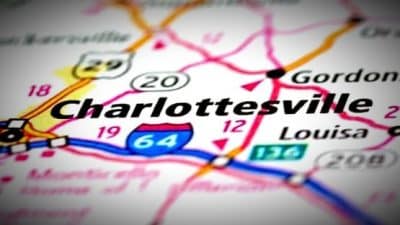
The Afton Express commuter route, connecting the Central Shenandoah Valley to Charlottesville, saw a 38% increase in ridership compared to last year.
Harrisonburg planted 10,000 trees on a tree farm as part of its climate effort. It will plant more than 30,000 trees on the tree farm by 2028 and have the site remain forested in perpetuity.
Our Climate Crisis
A recent Dutch scientific study shows that, across much of the world, sea levels are higher than previously assumed and coastal land is sinking faster. As a consequence, tens of millions of people once thought safe from coastal flooding are at risk of inundation.
Record low levels of Antarctic sea ice have led to the mass drowning of baby Emperor penguins. They have consequently been placed on the list of endangered species.
Climate scientist Katherine Hayhoe says that only about 1% of the excess heat in our climate system is ending up in the atmosphere while 90% is absorbed by the oceans. Climate change’s impacts on the ocean are massive but for most people it’s out of sight and out of mind.
A 5,000-mile-long marine heat wave in the Pacific is linked to a forming El Niño. It follows record warmth and a historic lack of snow in parts of the American West earlier this year. It could worsen heat and humidity this summer, and boost the risks of hurricanes and wildfires.
Politics and Policy

Kate Marvel, a well-known environmental scientist, announced that she’s leaving NASA because of the turmoil at the agency. This involves a 50% cut in the science division and a directive from the NASA administrator that climate related research and publication is politically charged and not helpful to the broader NASA mission.
A massive reorganization of the U.S. Forest Service will lead to the closure of the office in Grand Rapids that leads internationally recognized projects on the impact of climate change on peatlands and northern forests.
EPA Administrator Lee Zeldin defended his decision to repeal the legal determination that serves as the basis for federal rules to slow climate change, telling a gathering of climate change skeptics at the Heartland Institute that they should “celebrate vindication.”
The U.S. offshore wind industry has finally gotten a break. The five wind projects being constructed under the court orders can continue as the Trump administration missed a deadline to appeal the decisions, allowing them to proceed.
Northeast states are rethinking their ambitious strategies to cut emissions as they struggle with rising electricity costs and the Trump administration’s hostility to renewable energy.
China plans to double its clean energy capacity by 2035. That’s only part of the story. Presently China is the biggest installer of renewable energy, the biggest emitter of greenhouse gases, and the biggest user of coal.
Energy
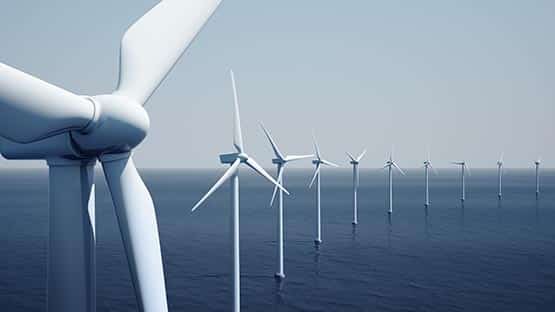
Renewable energy growth overtook global electricity demand growth for the first time last year. Record growth in solar — especially in China and India — was a driving factor. Renewables grew 33.8% and they now produce more than one-third of the world’s electricity for the first time in modern history.
The war in the Middle East is creating an oil shock much worse than the one in the 1970s, especially for countries in Asia that receive most of their oil through the Strait of Hormuz.
The war against Iran has sparked a renewable energy boom in Europe as people rush to buy solar systems, heat pumps, and EVs. The French prime minister says that electrification is now a concern of ‘national interest’ and no longer just about climate change.
China dominates renewable energy supply chains, producing a vast majority of the world’s solar panels, wind turbines, batteries and EVs. Now the war in the Middle East and the accompanying volatility in the supply of fossil fuels is set to give sales another big boost.
Solar energy, combined with battery storage can meet 90% of India’s electrical power demand at affordable costs, according to a recent study.
A wind farm in New Mexico is the largest renewable energy project ever built in the US and is now beginning to send enormous amounts of wind power to California. It will deliver a massive jolt of new electricity at a time when utilities are racing to keep up with demand.
The U.S.-Israel war against Iran is driving a massive shortage in cooking gas across Asia and Africa. It’s driving people to cook with coal and wood, and fueling a booming gas black market.
The International Energy Agency notes that fossil fuel “demand destruction” has begun to unfold as a result of the acute shortages and rising prices stemming from the US-Israel war against Iran. Governments, businesses, and households are massively curbing investment and consumption.
The company Stegra has secured the financing needed to complete its flagship green hydrogen steel mill in northern Sweden.
Unlocking affordable battery recycling in the US just hit another setback as a battery disassembly plant near Atlanta, which had outlasted several rival battery recycling firms, filed for bankruptcy.
Land, Food, and Agriculture

Brazilian researchers are mixing genes from rare species to increase the resilience of coffee plants to increased drought and global warming.
Renewable energy has brought income to Texas ranchers and tax revenue to counties long buffeted by boom-and-bust oil cycles. Now policy changes in Washington combined with local resistance is threatening that momentum.
An epic winter drought across much of the U.S. has created a bleak situation for farmers. The effects may ripple throughout the U.S. food supply if rainfall shortages and record heat continue throughout the coming summer.
Colony Mennonites from Belize are sparking deforestation fears with their new settlement plans in Suriname. The plain sect would pay millions to settle on around 24,000 hectares in a part of Suriname with around 90% forest cover.
After Hurricane Helene washed away or buried vital topsoil across the Southeast, farmers are facing years-long efforts to restore their fields.
Ecojustice
The Climate and Community Institute says that Trump’s $1.5 billion Pentagon budget request is a human, economic, and environmental disaster. It would create 267 megatons of carbon pollution and the $500 billion budget increase alone could virtually eliminate homelessness across the country.
A common criticism of wind turbines is that they endanger birds. A study of a wind farm in Aberdeen Bay, Scotland, revealed not a single collision. A study in Germany also showed that migratory birds almost completely avoid wind turbines.
A thinktank analysis claims that Cuba could beat the U.S. energy blockade with an $8 billion investment in renewable energy. The transition is already underway. In 2025 the country produced 10% of its electricity from renewable energy, up from 3.6% in 2024, and is aiming for 15% by the end of this year.
Big Oil is reaping huge war windfall profits and is set to make $234 billion by the end of the year, if oil prices continue at $100 a barrel.
Ecological and Climate Action
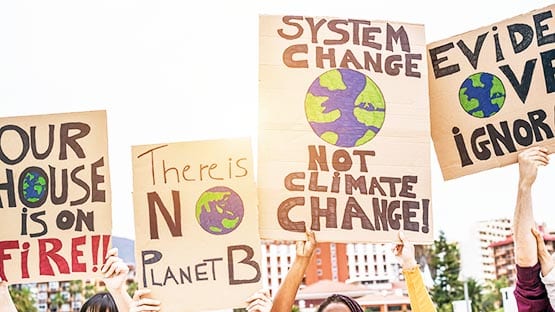
An international summit of 60 countries jointly hosted by Colombia and the Netherlands agreed to voluntary roadmaps to wean the world off coal, oil and gas. In his opening remarks, Colombian president Gustavo Petro said that a “suicidal” model of capitalism, tied to fossil fuel interests, is leading to war, fascism, and the potential extinction of humanity.
The rural town of Enfield, North Carolina, received a grant of $300,000 as seed money in its quest to install a geothermal energy system to heat and cool homes without fossil fuels while drastically lowering residents’ energy costs.
Youth-led environmental groups are increasingly aligning with immigration rights activists, arguing that fighting “a fascist government” is a vital step to halting the climate crisis.
Merino Energy, a California startup, says its through-the-wall, single room heat pumps are faster to install than ductless systems. They’ll be available for $3,800 — installation included.
Utilities, solar companies, and environmentalists worked together in Illinois to fast-track flexible interconnection and build lots of community solar in record time. It’s a speedy way to get cheap new solar online without requiring costly grid upgrades.
Does burning wood pellets actually fight climate change? Despite industry claims, scientists say it’s little better than fossil fuels.
Solar giant Qcells has launched a division that bundles solar and battery systems directly into new construction across the U.S. The goal is to make clean energy a standard feature in new construction rather than an add-on.


 Share
Share