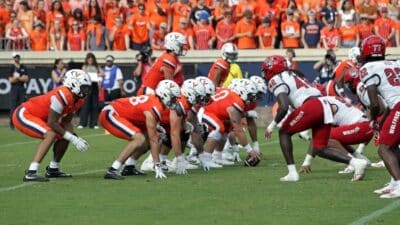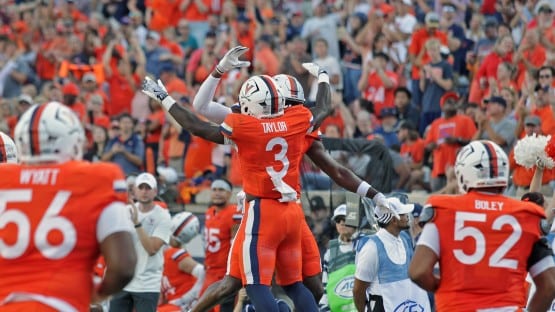
UVA Football enters its Week 2 matchup with NC State as one-and-a-half-point a road ‘dog, which, fine, whatever.
State won its opener, which was tougher than Virginia’s opener, 24-17 over East Carolina, which had beaten the Pack in the Military Bowl last year by a similar score, 26-21.
The ‘Hoos beat a Coastal Carolina team that is clearly in decline by a 48-7 final in Week 1.
The line for UVA-NC State is State -1.5, and the over/under is 56.5, which suggests a projected final score in the vicinity of State 28, UVA 27.
I’m not a gambler – not because I’m overly moral, just don’t like throwing money away – but if I were, I’d take the points, and the under.
Game Details
Virginia (1-0) at NC State (1-0)
Day/Time: Saturday, noon ET
TV: ESPN2 (Bob Wischusen/play-by-play, Sam Acho/analyst, Taylor Davis/sideline)
Radio: John Freeman/play-by-play, Ahmad Hawkins & Matt Schaub/analysts, Jay James/sideline
Satellite radio: SiriusXM: 381 | SXM App: 971
Press Conference: Tony Elliott
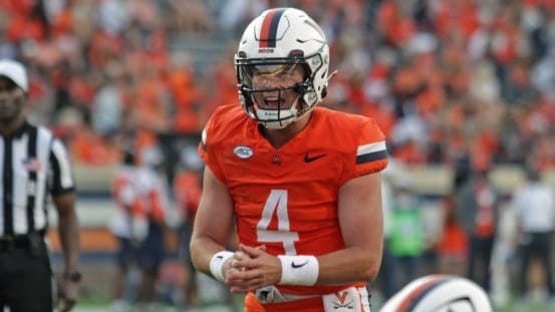
Q: What are your expectations for Chandler Morris this Saturday? Are you expecting him to practice today and play Saturday? What’s the status there?
Elliott: My expectation is, play his tail off. We’re gonna need him, and he was back in practice yesterday, full go. And so, my expectation is that he has a great week of prep and he’s ready to go and brings his best game.
Q: What do you like about what he did Saturday running the offense, and obviously played pretty well, too.
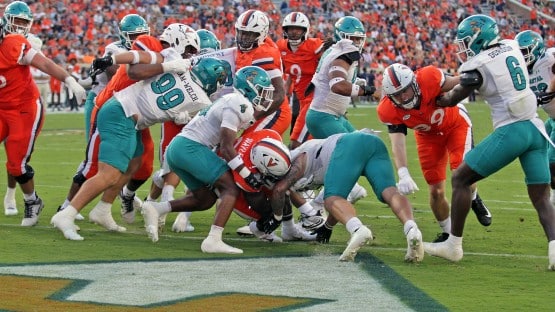
Elliott: Yeah, he just showed maturity. You know, it took us a couple of couple of drives to really settle in. You got a group of pretty much new guys playing together, but I thought he did a good job of settling in, and once he got settled, he was able to distribute the ball, manage the system, put together some scoring drives. Love to see him go down feet first right there, but that’s what you love about him, is, he’s such a competitor. He was that close to the goal line, and even down on the field when I got to him, he had a little bit of a sense of humor. He said that wasn’t very successful. but he’s like, Coach, I was so close, and all I saw was the goal line. So, I think we got to see the competitor, but then also we got to see a little bit of the gamesmanship of what he can do as a veteran quarterback.
Q: How much research did you guys put into your studying your red zone attack or approach in the offseason, and it looks like what’s the direct snaps and some jumbo sets and stuff you made some changes. Can you just elaborate on that?
Elliott: Right, so, I mean, red zone, that was, red zone and third down were two of the biggest points of emphasis in the offseason, to the point to where we researched a lot of the concepts that we were doing, we researched the teams that were in the Top 25 to see kind of what their efficiency, effectiveness was, what they were doing to the point to where we changed a lot of even the installation moving red zone earlier into practices. So basically, Day 1, we’re creating a mindset of being effective scoring touchdowns in the red zone. Day 1 install, both in the spring and in fall camp, had an emphasis on red zone. So, we did a lot more work in those areas throughout the course of a fall camp. And then also in the spring, based off of the research that we saw, and then I think personnel helps us, too. Having some more offensive linemen available gives us the ability to go a little bit heavier down there in some obvious run situations. But now you get guys more suited to create and move the line of scrimmage involved. And then also losing Grady (Brosterhaus) with his injury, and he’ll be back here in a couple weeks, forced us to be a little bit more innovative, look at some other ways to try and generate touchdowns when we get down in the red zone. And you’re going back in the film study from Saturday night.
Q: Saturday, just the offensive line rotation, where do you want that to kind of get to, like, do you want 10 guys playing in the first half, or where do you kind of want that?
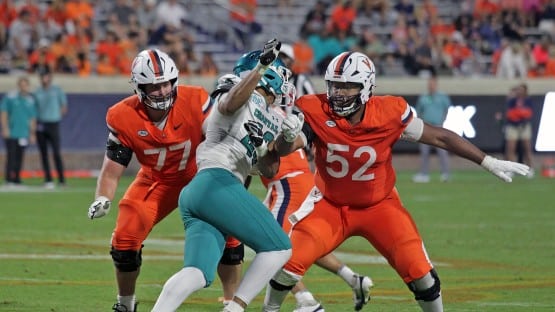
Elliott: Hey, I’d love to be able to play 10 guys in the first half. That’s a couple things, that means that you got depth that you can trust, and then you’re in, you feel like you’re in a position where you can roll those guys. So, man, I’d love for that to be the case. I know that may not be a, what you’ve seen over time as the most conventional thing, but we do it on the defensive line all the time, in playing multiple guys. So, I’d love to have the depth prepared and ready to go, and then hopefully in positions and games to where you feel confident that you won’t lose any kind of rhythm by subbing those guys. So, I’d love to get as many, I’d love to have, I think I said it before, I’d love to have 12, 13, 14 guys that you can play at that position.
Q: Pass protection took a big step forward. Can you talk about that a little bit?
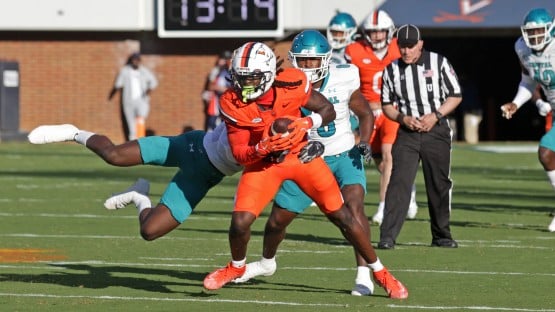
Elliott: Yeah, anytime you can come out of the game without having a sack on the stat sheet is really positive. That’s one of our goals and objectives offensively. I thought they did a good job of communicating, ID-ing. Biggest thing is we want to make sure that quarterback doesn’t get touched. So, we had some clean pockets in dropback, and then also with our play-action stuff. And again, we also got some three-man rushes, you know, with that structure. They were dropping eight at times, and that’s how that defense is built. So, it took a little bit of pressure off of us. They were trying to get into throwing lanes and drop guys into coverage, but we’re going to have to be on our P’s and Q’s, because this defensive front that we’re getting ready to play, both (Sebastian) Harsh and (Cian) Slone, are very, very active on the edges. (Brandon) Cleveland is very big on the inside. They can jump in and out of structure, go from four-down to three-down. And then they got some experienced linebackers that can bring pressure. So, we’re gonna get tested.
Q: What would you make of the run game? And I think yours longest run was like eight yards from the running backs outside of Chandler’s run. Did you like what you saw with the run game?
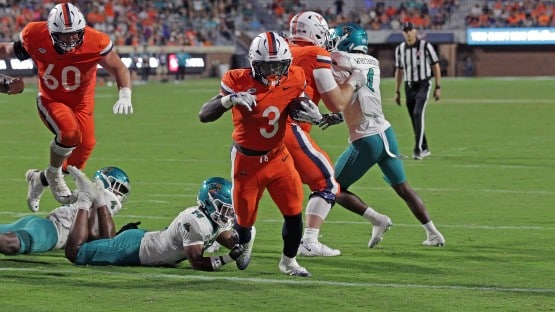
Elliott: I mean, we were sitting there right there, going into the last drive, with about 173, close to 180 yards rushing total, and if you can rush for 200 yards in a game, I mean, that’s pretty good, regardless of how you rack them up. I thought the backs initially ran hard, and then the game kind of got, I mean, it became explosive, the receivers started making plays. You’d love to see some longer runs, but overall, I thought the production was there, and I felt like we left a couple runs out there. Which is an opportunity for us to really challenge the backs, but I’m not worried about the direction that we’re headed, and we had four different backs that had equal amounts of carries. That was more pleasing to me, that you were able to play all four of them and get them touches, because we’re gonna need all four of them over the course of the season. And I think the other thing that that hurts your overall number is, it’s a good thing, is we’re down in the red zone, and we only got four yards to go, or we only got three yards to score, and so, overall it’s going to bring your averages down. But hey, if we’re snapping a ball on the four-yard line and running it in for touchdowns, then I’ll take that every day. Then there may be an open-field explosive, but we do have to, and I thought we had some that we could have extended a little bit, but it’s a great opportunity for us to challenge all four of those guys, and the offensive line, to go out there and be a little bit more explosive. But overall, I mean, we won the matchup rushing the football. We had success, you know, running the ball down in the in the red zone, so those are all positives, and I think the explosiveness will come as the games dictate throughout the course of the season.
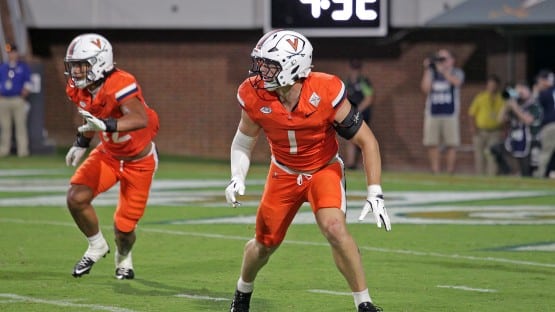
Q: Coach, you mentioned after the game that even though the sack numbers weren’t there, you thought the ends played well, were disruptive, and obviously Coastal was trying to move out of their way. When you watch the film, what did you see from those guys, and how much more can you get out of that group?
Elliott: Oh, I think we can get a lot more out of that group, and my biggest challenge was, I want us to get to the quarterback, even if it’s not schematically, they’re not gonna let us, we gotta find a way to get there. But it was good to see multiple guys go in there and didn’t see much of a drop-off. And so, I’m excited about what the potential is going forward. We’re really gonna need those guys this week to step up, because we can’t allow the quarterback to get comfortable back there, because he’s very good as a passer. But then also we gotta be very disciplined in our rush lanes, because he can hurt you as a runner as well. So, I thought we showed some good things. I know it was a little bit frustrating at times, because the ball was getting out quick. They were throwing it sideways on us and forcing us to retrace and redirect. It was good to see Mitchell (Melton) play through his hand situation. I didn’t know how that was gonna look.
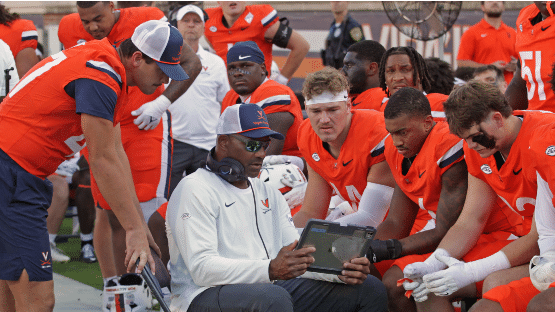
Q: Good to see (Daniel) Rickert get in there and give us some quality reps as a spy guy, but then also trying to impact the quarterback. Just where do y ‘all see just kind of his ability just to kind of move around the defense?
Elliott: Yeah, so what you saw was a function of Coastal doing a really good job of catching us in, you know, a pass rush package on third down and then not allowing us to sub, right, by playing with tempo and keeping that personnel on the field because you had Rickert and you had Cazeem (Moore), you know, playing on the interior, which, you know, is really good for us on third down, poses some challenges when you get into base down situations when you gotta defend the run, because you got smaller guys playing on the interior that don’t necessarily always work against the type of double teams that they gotta face. But that was a function of seeing him more so in our third down. But when we can get, if we’re efficient and effective on first and second down, then I think it gives us more flexibility to get those speed rushers on the field on third down. So, it was good to see those guys get opportunities, but at the same time, too, it’s tough. It’s most ideal when they get caught out there because they’re playing with tempo in some base down situations. In fairness to them, you know, Rickert and Cazeem, I mean, they’re edge guys. They’re not big (Anthony) Britton that’s 310 pounds, that’s used to taking on double teams. I mean, these are speed guys that are meant to come off the edge, but that’s kind of the risk/reward, because, you know, in third down, you want them inside to create some more one-on-ones to see, can you create an advantage on a guard? But then flip side is, when it’s first and second down, now the advantage could potentially go back to the offense, because they got a lot more of their offense available to run versus some of those sub packages.
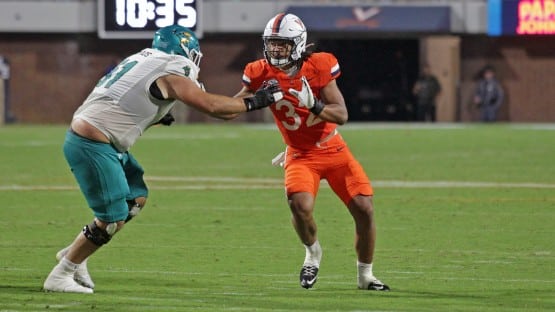
Q: At linebacker, we talked about Landon Danley and Trey McDonald, but Caleb Hardy is now switched over that position. What was the conversation like with him moving, and what was it about him that you wanted to move along pretty easy?
Elliott: Conversation went like, Caleb, this is where your body’s headed, you know, you’re up to 228 pounds, right? You’re looking more like a linebacker than a safety, and nothing wrong with that. And so, we’re thinking about moving you a little bit closer to the ball, and he’s like, coach, whatever I gotta do for the football team. And so far, it’s shown to be a good decision all the way around, because he just looks really natural as a linebacker. And again, it’s gonna become even more natural as he learns the defensive scheme from that position. But athleticism, you got a bigger safety now playing linebacker, so you’re gonna have an increase in speed, agility, athleticism. And then as he learns the position, then you’ll see more of the physicality come into play. But so far, I was pleased with his effort, and each day, he looks more and more comfortable in the box.
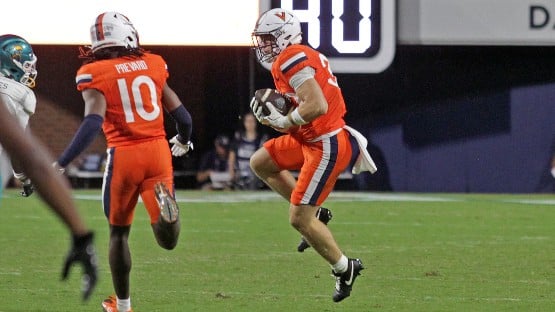
Q: Ethan Minter primarily was an offensive player in high school. What gave you confidence that he could make the transition to safety and did you have any tape of him tackling?
Elliott: He was a football player. That was really the confirmation. And generally at the high school level, your best athletes play quarterback for you. I had a chance to go observe him, both football-wise and then playing basketball. You saw from a basketball perspective that he was a physical kid, he would get up there and wasn’t afraid to use his body to play defense. Not a ton of tackling, but tackling is something that you can learn, and you still gotta teach it, even natural defensive guys how to tackle. But what you knew about him is that he loves the game. He was a great teammate. He was a leader, a really, really good athlete, and he was willing to make the transition. As long as there’s a willingness there, generally the guys that are willing to make that transition are able to successfully make that transition.
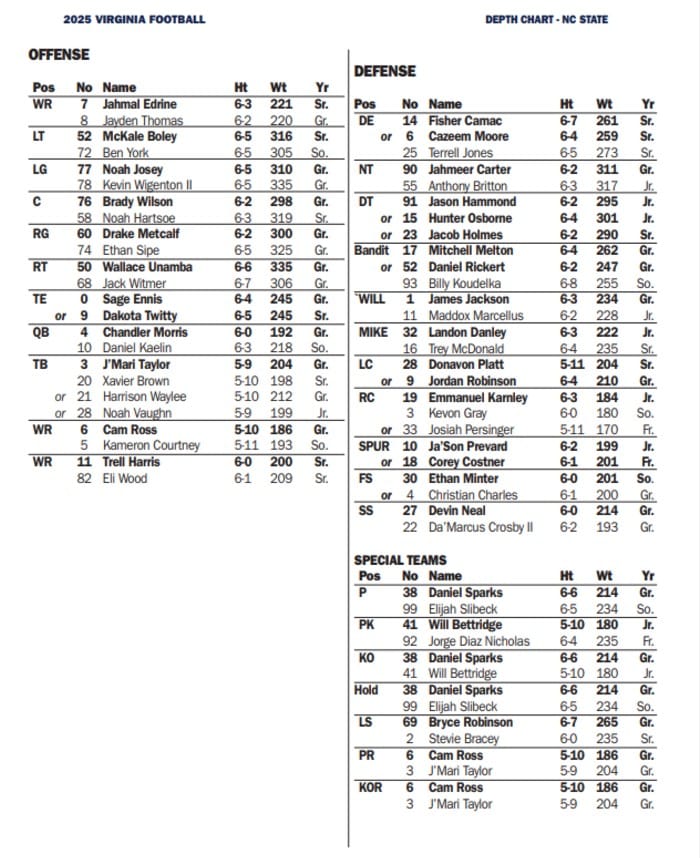
Depth Chart: Week 2

 Share
Share

Chris Graham