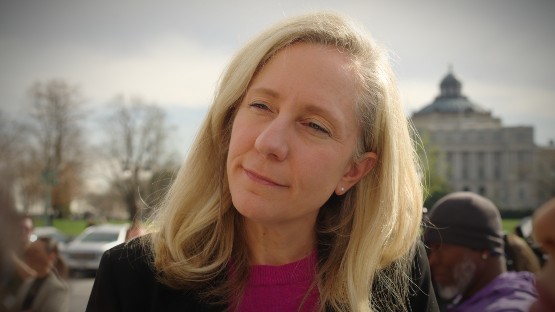
The office of Gov. Abigail Spanberger is touting her ceremonial signing of legislation creating paid family and medical leave. What they’re not telling you: the Democrat gutted the version of the bills that passed the Virginia General Assembly earlier this year.
“Today, we are empowering millions of Virginia parents and workers with the security, dignity, and peace of mind they deserve,” said Spanberger, at a signing ceremony in Richmond on Monday.
The governor noted the obvious positive, that Virginia is the first state in the South with a PFML program, in which “hardworking Virginians will have the freedom to take care of loved ones, recover from illness, and spend time with their newborns — all with the confidence that they will keep their paychecks.”
“Because no one should have to choose between spending time with their newborn and paying their bills. No one should have to drain their savings or fall behind on rent because a loved one gets sick. And no one should be forced to return to work while facing a serious illness,” Spanberger said.
The selling points from the governor’s press release:
- Beginning in 2028, most* Virginia workers will be able to take up to 12 weeks of paid leave for significant life events, including caring for a new child, recovering from a serious illness, caring for a family member with a serious health condition, or meeting the unique needs of military families.
- Under the law, Virginians will receive approximately 80 percent of their average weekly wage, capped at 100 percent of the state’s average weekly wage. Currently, the average Virginia worker who takes four weeks of unpaid leave loses more than $3,600 in income.
Now, to the asterisk:
- Spanberger narrowed the definition of family to exclude “chosen family.” Impacted here: the LGBTQ community.
Other differences between Spanberger and the GA:
- The General Assembly version of PFML allowed survivors of domestic violence to take up to 12 weeks off; the governor’s version reduced the time to four weeks off.
- The governor’s version of the bill criminalizes fraud; the General Assembly version created a three-year ban and required re-payment. Critics suggest that criminalizing misuse of the program is unnecessarily punitive, creating a chilling effect for people entitled to benefits but are intimidated by the criminalization of misuse.
- A worker’s job is protected under the General Assembly version of the bill, regardless of job longevity. Spanberger’s version requires people to have worked 120 days to have job protection. Bringing up the hypothetical that a worker diagnosed with cancer or having a serious accident within a few weeks of starting a new job would not have their job protected when they were ready to return.
Collective bargaining
The General Assembly passed a package of pro-worker bills that also included extending collective bargaining rights to half a million of Virginia’s public service workers, including teachers and firefighters.
Spanberger, kowtowing to the center-right business sector, weakened the proposed collective bargaining framework by making the right to collective bargaining merely optional – which is to say, easy for MAGA-majority county boards of supervisors to completely ignore.
We’re still waiting for action from the governor on this aspect of the worker-protection bills passed by the General Assembly.
Keep all of this in mind when you hear from your favorite MAGA radio host or elected pol that Spanberger is a socialist.
She’s barely a Democrat.

 Share
Share

Chris Graham