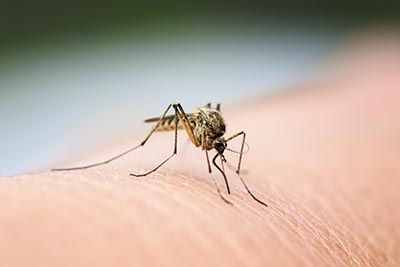
Dear EarthTalk: Do insecticide-resistant mosquitoes jeopardize the progress we have made at reducing malaria cases around the world?
– Sue Marchetti, New Orleans, LA
Mosquitoes do seem to be evolving defenses against what have been some of humanity’s most effective insecticides. A recent study published in the peer-reviewed journal, Science Advances, found that 78 percent of mosquitoes sampled by researchers in Vietnam and Cambodia carried multiple genetic mutations that made them resistant to at least two different commonly used insecticides there.
According to lead study author Shinji Kasai of Japan’s National Institute of Infectious Diseases, these findings aren’t surprising to those who have witnessed the coronavirus’ rapid-fire evolution to enhance transmissibility and the evasion of antibodies from vaccination and/or prior infection. “I believe our work will help us understand that evolution is a powerful force,” said Kasai in a recent Washington Post article. These new findings are especially worrisome to the World Health Organization, the Gates Foundation and other entities which have worked diligently to help bring down malaria’s case incidence by more than 40 percent and mortality rates by upwards of 60 percent around the world over the last two decades.
Malaria is a preventable and treatable disease that is caused by parasites of the Plasmodium species, which are transmitted to humans through the bites of infected Anopheles mosquitoes. The most effective way to control malaria is to prevent people from being bitten by infected mosquitoes; this is typically achieved through a combination of measures such as the use of insecticide-treated bed nets, indoor residual spraying with insecticides, and the use of insect repellents. For humans who have already contracted the illness, a range of drug-based therapies has helped bring mortality rates down. But if mosquitoes are no longer susceptible to these mitigation techniques, malaria cases are bound to rise, particularly as populations of Anopheles and other mosquito species are growing while expanding their geographical ranges thanks to global warming, increasing urbanization and globalization.
However, the relationship between insecticide resistance in mosquitoes and the overall incidence of malaria is complex and depends on many other factors as well. Besides the availability of effective prevention and treatment measures, malaria rates are also influenced by the level of healthcare infrastructure and access to care and the overall economic and social conditions of affected regions.
One silver lining is that we have lots of other types of insecticides that do seem to still be effective at mosquito control. But it may just be a matter of time until mosquito species develop new resistances in this biological/evolutionary arms race. According to Kasai, it’s not realistic nor desirable to wipe all the little blood suckers off the face of the planet entirely, as mosquito larvae benefit ecosystems by consuming lots of organic matter in wetlands which in turn helps recycle nutrients back into the environment while also providing food for fish and other wildlife.
“All organisms live as cogs on this planet and may be necessary to sustain the planet,” he adds. “I think the most desirable world is one in which mosquitoes can be controlled to the extent that people do not have to feel the risk of mosquito-borne diseases.”
CONTACTS: Discovery of super–insecticide-resistant dengue mosquitoes in Asia: Threats of concomitant knockdown resistance mutations, science.org/doi/10.1126/sciadv.abq7345; Artemisinin-based combination therapy in the treatment of uncomplicated malaria, ncbi.nlm.nih.gov/pmc/articles/PMC4492341/.
EarthTalk® is produced by Roddy Scheer & Doug Moss for the 501(c)3 nonprofit EarthTalk. See more at emagazine.com. To donate, visit earthtalk.org. Send questions to: [email protected].




 Share
Share