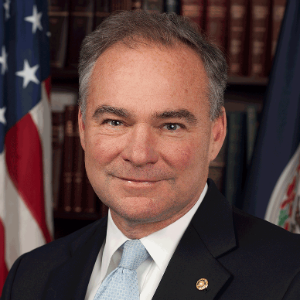
 U.S. Senator Tim Kaine (D-VA) joined Senator Chuck Schumer (D-NY) to introduce a bill to decriminalize marijuana at the federal level, leaving the decision about legalization in states’ hands.
Specifically, the Marijuana Freedom and Opportunity Act removes marijuana from the list of scheduled substances under the Controlled Substances Act, effectively decriminalizing it at the federal level. The legislation allows states to continue to decide how they will treat marijuana possession. The legislation, however, does not change federal authorities’ ability to prevent trafficking from states where marijuana is legal to states where is not.
“This bill makes commonsense reforms to decriminalize marijuana at the federal level so states can make their own decisions about what’s best for them and what’s best for their own local economies,” Kaine said. “This is also about easing the long injustice of laws that have disproportionately affected minority communities. I’m hopeful that with these reforms, states will correct some of those harsh punishments where they see fit.”
The Marijuana Freedom and Opportunity Act takes steps to help communities that have been disproportionally affected by current marijuana laws. The bill authorizes grant programs designed to encourage states and local governments to allow individuals to seal or expunge marijuana possession conviction records, and creates a new funding stream to help ensure that women and minority entrepreneurs have access to the new marijuana industries in their states. The bill also makes new investments in research to fully understand the effect of THC on both driving and public health – particularly in adolescents. It also preserves the federal government’s ability to regulate marijuana advertising – just as it does tobacco – so that advertisers cannot target children.
- A fact sheet on the Marijuana Freedom and Opportunity Act can be viewed here.
- The full text of the Marijuana Freedom and Opportunity Act can be viewed here.
- A section-by-section summary of the Marijuana Freedom and Opportunity Act can be found here.
Specifically, the legislation would:
- Decriminalize Marijuana: The legislation would decriminalize marijuana at the federal level by descheduling it, which means removing marijuana from the list of scheduled substances under the U.S. Controlled Substances Act of 1970;
- Respect States’ Rights: The legislation would maintain federal law enforcement’s authority to prevent marijuana trafficking from states that have legalized marijuana to those that have not;
- Level The Economic Playing Field: The legislation would establish dedicated funding streams to be administered by the Small Business Administration (SBA) for women and minority-owned marijuana businesses that would be determinant on a reasonable estimate of the total amount of revenue generated by the marijuana industry;
- Ensure Public Safety: The legislation would authorize $250 million over five years for targeted investments in highway safety research to ensure federal agencies have the resources they need to assess the pitfalls of driving under the influence of THC and develop technology to reliably measure impairment;
- Invest In Public Health: The legislation would invest $500 million across five years for the Secretary of Health and Human Services to work in close coordination with the Director of National Institutes of Health (NIH) and the Commissioner of Food and Drug Administration (FDA) in order to better understand the impact of marijuana, including the effects of THC on the human brain and the efficacy of marijuana as a treatment for specific ailments;
- Protect Children: The legislation would maintain the Department of Treasury’s authority to regulate marijuana advertising in the same way it does tobacco advertising to ensure the marijuana businesses aren’t allowed to target children in their advertisements. The bill also allows the agency to impose penalties in the case of violations;
- Incentive Sealing and Expungement programs: The legislation authorizes grant programs to encourage state and local governments to administer, adopt, or enhance expungement or sealing programs for marijuana possession convictions. The bill provides $100 million over five years to the DOJ to carry out this purpose.


 Share
Share

AFP