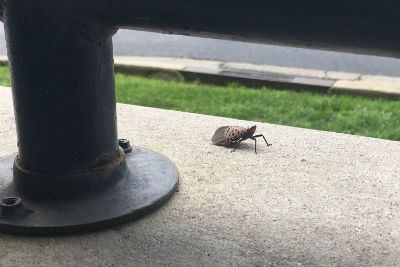
Virginia’s Spotted Lanternfly Quarantine has expanded to include the counties of Albemarle, Augusta, Carroll, Page, Prince William, Rockbridge, Rockingham, Shenandoah, and Wythe and the cities of Buena Vista, Charlottesville, Harrisonburg, Lexington, Lynchburg, Manassas, Manassas Park, Staunton, and Waynesboro.
This quarantine expansion is based on survey data indicating that spotted lanternfly (Lycorma delicatula) has become prevalent in these cities and counties. Frederick, Clarke and Warren counties and the city of Winchester, which were previously included in Virginia’s Spotted Lanternfly Quarantine and will remain so until further notice.
The Virginia Spotted Lanternfly Quarantine was established in 2019 to slow the spread of this invasive insect pest to un-infested areas of the Commonwealth. The quarantine also helps businesses avoid additional restrictions that could be placed on the movement of products from spotted lanternfly infested areas to states and regions where the insect has not been detected.
To slow the spread of the spotted lanternfly, businesses in the quarantined area are required to obtain a permit from VDACS and inspect regulated articles to ensure that the articles do not contain any life stage of the insect. Regulated articles are those which are considered to be a risk for movement of spotted lanternfly to un-infested areas and include, but are not limited to:
- Any life stage of the spotted lanternfly;
- Live or dead trees; nursery stock; green lumber; firewood; logs; perennial plants; garden plants or produce; stumps; branches; mulch; or composted or un-composted chips, bark, or yard waste;
- Outdoor industrial or construction materials or equipment; concrete barriers or structures; stone, quarry material, ornamental stone, or concrete; or construction, landscaping, or remodeling waste;
- Shipping containers, such as wood crates or boxes;
- Outdoor household articles, including recreational vehicles; lawn tractors or mowers; grills; grill or furniture covers; tarps; mobile homes; tile; stone; deck boards; or
- Any equipment, trucks, or vehicles not stored indoors; any means of conveyance utilized for movement of an article; any vehicle; or any trailer, wagon.
Businesses located within the identified quarantine area must follow the requirements of the spotted lanternfly quarantine. One requirement is for businesses to obtain a permit in order to move regulated articles out of the quarantined area. This permit will also allow for the shipment of regulated articles into or through states that have restrictions on the movement of regulated articles from Virginia’s spotted lanternfly quarantine. The permit application is available for download at www.vdacs.virginia.gov/plant-industry-services-spotted-lanternfly.shtml. Online training is required prior to submitting the permit application. There is a fee of $6 per person for the training, but no fee for the permit. Once training is completed, businesses must submit the completed permit application to VDACS at [email protected].
The quarantine also requires residents and visitors in the area to inspect regulated articles for spotted lanternfly and ensure those articles are free from the invasive insect prior to leaving the quarantined area. Residents and visitors are not required to obtain the spotted lanternfly permit, but are strongly encouraged to learn how to identify spotted lanternfly and kill the pest insect when found.
Spotted lanternfly was first found in the U.S. in Pennsylvania in 2014, with Virginia’s first discovery occurring in Frederick County in January 2018. The spotted lanternfly is a native insect of Asia and prefers feeding on Tree of Heaven (Ailanthus altissima), but will also feed on grapes, peaches, apples, maples, walnuts, hops, cucumbers, and basil. Additionally, spotted lanternfly has the potential to be a serious nuisance pest to homeowners when it is present in high numbers.
For more information on the spotted lanternfly quarantine and the spotted lanternfly permit, please email [email protected], call (804) 786-3515, or visit www.vdacs.virginia.gov/plant-industry-services-spotted-lanternfly.shtml.
Support AFP

 Share
Share

Contributors