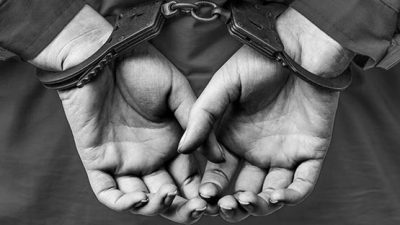
Immigration agents and the public seem to be at odds with enforcement tactics leading to huge safety concerns on both sides.
For the public, masked people in plain clothes and unmarked cars are showing up and grabbing people in courthouse raids, traffic stops or during protests. In many cases, bystanders have asked for identification, and their requests have been ignored leading to increasingly tense situations.
For the agents, there has been considerable pushback from citizens who are trying to ensure that the law is followed and that no one’s rights are taken away. The agents claim that they are putting their lives on the line in these situations.
In both cases, it has led to some extreme actions on both sides of the issue.
Self-appointed vigilantes have attempted to scare immigrants at workplaces and on the street – claiming to be immigration enforcement agents but instead being imposters – using the mask as an opportunity to rob and even rape their victims.
On the flipside, agents are standing by the need to wear masks due to personal information being published on the internet when they are recognized. The tactic of intimidation isn’t just used against ICE agents; it’s been used against legislators, judges and their families.
Time to set ground rules on masks
With thousands of new immigration enforcement agents soon hitting the streets due to the massive influx of cash approved by congressional Republicans, it’s time to set some ground rules, at least according to some democratic legislators.
U.S. Sens. Mark Warner and Tim Kaine (both D-VA) were joined by Sens. Angus King (I-ME), Michael Bennett (D-CO) and John Hickenlooper (D-CO) in introducing a bill to increase transparency, accountability, and safety in immigration law enforcement on Thursday.
The Immigration Enforcement Identification Act would prohibit law enforcement officers from obscuring their faces and require that they clearly display their agency, their name and a unique identifier while conducting immigration enforcement functions, with some commonsense exceptions.
The legislation would also give federal law enforcement agencies the authority to better protect law enforcement officers and their families from doxing.
“Communities around the country have been clear: we should not have armed, masked and unidentified individuals prowling around neighborhoods and snatching people off the street,” said Warner. “This conduct poses a great risk for everyone involved, from the officers themselves to well-intentioned bystanders who may misunderstand the situation.
“Despite the risks, our local police officers, state troopers, national guardsmen, and even members of the armed forces interact with communities every with full-faced transparency – the kind that creates trust and helps hold us all to higher standards.”
Kaine said the bill would require ICE officers and agents to visibly identify themselves as law enforcement.
“In recent months, we’ve seen how some ICE officers and agents – without clear indicia that they are law enforcement and often wearing masks – conducting immigration operations have caused fear and unnecessary danger on our streets and even in sensitive locations like county courthouses,” Kaine said.
“Our bill would also help to protect these officers and agents and their families from doxing and physical harm by giving them the tool to take their personal information such as their home addresses off the internet.”
King said the legislation is simple: “the bad guys wear masks, not law enforcement officers.”
“Our police, first responders and public safety officials play an important role in keeping our communities safe and free from harm, but there also needs to be accountability and transparency in the line of duty,” said King. “The uptick in immigration agents not clearly identifying themselves while on the job has eroded an already diminishing trust with the communities they serve.”
The Department of Homeland Security and Immigration and Custom Enforcement does not have a policy regarding masks. In a letter to Warner and Kaine, Secretary of Homeland Security Kristi Noem said the use of face coverings is at the discretion of each law enforcement officer.
“Given increasing incidents of doxing, threats and violence against law enforcement – including a 500 percent increase in assaults against ICE law enforcement officers – face coverings serve as a reasonable protective measure,” Noem said.
Breaking down the bill
The Immigration Enforcement Identification Act would require that all federal law enforcement and state and local law enforcement partners be identifiable while conducting immigration enforcement functions. This includes federal law enforcement organizations such as ICE, Customs and Border Protection, Border Patrol, Federal Bureau of Investigations, Drug Enforcement Agency, Bureau of Alcohol, Tobacco, and Firearms, U.S. Marshals, as well as state and local partners working with the federal government on immigration enforcement.
This bill also takes important steps to help protect members of law enforcement and their families by providing personal data privacy services for immigration enforcement officers whose official duties may put them at increased risk of being the target of threats, intimidation, harassment, stalking or a similar action.
These services can help an individual monitor their sensitive personal information – including their personal phone number, home address or other information that could be used to commit crimes against members of law enforcement – and remove it from websites, platforms, and data brokers.
This legislation has the support of the Law Enforcement Action Partnership, Immigration Hub, American Immigration Lawyers Association and Service Employees International Union.
“This legislation strikes the right balance between transparency and officer safety,” said Law Enforcement Action Partnership Executive Director Diane Goldstein. “Operating with clear identification – name, agency, and badge number – is standard practice for accountability across policing and the military, and there is no reason federal immigration officers should be exempt.”
“No one – White, Black, Brown, AAPI or Immigrant – should live in fear of masked agents snatching people off of the streets without identifying themselves. Families often don’t know where their loved ones are being held or who may be next,” said SEIU Secretary Treasurer Rocio Saenz.
“Our communities need safety and trust, not terror and chaos.”
Related stories
- Chesterfield: McClellan visits site of ICE courthouse raids, demands transparency
- McClellan demands answers, wants DHS, ICE to cease courthouse raids
- Unmask ICE: Democrats demand federal agents quit hiding behind masks
- Harrisonburg: Immigrants rounded up by ICE were covered in dirt, appeared scared
- Plain clothes, masks, unmarked vehicles: ICE agents target immigrants in Virginia
Support AFP



 Share
Share

Crystal Graham