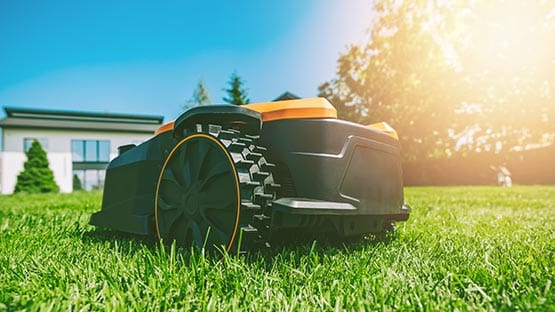
Robotic lawn mowers have become increasingly popular across Australia, offering homeowners a convenient and efficient way to maintain their lawns. These automated machines keep grass consistently trimmed with minimal effort, making them ideal for busy households and modern outdoor spaces.
However, one common concern among users is that their robotic lawn mower is cutting the grass too short. Scalping your lawn can weaken turf, expose soil to harsh sun and encourage weeds to take hold — particularly in Australia’s hot and dry climate. If you have noticed your grass looking stressed or uneven, it may be time to adjust your setup.
This guide explains how to stop a robotic lawn mower from cutting too short and how to maintain a healthy, resilient lawn year-round.
Understand the ideal cutting height for your grass type
The first step in solving the issue is knowing the correct mowing height for your specific turf variety. In Australia, common lawn types include Buffalo, Kikuyu, Couch and Zoysia, each with its own optimal cutting range.
As a general rule:
- Buffalo grass performs best at approximately 30–50mm
- Kikuyu thrives between 20–40mm
- Couch grass prefers 15–30mm
- Zoysia typically suits 20–40mm
Cutting below these ranges can stress the grass, reduce root depth and leave your lawn vulnerable to heat damage. Before adjusting your robotic mower, confirm the recommended height for your lawn variety.
Adjust the cutting height settings
Most robotic lawn mowers allow users to manually adjust the cutting height. This adjustment is typically made via a dial on the mower body or through a companion mobile app.
If your lawn appears scalped or patchy:
- Increase the cutting height incrementally rather than dramatically.
- Monitor the lawn’s recovery over one to two weeks.
- Avoid lowering the height again until the grass is visibly healthy and thick.
Remember, robotic mowers are designed to trim frequently and lightly. Unlike traditional mowers that remove larger amounts of grass in a single pass, robotic models maintain consistent length through regular cutting cycles.
Check for uneven ground and lawn scalping
In many cases, the issue is not the mower’s settings but the lawn’s surface. Uneven ground, dips or exposed tree roots can cause the mower to cut lower in certain areas, resulting in scalping.
Walk your lawn and inspect for:
- Low patches or depressions
- Soil erosion
- Raised sprinkler heads
- Buried debris or stones
Addressing these irregularities by topdressing or levelling the lawn can significantly reduce uneven cutting. In Australia’s clay-heavy soils, seasonal movement can also create subtle dips that affect mowing consistency.
Review the mowing schedule
Overly frequent mowing at a low height can weaken turf, especially during summer. While robotic lawn mowers are designed for daily or near-daily operation, you may need to adjust the schedule depending on growth rate and seasonal conditions.
During peak growing seasons, frequent light trims are beneficial. However, in cooler months or during drought conditions, reducing mowing frequency can prevent stress.
If your mower operates every day, consider programming rest days to allow the lawn to recover. Observing how your turf responds will help you find the ideal balance.
Apply the one-third rule
A well-known lawn care principle is the “one-third rule”: never remove more than one-third of the grass blade height at a time. Although robotic mowers usually trim small amounts, this rule still applies when adjusting settings.
If your lawn has grown longer than usual due to rain or holiday absence, avoid setting the mower to a very low height to compensate. Instead, gradually reduce the height over multiple mowing cycles.
This approach promotes deeper root systems and thicker turf coverage — both essential for Australian lawns exposed to intense sun.
Ensure blades are sharp and properly maintained
Blunt or damaged blades can tear grass rather than cut it cleanly. Torn grass tips lose moisture more rapidly and can appear brown or dry, giving the impression that the mower is cutting too short.
Regularly inspect and replace blades according to the manufacturer’s guidelines. In Australia, where sandy soils are common in coastal regions, blades may dull more quickly due to abrasive conditions.
A clean, precise cut supports healthy regrowth and improves overall lawn appearance.
Consider seasonal height adjustments
Grass height requirements change throughout the year. In summer, allowing grass to grow slightly longer provides shade to the soil, reducing evaporation and protecting roots from heat stress.
In winter, growth slows, and slightly lower settings may be acceptable — but never excessively short. Seasonal adjustments are particularly important in regions with extreme temperatures, such as parts of Queensland, Western Australia and inland New South Wales.
Raising your mower’s cutting height by even 5–10mm during hotter months can significantly improve turf resilience.
Reassess boundary wire placement
For robotic mowers that rely on boundary wires, incorrect installation may cause the mower to travel over lawn edges or uneven areas repeatedly. If the wire is placed too close to garden beds, paving or sloped edges, the mower may tilt slightly, resulting in uneven cuts.
Inspect the boundary wire layout and adjust if necessary to ensure stable, level mowing paths. Proper installation contributes to consistent cutting performance.
Improve lawn health through proper care
A healthy lawn is more forgiving when it comes to mowing.
To strengthen your turf:
- Water deeply but infrequently to encourage strong roots
- Fertilize appropriately based on soil and grass type
- Aerate compacted soil to improve drainage
- Apply topdressing to level uneven areas
When grass is dense and robust, minor mowing inconsistencies are less noticeable. Conversely, thin or stressed lawns show scalping more easily.
When to seek professional advice
If you have adjusted height settings, maintained blades and levelled your lawn yet the problem persists, it may be worth consulting a lawn care professional. Soil health issues, pest infestations or underlying turf diseases can sometimes be mistaken for mowing problems.
An expert assessment can identify underlying causes and provide tailored solutions for your region and grass type.
Final thoughts
Stopping a robotic lawn mower from cutting too short involves more than simply adjusting a dial. It requires understanding your grass variety, maintaining your equipment and responding to seasonal conditions.
With careful calibration, proper lawn preparation and routine maintenance, robotic mowers can deliver consistently healthy results. In Australia’s diverse climate, a slightly higher cutting height often promotes stronger roots, improved drought tolerance and a more vibrant lawn overall.
By making small, informed adjustments, you can protect your turf investment and enjoy the convenience of automated lawn care without compromising grass health.
This content is provided for informational purposes only and is not a substitute for professional advice. AFP editorial staff were not involved in the creation of this content.




 Share
Share