If one of us has a bad headache, a bad toothache, we take an aspirin and let it work its magic. But if you’re a jail inmate, you’re pretty much at the mercy of corrections officers and jail nurses to help you out.
“At Middle River, in practice, if one comes down with a migraine or a toothache or another sudden-onset medical, one cannot receive immediate palliative care in the form of Advil or Tylenol. One must place a ‘sick call’ and wait from days to weeks to see a nurse or ‘provider,’” a recent former Middle River Regional Jail inmate who reached out to me last week told me.
Doesn’t seem right, was my initial gut reaction.
Now, admittedly, I haven’t paid a lot of attention over the many years that I’ve been in journalism to what’s going on in our local jails and prisons.
I doubt you have, either.
And I’m imagining here that at least some of you who clicked on the headline might be thinking to yourselves, What’s the issue here, they’re jail inmates, they’re in there because they did something wrong.
That’s not how justice works, would be my reply.
The incarceration is the punishment.
While inmates are in custody, they have the same basic rights that those of us outside do to be kept safe and secure, to be fed, and to have access to healthcare.
Healthcare at MRRJ

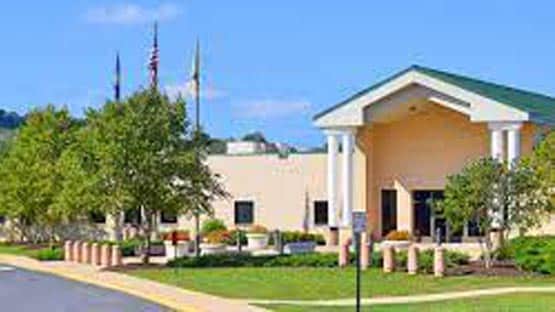
To try to get to the bottom of things on this, I reached out to MRRJ, and was put in touch with Regina Chestnut, the medical director at the jail, and Tony Heflin, the deputy superintendent.
When I got them on the phone, both disputed the notion that inmates are walking around with headaches and toothaches for days or weeks.
But, I dunno, their answers came across like offering wiggle room for interpretation.
ICYMI
- Female inmate dead at Middle River Regional Jail after medical emergency
- Authorities confirm ID in Middle River Regional Jail apparent suicide
- Middle River Regional Jail unequipped to prevent unnecessary deaths
“Normally, we will tell them to put in for a sick call. If there is something that’s a true emergency, of course, we see it right away. We’re not going to put an emergency off. But yeah, a lot of times they will be told, you know, to put in for a sick call,” said Chestnut, who oversees a staff of 16 nurses at the jail.
See the wiggle room there?
The recent former inmate who got in touch with me about this used almost identical language to describe to me the rationale given to inmates.
“The gap seems to be, at Middle River, around the definition of ‘emergency,’” the recent former inmate said. “As trivial as this seems, it is important. The medical personnel at the jail have apparently decided ‘emergency’ care is the same as ‘life-threatening’ care – while there is rarely a doctor there to provide such a diagnosis. ‘Emergent’ – or sudden, unanticipated – treatment is disregarded at Middle River, and if you have a medical crisis that does not seem to threaten your life, you are told to wait until you may be seen.”
Heflin explained the approach toward ensuring inmate health – nurses make passes to every pod in the jail three times a day, and officers trained in CPR and first aid make two passes a day.
Medical doctors are on-site twice a week, and a dentist is on the premises once a month.

“All of us outside of the secure facility have the right to go to EmergiCare at any time we feel the need and be seen. But underneath of an emergency that you go to the ER or EmergiCare for, most of us don’t have access to a doctor that’s going to answer that question as often as the inmates have in a jail,” Heflin said.
He makes it sound like a luxury, but this is actually just the jail following state law.
“We have staff that’s in that pod, in every pod, and we have nurses that’s around three times a day, and if there’s an issue, the officer will bring, if it’s more severe, maybe not quite to the hospital, the officers will either bring the inmate to the medical department or call for a nurse to come to the housing area,” Heflin said.
I tried to get at the issue raised by my recent former inmate contact about the definition of “emergency,” but I kept getting the wiggle room.
Chestnut stressed that inmates who put in for sick call are “usually seen within 24 hours or less” – I’m not a fan of “usually,” but that may be just me – and that inmates are allowed to keep Tylenol and Motrin in their housing area that they’re allowed to purchase for themselves in the jail’s commissary.
My recent former inmate contact had already told me about that one – and that an issue with the commissary pain relievers is that the packaging and shipment too often causes the items to break and leak.
“And telling indigent inmates to suffer because they cannot purchase Tylenol from the commissary creates a two-tiered system,” the recent former inmate said.
The bigger issue

I’m not trying to bust anybody’s chops here.
MRRJ is dramatically overcrowded, which is something we’ve been dealing with here locally for decades.
I remember, back in the late 1990s, when I was just a rookie reporter, the effort among our local governments to address overcrowding at the old Augusta County Jail, which was located in Downtown Staunton in the Augusta County General District Court building, with a capacity at 90 inmates, and often housing more than 200 at any given time.
The solution was MRRJ, which opened in 2006, has a rated capacity of 396, and according to Heflin, as of when we talked last week, was housing in the vicinity of 600 inmates – and that’s down from the average daily population of 932 that is on file for fiscal-year 2019.
ICYMI
Something else is going on when our local jail population is up 200 percent in 20 years, against a local population that has grown much more modestly, around 25 percent.
Kinda feels like we built a bigger jail, and decided, Hey, we have more space, maybe we should put more people in jail now.
That’s another story for another day – particularly when I just took a gander at the last three financial statements on file for MRRJ, and they show the jail turning profits: $3.2 million in FY 2021, $5.8 million in FY 2022, $5.9 million in FY 2023.
Public records
- Middle River Regional Jail FY 2021 financial statement
- Middle River Regional Jail FY 2022 financial statement
- Middle River Regional Jail FY 2023 financial statement
We’re going to need to figure out why that is.
Are we really putting more people in jail and turning a profit on the jail?
I’ll bet that the answer I get is runaround government jargon, but anyway.
In the meantime, I think we can afford to give inmates with headaches and toothaches a pain reliever without making them have to wait 24 hours, a few days, whatever it turns out to be there.
Support AFP


 Share
Share

Chris Graham