
Meteorologists are feeling more confident that the Shenandoah Valley will see six inches of snow or more with the weather beginning on Saturday morning.
“We pretty much have the Shenandoah Valley on the border of six to 12 inches, and 12-18, which will be mainly in the mountains,” said Tom Kines, senior meteorologist with AccuWeather.
In the Appalachians, which includes Wise, Dickenson and Buchanan counties, more than two feet of snow is possible, according to AccuWeather.
A thick glaze of ice will blanket Texas to the Carolinas, weighing down trees and power lines.
More than 4,000 flight cancellations are predicted nationwide, and major highways will likely be closed for days due to snow and ice.
“This storm will bring travel in the south to a standstill due to snow and ice,” said Kines. “Major airports like Dallas and Atlanta are going to have major problems.”
ICYMI
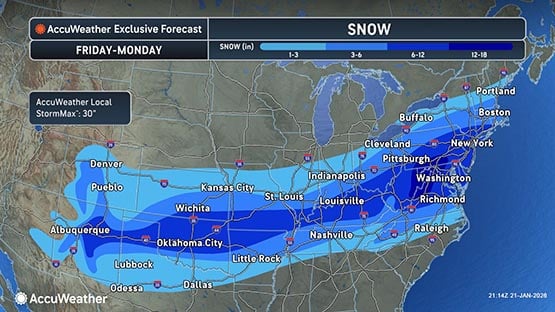
The storm is shaping up to be the most impactful storm of the winter so far, and with temperatures likely to drop sharply after the snow, cleanup may take weeks in some areas.
“The risk of ice, snow and frigid temperatures is a dangerous combination,” said Jonathan Porter, chief meteorologist with AccuWeather. “People traveling during this storm need to be prepared with emergency supplies in case they are stuck or stranded for hours in freezing and dangerous weather.
“People should be prepared for the risk of losing electricity and heat for days, possibly up to a week or longer in the hardest hit areas. The combination of ice, snow and bitter cold will likely slow efforts to repair downed power lines and clear the roads after the storm.”
The Virginia Department of Health recommends making preparations now to ensure your family is safe and warm during the storm.
“Being prepared for winter weather makes all the difference when a storm hits,” said Xavier Crockett, health director for the Central Shenandoah Health District. “We’re encouraging everyone to have emergency supplies at home, and to stay off the roads if they can, especially in our more rural counties.”
Before the storm
- Make sure you have an emergency supply kit on hand.
- Keep an emergency kit for your car.
- Organize and protect your prescriptions, over-the-counter drugs, home-use medical devices and vitamins.
- Talk to your doctor or pharmacist about how you can create an emergency supply of medicines.
- Check your smoke and carbon monoxide detectors.
- Replenish fuel for your car and heating sources.
- Weatherproof your home by insulating exposed pipes and caulking and weather strip doors and windows.
During and after the storm
- Bring your pets indoors and ensure they have water.
- Stay indoors and limit your exposure to the cold.
- Properly ventilate emergency heat sources.
- Keep generators outside at least 20 feet from your home.
- Check on neighbors and family.
If you go outside
- Take the following precautions to stay safe and prevent frostbite and hypothermia:
- Wear proper footwear for traction. Take slow, short steps.
- Dress warmly and in layers. Make sure you cover your head, fingers and toes.
- Avoid getting wet and change out of wet clothes as soon as possible.
- Stay hydrated. Drink warm beverages.
- Take frequent breaks if shoveling snow or working outdoors.
Stay informed
Make sure you understand the warnings, watches and advisories and have multiple ways to receive alerts.
- Follow local emergency management and weather service alerts.
- Avoid unnecessary travel during the storm.
- Check on vulnerable individuals and ensure adequate heating supplies.
- Prepare your vehicle before you travel.
- Dial 911 or #77 if your vehicle becomes disabled or involved in a crash.
- Be prepared for extended response times from emergency services.
Related stories
- UVA Basketball: Monitoring the weather for Saturday, with UNC, Tony Bennett on the schedule
- DEQ: Drought conditions persist across majority of Virginia, including Shenandoah Valley



 Share
Share

Crystal Graham