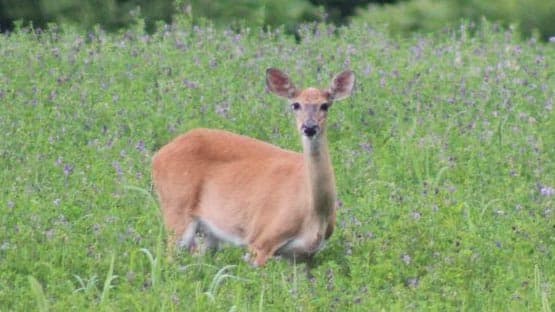
Dear EarthTalk: How are recent heat waves around the world affecting wildlife? – T.C., via email
It would be hard to ignore the heat waves that have plagued North America, Europe and Asia in recent months. If you did not experience them yourself, chances are that you read about them, or their effects. Abnormal thermal extremes like this have become more regular, intense and long-lasting over the last few decades as global temperatures have risen. In addition to their severe consequences for vulnerable human communities, heat waves have a drastic effect on many wildlife populations. While there is no one single consequence felt by all wildlife populations, heat waves universally disrupt the ecosystems where they occur, which, due to the interconnectedness of biodiversity, has implications for all living things.
Heat waves are different from the rising global average temperature. They are the peak, extreme, temperatures that happen for a finite duration of time. If the global average temperature warms by 4.4 C (the highest emission scenario projected by the Intergovernmental Panel on Climate Change (IPCC), 41 percent of species will experience extreme heat waves. But if global average temperature maxes out at 1.8 C of warming (the IPCC identifies 1.5C of warming to be the lowest emissions scenario), only 6.1 percent of species will experience extreme heat waves.
In any circumstance, the change in wellbeing or population size of one species in a local area sets off a ripple effect in that ecosystem. The secondary consequences of heat waves’ effect on oyster populations are a case in point. Heat waves reduce oyster population size as oysters are a stationary species and cannot move from uninhabitable water temperatures. When at a healthy population size, oysters limit algal bloom and are thus key to ensuring consistent oxygen levels in bodies of water. Therefore, experts warn of consequences for other marine animals in those bodies of water now faced with reduced oxygen levels.
Some wildlife populations, particularly insects, have actually increased in size due to heat waves over the last few decades. The length of mosquito season has increased in some parts of the world by 30 days or more over the last four decades, spiking reproduction rates and therefore population size. However, for some regions in the Southern hemisphere that are already very hot, increased temperature and dryness has actually shortened mosquito season, prompting a dip in reproduction rates.
In addition to mass mortality events, certain wildlife populations have been forced to migrate or change existing migration patterns. In the ocean and other bodies of water, the phenomenon that occurs when species migrate due to temporary changes in ocean surface temperatures caused by marine heatwaves is called thermal displacement. Some groups of non-stationary species like whales or sea turtles have moved tens of thousands of kilometers to reach a new region at their preferred temperature. This changes the food chain and equilibrium of the ecosystem they have moved to and that they have moved from.
Ultimately, global average temperature rise will have many of the same effects on wildlife populations, but recent heat waves have had large effects in a small fraction of the time. Limiting global average temperature rise will limit the extremity of heat waves and reduce potential consequences for wildlife.
CONTACTS: Mitigation pathways compatible with 1.5°C in the context of sustainable development, .ipcc.ch/sr15/chapter/chapter-2/; With Temperatures Rising, Can Animals Survive the Heat Stress? e360.yale.edu/features/with-temperatures-rising-can-animals-survive-the-heat-stress.
EarthTalk® is produced by Roddy Scheer & Doug Moss for the 501(c)3 nonprofit EarthTalk. See more at emagazine.com. To donate, visit earthtalk.org. Send questions to: [email protected].
Support AFP



 Share
Share