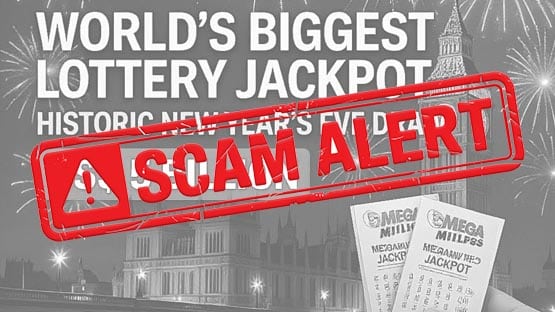
The Virginia Lottery is warning the public of scammers promoting a special international drawing for Mega Millions, using the game’s logo to promote the fake scam.
Lottery scams are common where scammers convince consumers they are entering a legitimate game or they’ve won a non-existent prize.
In many cases, the criminals contact intended victims and say they’ve won a large prize. They may also trick people into buying “tickets” for a fake drawing. They might falsely identify themselves as being with Mega Millions or an actual state lottery.
“These criminals use a lot of tricks to create the appearance of legitimacy,” said Khalid Jones, executive director of the Virginia Lottery and Mega Millions lead director. “These scams all have one thing in common: They try to trick you into getting your money or personal information by claiming that you have won a large lottery prize.”
Scammers may also impersonate an actual lottery game such as Mega Millions, claiming to have a huge “special drawing” that may not actually exist. Some scammers have lifted logos, photos and language from the Mega Millions website to make themselves look legitimate using terms like global edition, breaking news, open worldwide and worldwide draw.
If the person is fooled into thinking he or she has won a prize, the crooks may try to get the person to click malicious links or wire money for “taxes” or “fees.” They may also try to get the victim to provide them with a bank account number, which they will then clean out.
Another trick is to send the winner a bogus “check” and ask the winner to send money back to cover expenses. It is only after victims have sent their own money that they discover the check they received is counterfeit.
ICYMI
“It can be an effective lure to tell someone they have won a large prize when in fact that is not the case,” said Jones. “If someone tries to tell you you’ve won a lottery that you never played, it’s most likely a scam.”
The Federal Trade Commission has more information on fake lottery and other scams online. To file a complaint or get more information, call 1-877-382-4357. If you have been the victim of a scam, contact law enforcement.
Tips on avoiding scams
- If you are told you have won a lottery that you never played, be suspicious. You can’t win a legitimate lottery if you didn’t buy a ticket.
- If you see a promotion or a “special drawing” posted on social media, confirm the origin first. It’s a good idea to go to the official website, like Mega Millions, Powerball or the state lottery site.
- Be very careful about clicking links that say they go to a “special drawing” or promotion. The links could be malicious.
- No real lottery tells winners to put up their own money in order to collect a prize they have already won. If you have to pay a fee to collect your winnings, you haven’t won.
- If someone calls or texts to tell you you’ve won a big prize, look at the area code. If it is from a foreign country, that is a red flag. Also, be aware that some con artists use technology to disguise their area code: although it may look like they’re calling from your area, they could be anywhere in the world.
- Be suspicious if a message or social media posting contains misspellings or poor grammar.
- If you are told that you need to keep your “win” confidential, be suspicious.
- Just because a real lottery is mentioned does not necessarily make it a real prize. Someone may be using the lottery’s name or logo without permission.
- Never give out personal information or send money unless you verify the company’s or solicitor’s legitimacy.
- If they offer to wire the “winnings” directly into your bank account, do not give them your bank account information.
- If you are told that you can “verify” the prize by calling a number or clicking a link, that may be part of the scam. Instead, look up the contact information of the lottery or organization on your own.
- If you are talking or chatting with someone you think is trying to scam you, hang up immediately. If you try to engage them in conversation or try to “trip them up,” your name and contact information could end up on a list that’s shared with other scammers.
Related stories
- Augusta County: Got a call about missed jury duty? Police warn it’s a scam
- Victims in text-messaging schemes on the rise, $470 million lost to scams last year
- Local police, Virginia DMV warn of traffic ticket text scam making the rounds
- Got a text about an overdue toll charge? It’s likely a scam, according to the DMV
- From romance scams to attempting to steal Graceland, fraudster pleads guilty
- Virginia Beach: 12-year-old died from accidental drowning, ransom requests were a scam
- Virginia State Police: Trooper Mitchell on the line? It’s likely a scam

 Share
Share

Crystal Graham