TW: Suicide
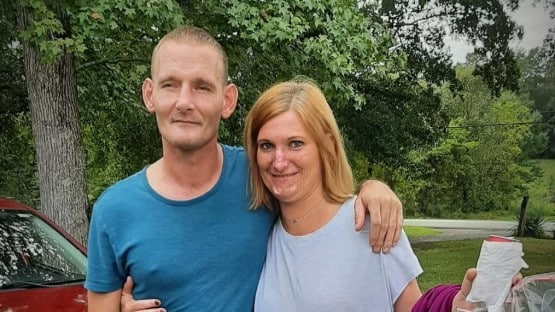
The Stafford County man who died by suicide on Sunday while in custody at the Rappahannock Regional Jail never had a chance.
“He said, ‘Sissy, I didn’t do this, but men don’t beat rape charges. I’m going to die in jail,’” said Elizabeth Self, whose brother, Christopher Lee Franklin, 40, was awaiting an Aug. 19 jury trial on charges related to the alleged Jan. 17 rape of an ex-girlfriend in Stafford.
ICYMI
Franklin maintained his innocence to his family, in daily phone calls in which he also described the brutal conditions in the jail, which opened in 2000 and had an average daily inmate population in 2025 at 1,118, according to information from Uncage RRJ, a nonprofit that tells us that nine people died in custody at the jail between 2022 and 2024.
I tracked the sourcing on that figure down to a document from Virginia.gov entitled Board of Local and Regional Jails Calendar Year 2024 Annual Report of Jail Death Reviews; per that report, the nine inmate deaths at RRJ in the 2022-2024 period was the second-highest among local jails in Virginia in that period – Riverside Regional Jail, another RRJ, if you will, located in Prince George, reported 12 deaths in the 2022-2024 period.
The total statewide in the 2022-2024 reporting period: 167.
For Franklin, who had no prior criminal history, and a documented history of mental health struggles – the U.S. Marine veteran suffered from depression, PTSD and anxiety – his time in jail leading up to his hearing was made infinitely more difficult by the jail staff’s lack of attention to basic details regarding his mental well-being.
Self said her brother was not given medications for treatment of his mental health conditions, and was also denied medication that had been prescribed related to eye surgery from before his incarceration.
Compounding these issues, Franklin could not eat the food he was served, his sister said, because he did not have teeth.
“We spoke with Chris on the phone every day, walked him through breathing techniques to help calm his anxiety, through grounding exercises to steady the panic attacks that would come and last for hours, telling him to hang on, giving him encouragement,” Self said.
The family, 10 hours away in Alabama, where Franklin grew up before joining the Marines, and later working in Northern Virginia as an FBI contractor with Top Secret clearance, was looking forward to next month’s jury trial as a chance for their brother to clear his name.
But.
This is where reality kicks in.
Franklin, without the financial means to hire an attorney on his own, was appointed a public defender, and according to Self, her brother was pressured by his appointed counsel to waive his right to a preliminary hearing, which was Step 1 in where things started to go south in his story.
When Self told me this, 30 years of covering similar stories had me thinking, public defenders – overworked, dramatically underpaid – are incentivized to seek plea deals for their clients.
Self detailed for me the facts of the case, from her brother’s perspective – Franklin and his ex were still dating as of Christmas, three weeks before the alleged sexual assault; she had called him the day of the incident to ask that he pick up his dog; the sex between Franklin and his ex-girlfriend was consensual; recent shoulder surgery had left Franklin unable to hold up his own body weight.
Those facts, laid out by an advocate working hard on your behalf, might give you a 50/50 shot of convincing a jury of your innocence.
And certainly, if Franklin was of means to hire a high-dollar attorney, who would line up a medical expert to compile a report on the effects of the shoulder surgery on Franklin’s physical state, and a private investigator to interview mutual friends, neighbors, family members, to try to present a more complete picture of whatever it was that happened on Jan. 17, your chances go up exponentially.
The prosecutor’s office has every resource in the world at its beck and call to make its case.
But the deck is stacked against you, if you’re Christopher Franklin, and you’re relying on a public defender with no budget to take on the full force of the Commonwealth of Virginia.
As much as his family was confident that he’d walk free after his day in court, Franklin clearly saw the writing on the wall, as evidenced by his observation that he was “going to die in jail.”
He was looking at the possibility of life in prison, and because the charges including brandishing a firearm, the best-case scenario was in the range of 40 years, which might as well be a life sentence.
Acceptance of this as your fate would test the mettle of even the most steely among us, from a mental health perspective.
For Christoper Franklin, dealing with mental and physical issues from his Marine service, without access to the meds that helped him function, without access to means that could provide for a proper legal defense, a possible life sentence became a de facto death sentence.

If you or someone you know needs support now, call or text 988 or chat at 988lifeline.org


 Share
Share

Chris Graham