The case involving a man who murdered and sexually assaulted four teenagers at an Austin, Texas, yogurt shop in 1991, may finally be solved, after advanced testing points to a dead serial killer.
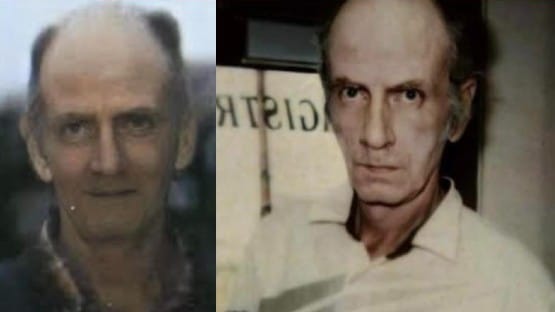
More than three decades after the murders, and just one month after a HBO docuseries aired, a break came in the case implicating serial killer Robert Eugene Brashers in the murders.
The horrid details of the homicide and the decades-long investigation were recently shared in a four-episode documentary series on HBO titled “The Yogurt Shop Murders.”
The series took viewers inside police interrogations and into the lives of families who were forever scarred by the loss of the young girls. The series also interviewed police investigators who remained haunted by the case and frustrated that it remained unsolved … until it wasn’t.
Inside the yogurt store murders
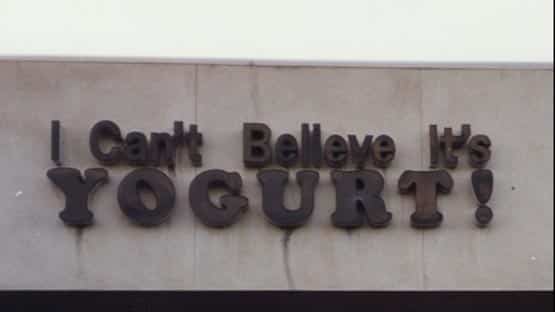
Four teenagers – Amy Ayers, 13, Jennifer Harbison, 17, Sarah Harbison, 15, and Eliza Thomas, 17 – were killed some time after the I Can’t Believe It’s Yogurt store in Texas closed for the night on Dec. 6, 1991.
The four girls were tied up with their own clothing, gagged and left nude. They were shot point blank in the head, and there was evidence of sexual assault, according to investigators.
The ICBIY in the Austin strip mall was set on fire before the killer fled the scene.
In 1999, four local boys were arrested in connection to the murders, and two confessed under duress during the grueling police interviews shared in the series. Despite no physical evidence linking the young men to the crime, two were tried in court, and one was sentenced to death, the other to life in prison.
In 2008, DNA evidence from the crime scene cleared all four men of the murders, and all charges were dropped, taking investigators back to square one.
In the concluding episode of the HBO series, a cold case detective began to review the evidence again, hoping recent advancements in testing could help police solve the quadruple murder once and for all.
ICBIY flashbacks | Connection to the Valley
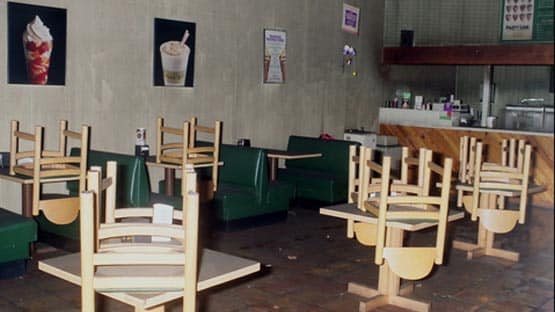
As it turns out, there were two ICBIY stores in the Valley, one in Staunton and another in Waynesboro. Both were in strip malls and owned by the same Staunton couple.
I worked at the ICBIY stores from 1993 to 1995. My older sister worked there from 1989 to 1991. We’d never heard of the murders in Austin until the HBO series debuted.
I primarily worked at the Staunton store, located on Greenville Avenue, across the street from the Staunton Mall, next door to a Subway.
On most nights, there were two of us on the schedule to work, and almost all of the night-shift employees were high-school students.
After we locked the front door at closing, we’d count the money and prepare the deposit for the bank, set up bank bag with cash for whoever opened the store the next day, put away toppings, wash dishes, clean bathrooms and usually sweep and mop the floors.
Our closing routine usually took about 30 to 45 minutes, and then we followed each other to drop the bank deposit in an overnight slot at a nearby bank. It was the kind that you couldn’t drive up to, so one of us had to get out of our car to drop it in.
I remember every night closing up, and especially on that drive to the bank, feeling like we’d be any easy target for a robbery, or worse.
Seeing the video footage and photos from the crime scene in Austin matched up almost identically with my memories of the two Valley ICBIY locations. Chairs were up on tables indicating that the floors had likely been swept and mopped for the night. They had a back door in Austin just like we did in Staunton. We usually used it to take the trash out and sometimes we left that way when our shift was over.
Those young girls were likely only minutes from leaving when Brashers showed up, armed with two pistols.
Back to Austin
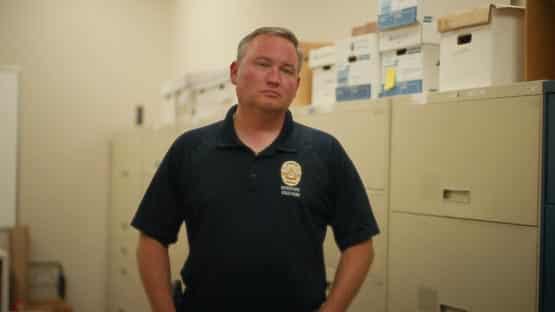
Brashers, the serial killer now suspected in the murders through advanced DNA and ballistics testing, died of a self-inflicted gunshot wound in 1999 after a standoff with police in Missouri.
DNA evidence has since linked him to other assaults and murders across the country.
“This is one of the most devastating and haunting cases in this city’s history,” Lisa Davis, the City of Austin’s police chief, said at a news conference last week announcing the breakthrough.
Among the evidence:
- DNA found under the nail of one girl matched a profile of Brashers
- DNA found in three sexual assault kits in the Austin case matched the profile of Brashers
- At other crime scenes, Brashers also tied the victims up with their own clothing
- A shell casing from one of the murder weapons was found in the floor drain of the ICBIY; the casing also linked Brashers to the quadruple homicide
“I’m sorry that it took 34 years for us to get here, but we’re here now,” said Austin detective Daniel Jackson.
The DNA profile also links Brashers to other crimes: the rape of a 14-year-old girl in Tennessee and the shooting of a mother and daughter in Missouri. Investigators believe he will eventually be linked to other murders and assaults throughout the country.
Brashers served four years in prison after he shot a woman in Florida who allegedly dismissed his sexual advances; he was out on parole in 1989. The multi-state murder-and-assault spree took place from 1990 to 1998.
The docuseries may have played a role in finally solving the murders, putting additional pressure on investigators to find answers.
While the case technically remains open, the evidence clearly points to Brashers.
“Austin lost its innocence the night those young souls became victims,” Kirk Watson, mayor of Austin, said at the news conference. “Today was a long time coming.”
Trailer: ‘The Yogurt Shop Murders’
Support AFP



 Share
Share

Crystal Graham