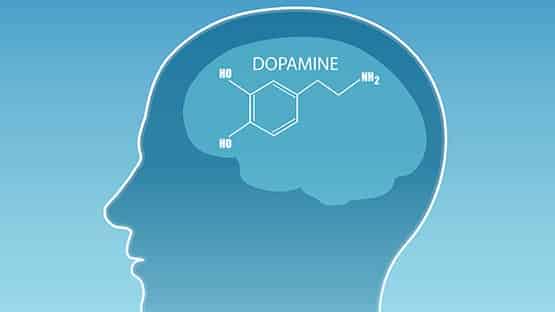
Every time someone places a bet, a single brain chemical is quietly running the show, shaping the decision long before any money changes hands and long after the result is known. Dopamine is popularly cast as the molecule of pleasure, yet that label is misleading, because its real job is to drive anticipation, learning and the restless urge for more.
Following one wager from the first flicker of temptation to the impulse to go again reveals exactly how it steers behavior at every stage.
The pull of the cue
The story starts before any stake is placed, in the moment a cue appears. Through repeated experience the brain learns which signals tend to precede a reward, and dopamine gradually shifts from the win itself onto whatever reliably comes first — a flashing light, a familiar jingle or the sight of a tempting promotion.
This is why the build-up so often feels more charged than the payout, since the chemical spike arrives in anticipation rather than on arrival. The same effect can occur before a player even places a wager, as simply completing a Stay casino login and seeing the available promotions can create a sense of anticipation that primes the brain to engage long before any real money is at stake.
Casino settings are deliberately dense with such triggers, and the most common cues that prime that anticipatory surge include:
- Flashing lights and color — visual signals the brain has tied to past wins.
- Distinctive sounds — jingles and chimes that announce action and reward.
- Free-spin and bonus prompts — offers that promise something good before any risk.
- The spin or deal animation — the brief, suspended moment before an outcome lands.
- Personalized reminders — notifications that pull a lapsed player back toward the cue.
By the time a person consciously decides to play, much of the groundwork has already been laid, because the brain has quietly been primed to expect something good. That priming is subtle and largely automatic, which is what makes it so effective, since the decision feels freely chosen even though the stage was set in advance.
Betting on uncertainty
Once a bet is actually placed, dopamine responds not to the prize itself but to the odds of getting it, and here the brain behaves in a surprising way. Laboratory work by Wolfram Schultz and colleagues showed that anticipatory dopamine does not simply rise with better odds; instead it peaks when the outcome is most uncertain.
In their experiments, dopamine activity climbed to its maximum when a reward was a fifty-fifty proposition, rather than when it was guaranteed. Pure chance, in other words, is the most potent setting of all, and the pattern looks roughly like this:
| Chance of winning | Anticipatory dopamine response |
| 0% (no chance) | Minimal — there is nothing to expect |
| 25% (unlikely) | Moderate and rising |
| 50% (pure uncertainty) | Peak — the strongest anticipatory signal |
| 75% (likely) | Moderate, beginning to ease off |
| 100% (guaranteed) | Low — certainty removes the suspense |
Gambling lives almost entirely in that high-uncertainty zone, which is part of why a coin-flip wager can feel more gripping than a near-certain one. The less predictable the result, the harder the anticipation circuitry works to brace for it. Game designers grasp this instinctively, which is why so many products keep outcomes balanced on a knife-edge rather than offering the comfort of near-certain returns.
Prediction error in action
When the outcome finally lands, dopamine switches from anticipation to judgement, comparing what actually happened against what was expected. Schultz called this the reward prediction error, and it follows a clear rule: the chemical surges when a reward beats expectations, stays flat when a win was fully predicted, and dips when an expected reward fails to arrive.
A genuine, unexpected win therefore delivers the biggest hit, while a result the player already saw coming barely registers at all. A loss, by contrast, produces a measurable dip, a small neural disappointment that the brain is then wired to want to correct. That urge to cancel the dip is the seed of chasing, since betting again offers the quickest apparent route back to a positive signal.
Near misses are the cunning exception, because an outcome that falls just short of a win — two jackpot symbols and a third agonizingly close — fires the system almost as though a real win had landed. The brain treats that ‘almost’ as encouraging information, which is exactly why such moments feel like progress rather than plain failure.
Why one is never enough
If a single dopamine hit were truly satisfying, gambling would be easy to walk away from, yet the chemistry pushes hard in the opposite direction. The drive to place another bet is built into how the system adapts over time.
Wanting is not the same as liking
Psychologists Terry Robinson and Kent Berridge drew a sharp line between two things dopamine is often assumed to merge: wanting and liking. Dopamine fuels wanting — the craving and the pull toward action — but it does not by itself create enjoyment, which means a person can feel driven to keep playing without taking much real pleasure in it.
Worse, the phasic dopamine response fades as an experience repeats, so the same bet delivers a slightly smaller jolt each time. The brain’s natural answer is to chase a stronger signal, often through bigger stakes or longer sessions.
Together these forces produce a familiar set of patterns:
- Diminishing returns — each win satisfies a little less than the one before.
- Rising stakes — larger bets are used to chase the fading size of the hit.
- Craving without enjoyment — the urge to continue outlasts any genuine fun.
- Cue sensitivity — triggers in the environment spark fresh urges to play.
- Chasing — a loss creates pressure to bet again and cancel out the dip.
None of this requires a person to be reckless or naive, since it stems from ordinary brain chemistry doing precisely what it evolved to do. The system is simply being used in an environment designed to keep it firing.
When the system breaks: Lessons from the clinic
The clearest proof that dopamine drives gambling comes from medicine, in an unexpected and sobering form. Patients with Parkinson’s disease are often treated with dopamine agonists, drugs that mimic the chemical to ease their movement symptoms, and a striking minority develop sudden compulsive behaviors as a side effect.
Studies have found that a meaningful share of patients on these drugs begin gambling compulsively, frequently with no prior history at all. One survey reported pathological gambling in around seven per cent of patients on a common agonist, against virtually none on an older treatment, while broader analyses link the drug class to impulse-control problems in as many as one in seven patients. Researchers explain it through a ‘dopamine overdose’ idea, in which the medication overstimulates the brain’s reward pathways well beyond their normal range.
When the medication is reduced, the behavior typically fades, which leaves little doubt about the cause. Few findings illustrate so plainly that increasing dopamine can turn an otherwise ordinary person into a compulsive gambler.
The bigger picture
Seen through dopamine, a gambling decision is far less about money than it first appears, and far more about anticipation, uncertainty and the brain’s constant drive to predict and pursue rewards. From the opening cue to the urge to go again, the chemistry is at work at every stage, which is why willpower alone so often struggles against it. The pull is not really a sign of weakness, but the predictable output of a system doing its ancient job a little too well.
Knowing how the mechanism operates does not make anyone immune, but it does make the pull easier to notice and question in the moment. Anyone who finds the urge to keep playing is growing harder to control can seek free, confidential help from services such as GamCare or the National Council on Problem Gambling, and stepping back early is always easier than leaving it late.
This content is provided for informational purposes only and is not a substitute for professional advice. AFP editorial staff were not involved in the creation of this content.

 Share
Share