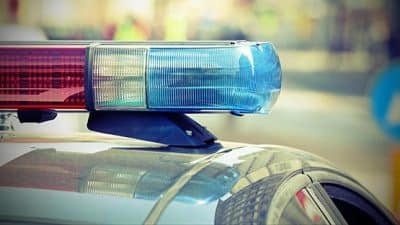
Jacob Valente, a third-year doctoral student in the Virginia Tech-Wake Forest University School of Biomedical Engineering and Sciences program, has received the Dwight David Eisenhower Transportation Fellowship Award.
For more than 30 years, this award, given by the Federal Highway Administration, benefits the nation’s brightest minds in the field of transportation, according to the FHWA website, helping these students earn advanced degrees and support the U.S. transportation industry.
Past fellows have pushed for innovative change in areas such as highway infrastructure and aviation, making the industry more effective and efficient. Valente’s research proposes to do just that: conduct research for innovative change to assist emergency medical service (EMS) responses to vehicle collisions.
Valente works in the Advanced Vehicle and Technology Research (AVaTR) Lab alongside Miguel Perez, associate professor in biomedical engineering and mechanics in the College of Engineering. Together, they are spearheading multiple projects to improve EMS responses to vehicle collisions.
“I believe the results and subsequent implications of these projects have the potential to save lives and reduce life-altering injuries sustained from motor vehicle crashes,” Valente said. “Knowing that these projects could even positively impact one person’s life is the most rewarding aspect of my work.”
Valente, a first-generation college student, never expected to attend graduate school. But a thought-provoking question, posed by Clay Gabler – the former Samuel Herrick Professor at Virginia Tech until he passed away in 2021 – encouraged Valente to think more deeply about transportation issues and then to apply to the accelerated master’s program in biomedical engineering and mechanics.
Gabler contrasted the public response to plane crashes versus vehicle crashes. When a plane crashes, he said, society deems it unacceptable, resulting in a thorough investigation. Vehicle crashes happen more often, yet do not generate the same level of response.
Why is that?
Gabler’s question sparked Valente’s interest in the study of vehicle safety. Then, a guest lecture during Valente’s senior year as an undergraduate at Virginia Tech, explored complications and issues in the EMS system and in hospitals. Valente began thinking about how his engineering knowledge could help solve these problems.
“I was stunned when I thought about the desensitization I had to car collisions,” said Valente. “It really made me think. As I got deeper into the research and kept pondering the issues I heard about, I realized I wanted to do something to help address these problems. I had the topic in mind – doing more to keep medical services and responders in mind for improved vehicle collision response – and Dr. Perez agreed to go along with it. We hope this research can save lives.”
One of Valente and Perez’s projects involves collecting naturalistic driving data from ambulances. Naturalistic data is data collected over time via sensors and cameras installed in the vehicle. Valente said the goal is to identify how other road users, such as passenger vehicles, pedestrians and bicyclists, interact with emergency vehicles in active response modes. By identifying harmful or negative interactions in the data, Valente hopes to design interventions or recommendations to improve the safety and efficiency of emergency responses.
Valente and Perez are also working on a comprehensive injury triage system to assist EMS responders. Current algorithms and processes can estimate the severity of a vehicle crash and predict injury risk to occupants through vehicle-based measurements like crash speed. However, these processes don’t factor in the post-collision medical status of the vehicle’s occupants. Access to this information, as evaluated through real-time vital sign measurement, could help EMS responders more efficiently mobilize additional resources, such as advanced life support personnel or a helicopter. Rather than waiting to arrive on the scene to evaluate occupants’ conditions, the responders could already have the equipment at the collision site or en route. This could be a matter of life or death in many instances, said Valente.
In addition to this research, Valente and Perez are sponsoring a senior design team in biomedical engineering and mechanics. The team is working to develop a system that measures how the volume and area of a vehicle – the occupants’ space – changes in a collision. This quantified prediction could help determine the need for additional EMS resources, such as extrication equipment. The seniors are halfway through their project, having already conducted the literature review and testing designs. During the spring 2022 semester, the senior design team will continue working with Valente and Perez to wrap up their proof-of-concept and present their conceptualized design.
“My favorite element about Valente’s research is that you can see immediately how useful its findings will be,” said Perez, also a data engineering leader at the Virginia Tech Transportation Institute. “Motor vehicle crashes claim nearly 40,000 lives every year in the U.S., and anything that we can do to reduce that number is a worthwhile effort. There is no doubt in my mind that, by increasing the efficiency and efficacy of our crash emergency response, Valente’s research will save lives and improve the standard of care for crash victims.”
Valente hopes his research will generate new public policies or technology applications to benefit emergency response. Valente said this could include technology that alerts or directs road users of approaching ambulances or additional training for ambulance drivers to handle hazardous conditions. His goal is to incorporate feedback from EMS responders to improve upon his research and its outcomes. Envisioning the outcomes of this research still feels surreal in ways, he said, since he did not see himself in graduate school and working on important research, yet here he is.
“College was a new experience for me, so graduate school was truly uncharted territory and took a big leap of faith to commit to it,” said Valente. “Receiving this award has been a huge affirmation that I am doing what I am meant to do.”
Valente received his bachelor’s in engineering science and mechanics from Virginia Tech.


 Share
AFP