By Barbara Coombs Lee and Kathryn Tucker
Pennsylvania Attorney General Kathleen Kane is getting political heat for saying that she will not defend the state’s ban on marriage equality in a federal lawsuit, calling the prohibition “wholly unconstitutional.” She explained to The Washington Post: “If there is a law that I feel that does not conform with the Pennsylvania state constitution and the U.S. Constitution, then I ethically cannot do that [defend it] as a lawyer.”
As attorneys, we agree it is unethical to defend unconstitutional laws. It follows that Kane’s office should also not pursue a case that impinges on an individual’s constitutional rights. That’s why her office should drop an unsupportable assisted suicide case against a Philadelphia woman. The preliminary hearing is Aug. 1.
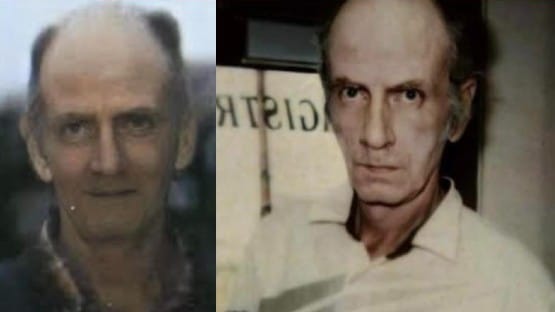
Barbara Mancini was present when her 93-year-old, terminally ill father ingested morphine to relieve his agony. In a perversion of justice, the state filed assisted suicide charges against Barbara in the death of her father, Joe Yourshaw, who lived in Pottsville.
In 1997, the U.S. Supreme Court recognized that dying patients have a constitutional right to as much medicine as needed to relieve their pain even if it advances the time of death. The Court’s finding came in two landmark cases, Washington v. Glucksberg and Vacco v. Quill, both brought by Compassion & Choices’ predecessor organization, Compassion in Dying. Justice O’Connor’s puts it this way in her often quoted concurring opinion inWashington v. Glucksberg: “…a patient who is suffering from a terminal illness and who is experiencing great pain has no legal barriers to obtaining medication, from qualified physicians, to alleviate that suffering, even to the point of causing unconsciousness and hastening death.”
Prosecution of Mancini is an assault on a loving daughter and a violation of dying patient’s constitutional right to pain relief. Mancini’s father was receiving hospice care at home and authorities allege that Barbara, a registered nurse, handed him a partially filled bottle of morphine at his request. They assert that this act constitutes “assisted suicide.” A hospice nurse who arrived shortly afterward called 911. Yourshaw was revived at the hospital, only to die there four days later. Ironically, doctors prescribed morphine to treat his symptoms while he was hospitalized.
Assisted suicide statutes weren’t intended to apply to this kind of death. They rightfully take aim at those who encourage a mentally unstable person to take his life violently. For example, in a November 2010 Schuylkill Haven, Pa. case, 26-year-old David Fitting gave a gun to his 27-year-old friend Andrew Mullins after Mullins drank alcohol and told Fitting: “My life has no meaning.” Mullins shot himself and Fitting was charged under the state’s assisting suicide statute. This is “assisting a suicide.” Helping a terminally ill man relieve his pain is not.
Joe Yourshaw suffered from many medical conditions, including end stage diabetes, extensive heart and cardiovascular disease, stroke, kidney disease, and arthritis. The cumulative burden of his multiple medical problems caused great suffering. Joe consistently and repeatedly stated the hope that he would die peacefully at home, but police authorities robbed him of his wish.
The state should respect Joe Yourshaw’s constitutional right, as a dying patient, to receive as much pain relief as needed even if it advances the time of his death. Attorney General Kane should act to honor this right by dropping the unjust prosecution of his loving daughter. Otherwise, it could ruin Barbara Mancini’s life.
Barbara Coombs Lee is President of Compassion & Choices, the nation’s oldest and largest nonprofit organization working to improve care and expand choice at the end of life. Previously, she had a 25-year career as a nurse and physician assistant and often cared for terminally ill patients. Kathryn Tucker is the Director of Advocacy and Legal Affairs for Compassion & Choices and served as lead counsel in Washington v. Glucksberg and Vacco v. Quill. She also is an Adjunct Professor of Law at Loyola Law School in Los Angeles.
Support AFP



 Share
Share

Contributors