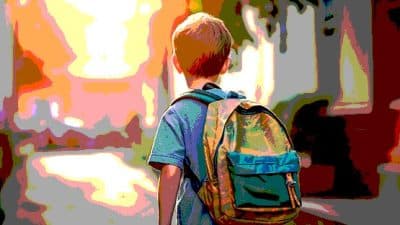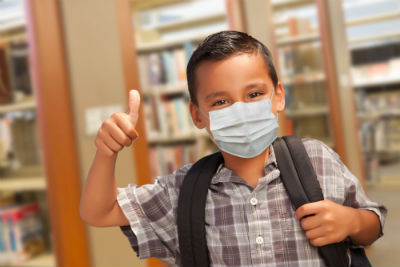
There are tens of thousands of children in America who have not seen a book since March.
Might I repeat that? They literally have not touched or seen a book since mid-March.
Our schools and are libraries are shuttered, leaving children from lower socio-economic backgrounds in a “book desert” and daily widening the education gap between the privileged and underprivileged children.
Our libraries must open for in-person browsing. Children without access to books at home are sinking into the million-word gap daily, and their parents do not have print resources available to them.
There are zero instances of COVID spreading at libraries. Again, COVID outbreaks have never been traced back to the library. Never. Google it. Why are we closing libraries and reducing them to curbside pick-up (an option for the privileged, literate, and technically savvy) when there is no documented spread inside a library?
Barnes and Noble is alive and thriving down the road, and hundreds throng to Walmart at a time, but we cannot open our libraries to provide opportunities for our children who have no access to books?
Have you ever been to the library when it was over 25 percent capacity? The nature of a library is six feet of social distancing.
It is not a “gathering,” and thus does not qualify for the 10-25 person limits because the people in the building are naturally spread out and households are not mingling even in pre-COVID times. If a person enters a library with COVID, and statistically this will happen, the likelihood of them coming into close contact with someone is incredibly minimal.
The only difference between Barnes and Nobles and the local public library is money. America is paying public libraries tax dollars to provide a service that we are unable to fully utilize. It is robbery to tax Americans in the name of public access to books, continue to pay librarians, and house book collections, yet provide services only to the literate and privileged citizens via time-consuming curbside pick-up options and inaccessible digital libraries.
Numerous Americans do not have access to the internet and cannot access digital books. Toddlers, preschoolers and early elementary-aged students who are at crucial ages for literacy development do not have guaranteed access to a personal reading device especially in low-income homes; their parents may have a smartphone, but how much time are they giving that necessary device to their young child to read a book?
The process of finding age-appropriate books for children, placing a hold on them online through a public library catalog, and scheduling a pick-up is very time consuming and rather difficult the first few times.
I have a reading specialist master’s degree, five years of teaching experience, my library barcode number memorized, and endless time as a stay-at-home mom, and I have struggled to keep a flow of library books in our home since March because the process of finding picture books through a library catalog is not user-friendly.
You must know the title of the book you want your child to read before placing a hold on it. That takes time to research dozens of books and then time to utilize the catalog.
My children are indeed privileged that I have the time and inclination to go through this time-consuming process each week to keep their intellects fed. Other mothers are too busy keeping bellies fed to go to this extra length.
A quick stop at the library while out running errands is very doable, and something people are more accustomed to. Telling busy, stressed parents to just “order some books” for pick-up is naïve and absurd.
It is not March, it is December. We know a lot about COVID, and we know what preventative measures to take. The library is not where COVID spreads, but it is where knowledge and literacy spread, and we are in desperate need of that. Do not deprive our children of their futures out of some unfounded belief that libraries are where COVID runs rampant.
Not every impoverished child will be able to take advantage of the opportunity of an open library, but we have a duty to make it available to them. We need easy access to books and Americans are paying for that through taxes.
If Barnes and Noble is safely and legally open, our libraries have a responsibility to be open for the literacy of our children.
Melissa Colby worked as a remedial reading teacher in Title 1 schools for five years and has her reading specialist masters from Regent University.She currently lives in Virginia with her husband and two toddlers.



 Share
Share

AFP