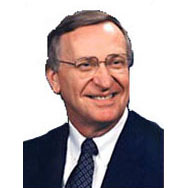
 Over the next couple of decades Virginia will have many more job openings for educated professionals and skilled technicians than there are persons in the pipeline to fill them, according to Northern Virginia Community College President Robert Templin speaking at “Blueprint Virginia,” an annual economic summit in Northern Virginia last week. Templin is a recognized expert on workforce training and has a broad perspective on the issue from his position as head of the community college with the largest number of degrees granted each year in the nation. He was joined at the podium by Dr. Ángel Cabrera, recently inaugurated president of George Mason University. President Cabrera brings a set of international credentials to his post as head of one of the fastest growing universities–in size and prestige. His point that the economic development success and prosperity of any region of the country is related to the presence of a first-class, research-based university can be illustrated with numerous examples throughout the country.
The occasion of the speeches by the two college presidents was a meeting called by the Virginia Chamber of Commerce and local chambers to announce a year-long initiative “to bring together the state’s regional leaders and industry experts to craft a strategy that will provide a road map for economic competitiveness for the Commonwealth.” Key to any such strategy would be workforce training and development in which both presidents are experts. Interesting to note was Dr. Templin’s example of training our future workers through a community college program that starts in the elementary schools to interest young children in science, technology, engineering and mathematics–the so-called STEM subjects–and to help students who may be first-generation college attenders. These students are encouraged to attend NVCC and may enroll in college-level courses while they are still in high school. NVCC has a transfer agreement with all the public four-year colleges and universities in the state that says that if you successfully finish your community college work with a high enough grade point average you will be automatically accepted by a four-year institution.
But the presidents also expressed concern. While Virginia has been known over the years as a business friendly state, would it lose this distinction with the cutbacks that it has been making to education at all levels for the past several years? New to the area, Cabrera pointed out our dubious distinction of having the worst traffic congestion in the country, and his point was amplified by one of the other speakers who arrived late to the meeting having taken more than two hours to get from Stafford to Dulles. Transportation has clearly suffered from a lack of funding not unlike higher education is experiencing. Beyond education and transportation, there are other issues that need to be addressed as well for the region to maintain its success.
Blueprint Virginia is a state-wide plan that is scheduled to produce a document in time for a newly-elected governor who takes office in January next year. Assisting the State Chamber in this very worthwhile endeavor is the Council on Virginia’s Future that does wonderful work in identifying performance indicators for any goals that are established (www.future.virginia.gov). I encourage individuals to go to the Chamber website atwww.vachamber.com/blueprint to make your views known for Virginia’s future direction.
With the one-term governor limitations in the Commonwealth it should be useful to come into office with an already produced consensus document that forges a new path.
Ken Plum is a member of the Virginia House of Delegates.
Support AFP

 Share
Share