When people picture a bad wreck on Interstate 81, they imagine the dramatic stuff: the closed lanes, the helicopter, the line of brake lights stretching back past Staunton. They rarely think about what comes after. The weeks of phone calls and paperwork that decide whether a crash victim is made whole or stuck with the bill.
Locals already know I-81 has a reputation with the mountain grades, truck volume, construction and the weather. Knowing the road is risky is not the same as knowing what to do when the risk lands on you.
So what should you actually do in the hours and days after a serious crash?
The I-81 corridor is a different kind of risk
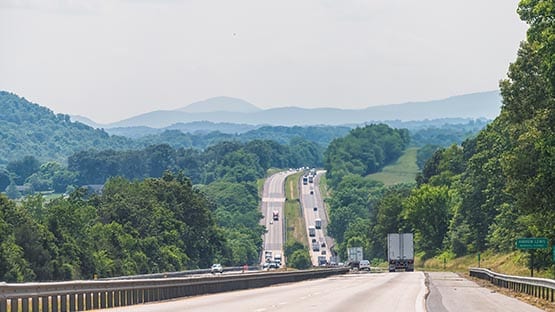
I-81 isn’t a typical interstate. It’s one of the busiest freight routes in the country, and that freight carries a measurable safety cost for the cars sharing the road with it. Virginia’s transportation department has designated a 15-mile stretch of I-81 between Ironto in Montgomery County and Salem as a Highway Safety Corridor, citing speeding and heavy truck traffic as key contributors.
Truck share matters because of physics. A loaded tractor-trailer hitting a sedan is not a fender bender. It’s a catastrophic event with broken bones, totaled vehicles, and an insurance fight on the other side. Add the steep grades between Roanoke and Winchester, plus the fog that settles into the Valley, and a routine drive turns dangerous fast.
The pattern holds nationally, too. The road is not getting safer on its own.
The first hour decides more than people realize
What happens in the minutes after impact shapes everything that follows. Most drivers are rattled, sore, and trying to be polite. That instinct works against them.
- Call 911, even if it seems minor. A police report is the foundation of any later claim. If officers don’t document the scene, your version of events becomes your word against the other driver’s.
- Get checked out. Adrenaline hides injuries. Concussions, soft tissue damage, and internal bleeding can show up hours later. A same-day medical record ties those injuries to the crash.
- Photograph everything. Vehicle positions, skid marks, debris field, road conditions, the other driver’s plate, any visible commercial markings on a truck. Wide shots and close-ups both.
- Get witness contact info. Names and phone numbers. People who pulled over to help will be gone in an hour and almost impossible to find later.
- Say less than you think you should. Don’t apologize, speculate, or guess at speeds. Stick to facts when you talk to police, and never give a recorded statement to the other driver’s insurer at the scene.
Truck crashes play by different rules
A wreck involving an 18-wheeler is not the same legal animal as a two-car collision. There may be multiple defendants: the driver, the trucking company, the cargo loader, even a maintenance contractor. Each one has its own insurer, and each insurer has its own lawyers on standby.
Trucking companies often dispatch investigators to the scene within hours. They’re looking for evidence that helps their side, not yours. Skid marks fade, dashcam footage gets overwritten, and electronic logging device data can disappear if no one demands it be preserved.
That asymmetry is why injured drivers who try to negotiate alone tend to settle for a fraction of what their case is worth. The other side knows the rules of the game. You’re learning them on the fly while also trying to heal.
Where state lines complicate things
I-81 doesn’t stop at the Virginia border. Plenty of Augusta County drivers head north into Maryland, West Virginia, and Pennsylvania for work or family. A crash that happens 200 miles from home suddenly involves another state’s traffic laws, another state’s insurance rules, and another state’s courts.
Pennsylvania, for example, uses a choice no-fault system that is genuinely confusing if you’ve never dealt with it. If your crash happens in western Pennsylvania, a firm that handles those cases day in and day out, like Conlon Tarker in Lawrence County, will know which insurance layer applies first and how to coordinate with your Virginia coverage. The point isn’t which firm you call. It’s that you call someone licensed where the crash happened.
Trying to handle an out-of-state claim with an in-state attorney who doesn’t practice there often costs people money and time.
The mistakes that cost people the most
- Waiting too long to get treatment. Insurers use gaps in medical care to argue your injuries weren’t from the crash. If you hurt, document it early and follow through with appointments.
- Posting about the crash online. A single Facebook photo of you smiling at a cookout can be used to argue you weren’t injured. Defense lawyers do check.
- Accepting the first settlement offer. Early offers are almost always low. Once you sign, you cannot reopen the claim when a back injury turns surgical six months later.
- Missing the statute of limitations. Every state sets a hard deadline to file suit. Miss it and your case is gone, no matter how strong it was.
Drive it like you mean it
None of this advice helps if you skip the part where you drive defensively in the first place. Leave more following distance behind trucks than feels necessary. Stay out of blind spots on the right side of trailers. Slow down for fog in the cuts near Lexington and ice on the overpasses south of Harrisonburg.
And put the phone down! The crash you avoid is the one you never have to litigate.
This content is provided for informational purposes only and is not a substitute for professional advice. AFP editorial staff were not involved in the creation of this content.


 Share
Share