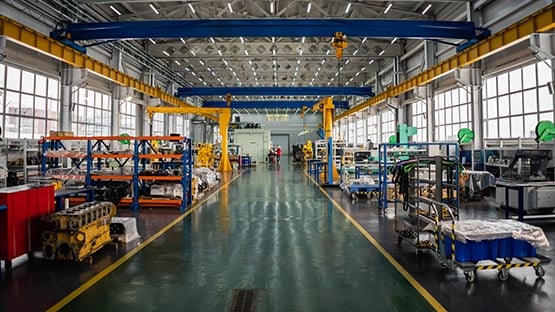
A factory can produce more parts and still ship the same number of orders. The explanation may be sitting on a pallet between production stages. If machining outruns finishing, the extra pieces wait. They have increased the amount of unfinished work without increasing completed output.
That gap matters when an owner is considering another machine, overtime, or additional floor space. A purchase that makes one department faster can leave the plant’s delivery problem intact. Meanwhile, more material has been purchased and more labor spent on products that are still waiting to be completed.
Manufacturing remains a visible part of the regional economy. The Innovative Refrigeration Systems expansion announced in Augusta County in May 2026 is one example of investment in local production. For an established manufacturer evaluating its own next investment, understanding how work moves through the existing plant helps identify where extra capacity will count.
The queue behind the numbers
A daily production total can conceal important differences. Parts completed at an early stage, products awaiting inspection, and goods ready for dispatch represent different amounts of progress toward fulfilling an order.
Put the production-status, downtime, and scrap data from a manufacturing execution system alongside observations of where unfinished work accumulates. Together, they can help managers investigate why a busy shift produces fewer completed orders than expected. The investigation still needs people who understand the process and can check what the records mean.
The central issue is the operation restricting the flow of work. If finishing can handle less than machining supplies, producing additional machined parts will enlarge the queue unless something else changes. Faster machining alone has not increased the plant’s ability to complete those products.
Queue length needs context. Manufacturers may deliberately keep a buffer of work available to protect an operation against interruptions upstream. A temporary pileup after a breakdown also means something different from a queue that repeatedly grows under the normal schedule.
The useful investigation follows a product through its actual route. It examines processing and waiting, including time awaiting materials, an inspection decision or the right tooling. The National Institute of Standards and Technology describes value stream mapping as a way to examine manufacturing processes and information flows, identify waste and find opportunities to reduce lead times.
Keeping the product group in view is essential. Different products can require different amounts of time at the same workstation. An increase in total pieces may simply reflect a shift toward easier jobs while a difficult customer order continues to wait.
Count reworked items consistently, too. A part passing through the same operation twice should not be mistaken for two pieces of new output.
Match the investment to the constraint
A case involving Hope’s Windows in Jamestown, New York, illustrates why looking beyond individual production totals can be useful.
In NIST’s account of the project, increased sales were accompanied by production problems affecting throughput and delivery. Fabrication took place in one plant, with finishing operations in another. A map of the finishing process helped identify bottlenecks in the movement of material.
The recommendations included changes to assembly responsibilities, clearer production expectations, and designated locations for components. They also addressed the condition of work arriving from upstream operations. Each recommendation addressed an observed problem in the way work was organized.
For another manufacturer, the evidence might support additional machinery. It might instead point to recurring setup delays, missing components, or an inspection backlog. Each finding calls for a different response. Buying another upstream machine would do little to resolve a shortage of qualified inspection capacity downstream.
The same analysis can inform decisions about outsourcing part of production. Moving a genuinely constrained operation to a capable supplier may release capacity, but transport time, quality requirements, and the supplier’s schedule belong in the comparison. Shifting work outside the building does not automatically make the complete order move faster.
Management should also check what happens after an improvement. Once one restriction is relieved, another operation may become the limiting factor. The measure of success should include completed, acceptable output for the orders customers need, together with delivery performance and the amount of unfinished work remaining.
That approach changes how an owner evaluates an apparently underused machine. Spare time at one workstation can be consistent with a well-coordinated production schedule. Keeping it running merely to improve its individual utilization figure may consume material and space without helping the next delivery.
A factory expansion can be the right decision. The strongest case identifies which part of the production route needs capacity and how the investment will help complete customer orders. More activity becomes valuable when it translates into goods that can leave the plant.
This content is provided for informational purposes only and is not a substitute for professional advice. AFP editorial staff were not involved in the creation of this content.



 Share