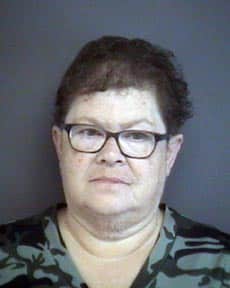
A reader wrote to us this week concerned that a Staunton woman, Kimberley Diane Shepard, who had faced felony charges in the deaths of two dogs found decomposing in her apartment in 2024 was, in effect, going to get away with it, after learning that the charges had been dismissed earlier this month.
Looking into this, it is, indeed, a sad, troubling and infuriating story, all at once.
But in the end, the dismissal was at least close to being the right way to handle the case, considering.
Let me explain.
Background
Shepard, the accused in this case, took in the two dogs, named Puff and Leroy, in 2019.
“Those two dogs were my wife and her mother’s dogs that they had trusted to give her after Diane was adamant that she would keep and take good care of them,” the reader who alerted us to this story told us.
This is the beginning of the sad, troubling and infuriating parts to this story, all at once.
Over the course of the five years that the reader and her wife were neighbors to Ms. Shepard, “we never saw her take them outside, not once. Anytime we asked about them, she always had an excuse as to why she couldn’t bring them out,” the reader told us.
The reader also told us that Shepard was “guilt-tripping another tenant to let her stay with her because her own apartment was too unsanitary for her to stay in herself,” which we’ve been able to corroborate, from the police report on file from the day Shepard was arrested in connection with the deaths of Puff and Leroy, on Sept. 21, 2024.
“Shepard was very hesitant to let me into the apartment because she said it was such a mess. She first cracked the door and said if the dogs were there, they would be barking. I immediately smelled a strong odor of decomposition, and several flies flew out of the apartment, and Shepard closed the door. I told Shepard that I needed to see in the apartment. Shepard opened the door again and turned the light on
“The door was unable to open all the way due to the amount of trash and clutter in the apartment. I was able to see into most of the front room, and observed the apartment to be in complete disarray with flies and trash completely covering the walls, floor and ceiling. Shepard began to shut the door again, and in the entryway of the apartment, I observed black curly fur, in a heap on the ground. I shined my flashlight on the fur and observed the legs and head of what appeared to be a furry black dog that had been deceased for some time and had begun to decompose
“I asked Shepard if that was a dog, and she began to walk away. I told Shepard she was not free to leave at this point. Shepard was read her Miranda rights, and I asked her if that was her dog. Shepard said it was, and the other dog was in the apartment as well, deceased.
“I asked Shepard how long it had been since she was in the apartment, and she said about a week, but the dogs have been dead a lot longer than that.”
Therapeutic docket
Jeff Gaines, at the time the Commonwealth’s Attorney in Staunton, signed off last year on moving Shepard’s case in Staunton General District Court to the court’s Therapeutic Docket.
The Therapeutic Docket allows participants to engage in an intensive probation that includes mental health treatment along with other services.
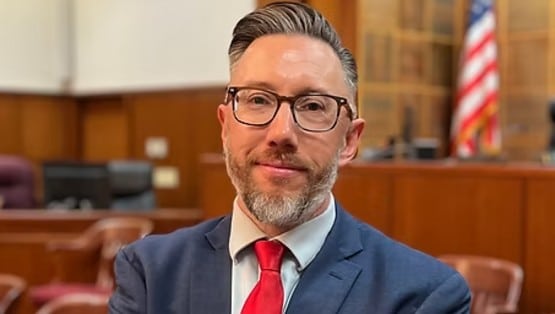
I reached out to John Baber, who was elected to the post of Commonwealth’s Attorney last fall, to discuss the Shepard case, and Baber told me that he would have made the same move with the case.
“Ms. Shepard was 60 years old, with no prior criminal history, and the police found two decomposing dogs in her (rather messy) apartment. The investigation did not yield any facts about how the dogs died, and it is probable that they died of natural causes (rather than as a result of malnutrition or abuse). Therefore, proving the actual charges at trial would be difficult, yet the facts certainly paint a picture of a person in need of services,” Baber told me, via email.
The goal with the Therapeutic Docket, Baber explained, is for “for the right participant to get a lot of support and services as a result of their contact with court. This can help that person get out of the system, rather than get deeper into it, thereby making society a safer place as a whole.”
‘It is a tool my office utilizes depending on a host of factors, some of which being: the severity of the charges, the person’s amenability to treatment, and the specific mental health issues at play. For the right candidate, the docket can serve as life raft to the struggling,” Baber said.
Shepard completed her participation in the program last month, Baber said, and as part of the participation agreement, had her two charges dismissed.
The hard part to this
Based on the description of the living arrangements in the apartment from the police report, Puff and Leroy weren’t cared for the way the great bulk of those of us in the population with pets in our homes care for our furry, four-legged loved ones.
“The court did not give them justice. She chose to neglect and ultimately kill them, and faces no consequences,” the reader who alerted us to the story of Puff and Leroy observed.
It would seem, at the least, that prosecutors could have pushed for a no contest plea to a lesser charge as a condition of allowing Shepard to take part in the Therapeutic Docket, which, otherwise, gotta say here, that Therapeutic Docket thing, I think, is a good thing, in giving the court system an alternative to just going with straight jail time.
A no contest plea, at least, would be an actual legal consequence for situations like this one involving Diane Shepard, who left two dogs to die in her apartment, and walked away without even so much as a slap on the wrist.
Support AFP



 Share

Chris Graham