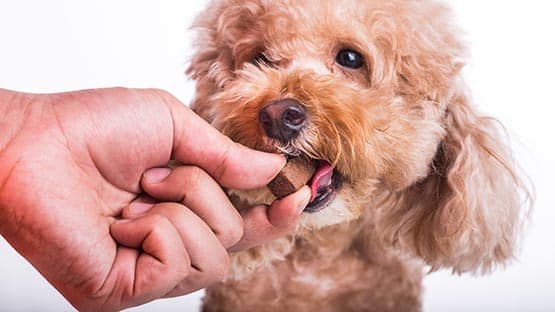
Four shelves. That’s how many stores in my town now sell something labeled for dogs and mushrooms. Four. Ten years ago I couldn’t find a single one, and the feed store clerk would have laughed at the question. So I did what any stubborn dog person does: I walked into all four with a notebook and started asking questions nobody could answer cleanly.
Here’s what I learned. The shop on the corner stocks better product than the big box store down the road, and it has nothing to do with brand names. It comes down to how the staff talks about the stuff. If you’re standing in a local store trying to figure out whether the jar in your hand is worth your money, I’d point you toward a brand with a published methodology, like medicinal mushrooms for dogs, and then grade the shelf around you with a short list. That list is below, and it took me three weekends to build.
Most pet parents I know walk in expecting a sales pitch and walk out with a jar they don’t understand. You don’t need a biology degree to shop this category. You need five minutes, a couple of honest questions, and the willingness to leave empty handed.
What’s actually on the shelf at a local shop?
Broadly, three kinds of products. There are chews and treats with a mushroom blend listed somewhere in the ingredients, there are powders you scoop into food, and there are tinctures you drop onto a meal or into a bowl of water. Each has a different failure mode.
Chews are the easiest to get down a picky dog and the hardest to evaluate, because the mushroom content is usually small and buried under peanut butter flavoring. Powders are straightforward but messy, and half the scoops I’ve seen are too big for a small dog. Tinctures are the most concentrated and the most annoying to administer if your dog has opinions about droppers. Mine does. She treats the dropper like a suspicious insect.
None of these are interchangeable, and I wish more shops organized the shelf that way instead of by brand logo. Ask the clerk which format they’d pick for a dog that refuses pills. Their answer tells you whether they’ve actually talked to customers.
The five-minute shelf test
This is the part you can do in the aisle. I call it the shelf test because it requires almost nothing except your attention and a phone.
- Flip the jar and read the species list. You want Latin names, not just “mushroom blend.” Turkey tail should read Trametes versicolor. If the label only says “mushroom extract,” put it back.
- Ask where the fruiting body is. Fruiting bodies are the actual mushroom. Mycelium grown on grain is a different product and often comes with grain filler. The good brands brag about fruiting bodies on the front of the label.
- Check the dosing instructions. A weight chart in pounds or kilograms is a green flag. Vague language like “give as needed” is not.
- Look for the store’s own knowledge. Ask the person behind the counter what they’d give a nervous rescue dog. If they stammer, that’s information.
- Read the guarantee. A real return policy signals a brand that stands behind the product. No policy at all means you’re the test subject.
Five minutes, five checks. I’ve walked out of shops holding nothing after doing this, and I’ve bought the same afternoon. The difference was never the packaging.
Why the local shelf beats the algorithm
Online shopping is fine for dog food. For supplements, the store has an advantage nobody talks about: you can smell the product. Tinctures that have gone off smell like a wet basement. Powders that clumped in the warehouse feel gritty between your fingers. You can catch both in a shop and you can’t through a screen.
There’s a second advantage, and it’s social. Small shops talk to their distributors, and those distributors carry news about which small brands have quietly disappeared or changed their sourcing. Ask how long the shop has stocked a given brand. A clerk who says “we brought this in last month after the owner tried it on her own dog” is a better source than a review page with a thousand stars.
The tradeoff is selection. The independent shop carries maybe twelve SKUs. The big-box retailer carries three hundred and understands none of them. I’ll take twelve with a knowledgeable clerk every time.
What the vet clinic down the street will tell you
I stopped in at my vet’s office with the same notebook, and the receptionist said something I think about constantly. She said the phone rings every week with someone asking about mushroom products, and the staff has no standard answer. That’s not negligence. It’s a young category. Training takes time.
What the staff could tell me is generic and useful. The American Kennel Club maintains extensive resources on canine care basics, and it’s a reasonable place to get grounded before you ask a professional anything specific. Bring the jar with you to an appointment. Photograph the label. Vets are busy, but a labeled product is a concrete question, and concrete questions get answered.
One more thing the clinic shared, and this one stings. Several products on local shelves were formulated for humans and relabeled for pets. The dosing is often wrong for a twenty pound dog. Ask whether the product was built for dogs from the start or adapted afterward. If the clerk doesn’t know, that’s your cue to look elsewhere.
How I’d set up a routine that actually sticks
Buy one product, not three. Pick a format your dog will tolerate and a mushroom that matches the reason you’re buying. If you’re not sure of the reason, my blunt advice is to wait until you have one. “General wellness” is a marketing phrase, and it makes for a vague purchase.
Then run a plain, honest trial. Most manufacturers and stores will tell you to give it several weeks. I’d start with the smallest bottle available and add it to the morning meal, which is calmer than the evening one in my house. Keep notes in your phone: what your dog ate, how she slept, whether she got up the stairs faster. Memory is a liar. A two-line note each day isn’t.
The Library of Congress has a surprisingly readable collection on folk and traditional uses of fungi across cultures, and it’s worth a browse if you’re the curious type. Mushrooms have been part of human wellness practice for a very long time, which is a point in their favor and also a reason for skepticism about any bottle that promises a miracle.
My honest stance: buy from a shop that will take the product back, choose a brand that publishes how it extracts, and give it a real trial with real notes. If your dog’s behavior doesn’t change, you’ve learned something useful for the price of one bottle. That’s a fair trade.
The shelf won’t save you from bad questions
The local pet shop has gotten better in the last few years. Staff know more, buyers ask sharper questions, and the distributors have started requiring paperwork from the brands they carry. That’s a good trend and I’m rooting for it.
But the shelf can’t do the work for you. Walk in with a reason, test the label against the five checks, and be comfortable leaving without buying. The clerk who respects a customer who does that will become your best resource in town, and your dog gets a better shot because of it.
Next time you’re at the register, ask one question the clerk has never heard before: what would you give your own dog, and why? Then tell me what they said. I’m collecting answers.
This content is provided for informational purposes only and is not a substitute for professional advice. AFP editorial staff were not involved in the creation of this content.
Support AFP



 Share