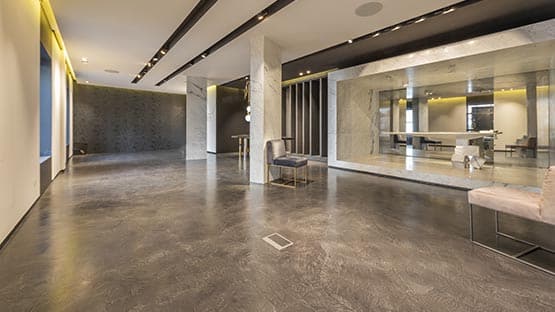
In a high-end art gallery or modern mansion, the floor looks like a work of art in and of itself. If you work in a factory, polished concrete is not nearly as modern or high-tech. But putting a machine over the floor isn’t the only way to make it look great. Here are seven design tricks that professionals use to make rooms look beautiful.
1. Selecting the perfect aggregate exposure
The “aggregate” refers to the small sand and stones that mix into the concrete. You can opt for a “salt and pepper” look, where only tiny grains are visible, or a “full exposure” look that shows larger, colorful stones. This choice changes the texture and character of the room.
For your decor, you can adapt this exposure to match your style and work with polished concrete specialists. If you prefer a minimalist, industrial feel, a light grind will generally be your style. Exposing larger stones allows you to project the appearance of an expensive terrazzo at a fraction of the cost, making it look much more decorative and luxurious.
2. Mastering the levels of reflectivity
Not every concrete floor should look like a mirror. Specialists provide levels of “sheen”—from a soft matt to a high-gloss finish. In busy areas, matte finishes are ideal to obscure dust and footprint marks, offering an elegant and unobtrusive facade.
High-gloss finishes, meanwhile, are like a giant lamp in your room. They reflect natural light and overhead lamps, and small spaces can feel bright and airy. The key is to keep the gloss level the same so that your lighting plan works and the room doesn’t feel too bright or too dark.
3. Utilizing integral color and dyes
Concrete doesn’t have to be grey. Specialists use integral colors added to the wet cement or topical dyes applied during the polishing process to create almost any color. The color possibilities are virtually limitless, ranging from deep charcoal to warm, earthy tones.
Topical dyes are well recommended because they are layered to develop a variegated, natural stone pattern. The method adds depth and movement to the floor so it doesn’t appear to be a flat, painted surface.
4. The role of grout and densifiers
Professional grinders use grout to smooth out uneven surfaces by filling in tiny fissures and holes. After that, densifiers are used to chemically harden the concrete from the inside. It increases the floor’s resistance to water and stains.
The process guarantees that the shine will remain for a long time. Future applications of waxes and coatings are rendered unnecessary. An appropriately densified floor is ideal for high-traffic areas like retail stores or households with young children because it requires far less cleaning and upkeep.
5. Creating decorative saw cuts and patterns
You can experiment with ornamental saw cuts for architectural details or scale. These shallow grooves can mimic the appearance of large-format tiles or illustrate geometric designs. They improve the visual appeal of a room by breaking up large areas of flooring.
For a more striking effect, colored resins can be used to fill these cuts. The floor feels more “designed” than “just finished” thanks to this subtle design detail.
6. Managing the edging and corners
While large machines handle most of the work, workers use smaller tools to finish the corners and edges by hand. If you don’t do it right, the room’s border will have a different texture and shine than the rest.
Experts put in many hours to ensure the “edge-to-center” transfer goes off without a hitch. Your floor will appear perfect from any angle thanks to this meticulous approach. It’s the deciding factor between an amateurish-looking renovation and a high-quality architectural addition that increases the value of your home.
7. Protecting the surface with penetrating sealers
The last secret is in the sealer you pick. Professionals use penetrating sealers instead of regular floor finishes, which just sit on top of the surface and can scratch or peel. These penetrate the pores of concrete and protect it from within.
This keeps the concrete’s natural ability to breathe while making it very resistant to spills. It also doesn’t change the way the floor looks, so the natural beauty and color of the aggregate stand out.
Investing in architectural excellence
Polished concrete is more than just the floor; it’s also about the longevity and aesthetic of your home. If you go into your next renovation, think about how the perfect floor could influence the design of the entire interior. Choosing polished concrete now is a decision well worth making, given its low maintenance and high impact. It’s fun to see how the material can change the look of your room.
This content is provided for informational purposes only and is not a substitute for professional advice. AFP editorial staff were not involved in the creation of this content.


 Share
Share