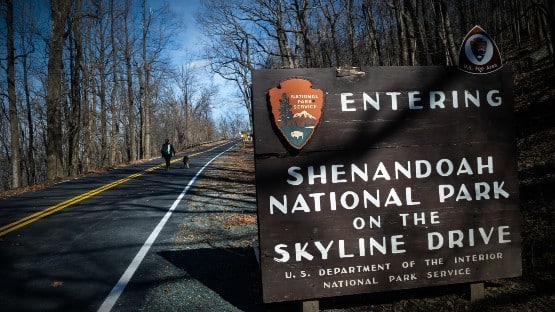
Shenandoah National Park is highlighting on its social media an apparent outbreak of the very contagious norovirus on the Appalachian Trail.
There’s obvious reason for concern – the Trail sees an estimated 16.9 million visitors annually from tip to tip; Virginia, home to 550 miles of the 2,190-mile Trail, records 4.3 million of those visits annually.
There are no hard numbers for the number of Trail hikers on the 101-mile portion in the boundaries of the Shenandoah National Park, which runs from Rockfish Gap in Waynesboro up to Front Royal, just a general sense that most of the 1.4 million annual visitors to the Park head up to the Trail for a day or a few days.
This would be the busy season – the Park gets on either side of 200,000 visitors per month in the summer, per data from the National Park Service.
Alrighty, then, so, norovirus is spreading up there, and folks could be bringing it back down with them.
What do we do?
Shenandoah National Park offered recommendations to help keep yourself and others safe, whether you’re on the AT or in the park.
- Treat all water. Boiling water for at least one minute is the most reliable way to kill germs.
- Don’t share food, water or other personal items. Norovirus is highly contagious and can be spread on surfaces.
- Properly dispose of waste. Bury waste at least eight inches deep and 200 feet from water sources, campsites and trails. Wipe down privy handles, bear boxes and other surfaces before using.
- Wash your hands with soap and water for at least 20 seconds. Hand sanitizer does not work well against norovirus.
- Avoid others. Avoid other hikers while sick and for two to three days after symptoms subside. Tent alone when possible and get single rooms at hostels/hotels.
- Seek medical treatment. Especially if you become severely dehydrated or symptoms last for more than a few days.




 Share
Share

Chris Graham