
South Carolina, where Donald Trump beat Kamala Harris by 18 points in the 2024 election cycle, which last voted for a Democrat for president way back in 1976, will hold the first Democratic Party presidential primary in the 2028 cycle, because Democrats aren’t good at math.
Supposedly, it’s about the Black vote in South Carolina – Black voters make up 23.6 percent of the state’s total registered voters.
Black voters in Virginia, which will come after South Carolina, but before Super Tuesday, in 2028 – and we’re supposed to rejoice about that – make up 20.8 percent of our registered voter base.
And guess what – a Democrat has won here in each presidential election since 2008.
I can see getting away from 87.7 percent White/4.9 percent Black (and MAGA-voting) Iowa, and 91 percent White/1.7 percent Black (and Dem-voting) New Hampshire, to start the nomination cycle in a state that is more representative of America (72.3 percent White/15.4 percent Black) as a whole.
But how about starting the cycle in a place we have an actual chance to win in November?
Mark Warner on the decision to move Virginia up
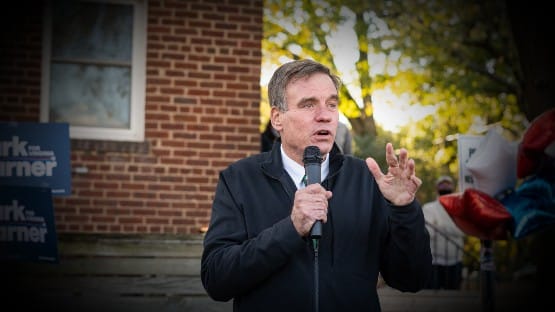
U.S. Sen. Mark Warner, D-Va., who made an aborted run at the 2008 presidential nomination, released a statement on the DNC decision to put Virginia on the list of early presidential primary states:
“Today’s decision to include Virginia among the group of early states in the Democratic presidential nominating calendar is a tremendous vote of confidence in the Commonwealth and in the voters of Virginia.
“Virginia has earned this moment. We are a competitive Southern battleground where campaigns have to do the hard work of listening, organizing, and building broad coalitions in order to win. A candidate who can compete in Virginia can compete anywhere.
“Our Commonwealth reflects the coalition that Democrats need to win nationally. Urban, suburban, and rural communities. Military families and veterans. Black voters, Latino voters, AAPI voters, young voters, working families, and organized labor. Candidates won’t be able to succeed here by appealing to just one part of our party – they’ll have to show they can bring people together.
“Virginia also knows how to run elections. We have demonstrated that we can administer accessible, secure, transparent elections while making it easier, not harder, for eligible Virginians to make their voices heard. We are ready for this responsibility.
“I want to thank the Democratic National Committee Rules and Bylaws Committee for recognizing what so many of us have long believed: that Virginia belongs at the center of the presidential nominating process. This isn’t just a win for Virginia – it’s a win for Democrats who want a nominating process that tests candidates in a diverse, competitive state that looks like the coalition we need to build to win the White House. I look forward to welcoming candidates to every corner of our Commonwealth and seeing them engage with Virginians who expect leaders to listen, organize, and earn every vote.”
Bigger issues for the DNC?
So, great news for the DNC – even if we’re having voters in a state that will go to whoever the MAGAs nominate in 2028, at least it’s not a state that is as White as my native Augusta County (90.4 percent White/5.0 percent Black).
Bad news for the DNC, per one report, at least: it’s broke.
NOTUS reported on Sunday that the national Dems are effectively $2 million in debt right now, and had to put up the DNC headquarters in DC, located between Capitol Hill and Nats Park, as collateral for a $15 million loan last year just to stay afloat.
Yikes, indeed.
DNC Chair Ken Martin, in an op-ed on Substack, countered that, basically, all is well – explaining that the NOTUS report is focused on the limited cash on hand, a paltry $16 million, as of the party’s most recent report with the FEC, while the party’s strategy is not to have cash on hand to report to the FEC, but rather, cash flowing out of the party coffers doing things on the ground.
“Why does the DNC have less cash on hand than some expect? Because we made a conscious decision to invest money in the work required to win in 2025, 2026 and beyond. We are converting the cash we raise into electoral assets: more people, earlier organizing, better technology, and stronger state parties,” Martin wrote.
“That answer may be unsatisfying to people who believe the purpose of a political party is to accumulate the largest possible bank balance until the final days before an election. But a party is not a savings account. Its purpose is to build power.”
I can buy that – and I’m not prone to buying much from national Dems, who I think don’t give a fig about people like me in the hinterlands.
We’re not seeing any of those sweet electoral assets out my way, because the Democrats gave up on us after Jimmy Carter.
But I would agree, money doesn’t do anybody any good sitting in a bank account.
Video


 Share
Share

Chris Graham