Virginia environmental news
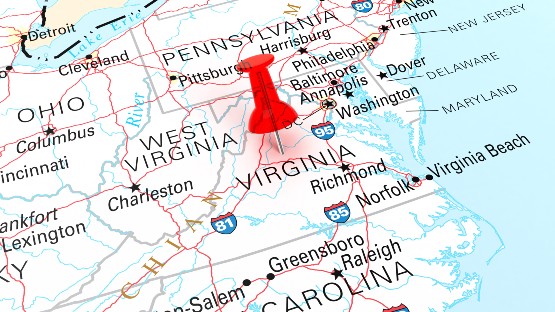
State Senate President Louise Lucas, Virginia’s immovable power broker, has clashed with Gov. Spanberger over lucrative state tax incentives for data centers, which have grown to about $2 billion a year. She vows to continue the fight in the next legislative session.
Gov. Spanberger announced that Virginia is partnering with a service called Switch Together, run by Solar United Neighbors, that will help homeowners and small businesses to install solar power systems at lower cost through group discounts. It will save the equivalent of $6,300 on a typical system.
Dominion Energy submitted its arguments to Virginia’s State Corporation Commission (SCC) as it seeks to merge with NextEra Energy. Advocacy group Clean Virginia quickly filed an argument against the merger with the SCC.
An amendment to the two-year budget agreed to by Virginia lawmakers will return 45% of funds earned through the Regional Greenhouse Gas Initiative (RGGI) to rate-paying residents, small businesses and churches.
Virginia hosted the first flight of the federal government’s electric aviation pilot program in Charlottesville. It sets the stage to improve air transportation while boosting health services and mitigating impacts on the environment.
James Madison University received a $163,000 grant from the Chesapeake Bay Trust to help with the expansion of the Edith J. Carrier Arboretum. They will expand from 63 to more than 110 acres, planting 1,500 native trees and several hundred native shrubs.
Our climate crisis
We have suffered through blazing hot heat waves across Europe and, to a lesser extent, here in the U.S. In a brief video, climate scientist Kate Marvel breaks down how scientists use computer models to determine whether climate change is behind such extreme weather events.
Dangerous heat, strong winds and vegetation parched by a historic drought spurred the explosive growth of scores of wildfires across 10 states in the West. Federal firefighters say they’re facing immense pressure and a shortage of resources.
Lake Powell, which supplies water to 40 million people in seven western states, threatens to plunge to unprecedentedly low levels of 25% this year after a historically bleak snowpack failed to raise its water level. Looming necessary drastic cuts in water will be catastrophic for many.
As France and Spain battle some of the worst wildfires in recent history, experts warn that they can generate their own unique weather systems known as pyrocumulonimbus, or “fire clouds” that exacerbate the effects of the blazes.
Politics and policy

Energy Secretary Chris Wright dismissed global warming and claimed that “cold is a larger killer” during the record European heatwave in June.
The Trump administration will pay Duke Energy $129 million to abandon its offshore wind project off North Carolina. The utility plans to reinvest it in gas and nuclear power projects.
The Canada-Alberta deal to build a new oil pipeline to the West Coast is raising alarm from energy and environmental organizations. Will overseas buyers, who are rapidly converting to renewable energy, even want to buy the oil that may eventually flow through the pipeline?
Energy-efficiency standards can make it more expensive to construct new buildings, but they save money for residents in the long run. A recent Department of Energy study highlights the first part but completely ignores the second half of that equation.
The Trump administration appointed Matthew Weilicki, a leading climate denier, to head the office that produces the National Climate Assessment. Climate scientist Katharine Hayhoe says he “is unqualified in this area, cannot offer valid critiques, but instead shares debunked claims.”
The European Commission unveiled a 2040 target for EU electrification that would aim to cut oil use in half and gas use by two-thirds.
As climate information disappears from federal websites such as Climate.gov, fired scientists who formerly worked on it are now rebuilding it elsewhere. The website was launched in June with a new nongovernmental domain: Climate.us.
New York became the first state to impose a moratorium on the construction of data centers. It is a striking setback for AI companies that politicians once courted for investment but have now triggered public fears about energy prices and water use.
With the end of federal subsidies and a shrinking domestic market, large U.S. automakers are backing away from EVs even as EVs are rapidly gaining market share worldwide. Some analysists fear that this will make US automakers obsolete.
Energy
Russia’s invasion of Ukraine and the war with Iran are changing the global energy market in real time. For example, the Philippines is leading the world in the rush to install solar as fossil fuel prices soar.
Wind and solar power overtook fossil fuels in Germany for first time ever last year. Solar and onshore wind have grown rapidly over the past two decades as the nation transitions away from both coal and nuclear power.
Despite tariffs and shifting tax-credit policies, utility-scale solar is booming in the U.S. as electricity demand rises and projects remain relatively easy to develop. A big part of the demand is new data centers, as is also the case for new gas power plants.
Lithium-ion batteries still dominate, but sodium-ion and solid-state technologies are moving from lab to market. They offer cheaper and more powerful alternatives—and are less reliant on hard-to-source materials.
U.S. electrical grids were able to tap renewable energy to meet record demand during the massive heatwave in early July. There was no need to tap diesel generators and battery backup systems as a last resort to prevent power shutoffs.
As the prices of home battery systems fall, they’re becoming a key part of the modern electric grid. They could soon become the next must-have household appliance.
EV sales have slumped in the U.S. after Congress and President Trump ended tax credits last fall. Even so, sensing an economic opportunity, retailers and fast food restaurants in Southern states are building out EV charging stations.
Google will buy all the power produced by the largest solar-plus-storage plant in the US that is being built in Arkansas.
JPM, the largest electrical grid in the U.S., has been stretched to create the new capacity required by data centers. Its stakeholders have now approved a plan where data centers will be required to pay directly for the additional capacity resources they need.
Global EV sales are now estimated to account for 27% of new-car sales in 2026, up from 9% five years ago. Sales of electric buses and 2- and 3-wheelers — which dominate roadways in the Global South—are tracking closer to half of all new purchases.
Land, food, agriculture

In the coming decades, increasing heat and drought from global warming could kill off roughly 30% of the Amazon’s useful plant species within the habitat of Indigenous communities that use them.
Specialty farmers, who grow crops like vegetables and fruits, are being forced to adapt to protect crops in the face of extreme heat. This includes adapting growing seasons, the time of day when they work in the fields, and erecting cooling stations.
Nature was missing from neighborhoods on Chicago’s South Side. Now Latino leaders and community members are transforming a local park, and a charter school is teaching kids how to grow food in their community garden.
A solar installation built on rewetted, degraded peatlands appears to be increasing bird populations and diversity according to an initial study.
Biodigesters, which turn manure from large feedlots into methane gas, are facing an uncertain future as federal and state support dwindles for these increasingly unpopular systems and as environmental opposition to them has grown.
Ecojustice
The stewardship of Indigenous people fosters the health of their land, its biodiversity, and ability to store vast quantities of carbon. This is generally not recognized in climate negotiations, access to climate resilience funding, or the enforcement of human rights.
While there are legitimate concerns, the EV supply chain is not nearly as dirty or exploitative as many critics claim — some of those claims are being foisted by the fossil fuel industry.
Big Oil and Gas promoted the fraudulent claim for decades that so called “natural gas” is clean and a climate solution despite knowing that it is a significant source of air pollution and a major contributor to climate change. Internal documents show that they already knew this in 1966.
In the midst of heat waves this summer, the Energy Department gutted its Energy Saver section and removed some of its most actionable advice about how to conserve energy.
Ecological and climate action

A PBS documentary series, “Sacred Ground,” with Tim Daly, explores the human side of climate change through stories of resilience, innovation, and hope.
Paris is harnessing a system of underground pipes that distribute chilled water from the Seine River to cool buildings, reducing the need for air-conditioners.
Swapping beef for salmon once a week could significantly cut your carbon emissions and improve your health.
Millions of rickshaws and scooters zip through the streets of Delhi, India’s capital, emitting toxic fumes in their wake. The city is now making a $2.5 billion plan to phase out new diesel and gas scooters, trucks and buses in two years. Environmentalists are hailing this as a “gamechanger.”
States bordering the Chesapeake Bay are investing in living shorelines, a method of shoreline stabilization using natural materials like plants, sand and oyster shells to protect against erosion.
Cities often overlook the benefits of urban trees, shrubs, and even vegetation. They reduce temperatures, mitigate flooding, and provide habitat for animals. They also absorb pollutants, and improve air quality for everyone.
The UN COP31 president-designate Murat Kurum, Turkey’s minister of environment, urbanization and climate change, launched a target for 35% of the world’s energy to come from electricity by 2035. He says renewables and electrification combat high energy costs.



 Share
Share