“The story of Kepone was well known 40 years ago. Even 20 years ago, but with each passing decade it bears retelling lest we fail to heed the warning of history and somehow fail to provide for vigilance when it comes to protecting public health and the environment.”
—Joseph Maroon, Executive Director, Virginia Environmental Endowment
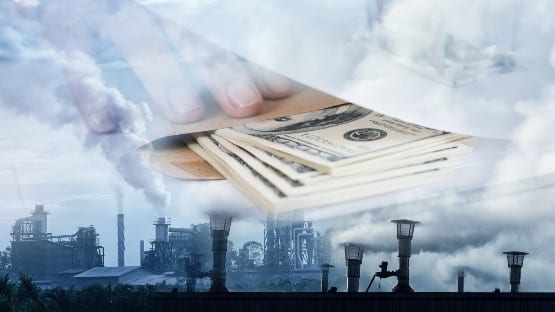
The Kepone disaster should never fade into history. Its story needs to be illuminated so we never forget how greed, lies, and lack of oversight can poison people and the environment.
‘Chemical Capital of the South’
The Kepone disaster happened in Hopewell, Virginia, a city at the confluence of the Appomattox River and James River about 20 miles southeast of Richmond. In 1975, it was known as “the Chemical Capital of the South.”
Kepone is the brand name for chlordecone, a highly toxic, white, powdery insecticide used to kill leaf-eating insects, ants, and roaches.
Allied Chemical produced Kepone in Hopewell from 1966 to 1974. Then in 1975, it subcontracted the production of Kepone to Life Science Products, a small start-up run by two former Allied executives. At its peak production in 1975, employees manufactured 6,000 pounds of Kepone per day working around the clock.
Everyone was in it for the money
The blue-collar laborers in Hopewell were given high-paying jobs, executives of the company were making good money, but little was done to properly dispose of the byproducts or waste from the manufacturing process.
It made a lot of toxic dust, and work areas were laden with it. Employees didn’t wear protective clothing or use respirators. They handled the material with no gloves and ate meals on dust covered tables.
The main chemist told one of the workers, “You can eat a cupful of this stuff. It won’t hurt you.”
That was a big lie
It didn’t take long for the workers to develop what they called the Kepone shakes: uncontrollable tremors and irregular eye movements.
Later, liver damage, weight loss and sterility set in for some.
Waste from Kepone production was dumped in the James River, into holes in the ground, into the local landfill and piped to the local sewage treatment plant.
Kepone would eventually kill the bacteria needed to digest sewage and cause the plant to close.
LSP shut down
Soon after the worker’s poisoning became known to the Virginia Department of Health, the LSP plant was shut down. The Environmental Protection Agency and the Virginia Water Control Board (now the Virginia Department of Environmental Quality) began testing the water and fish in the James River and found toxic levels of Kepone in the fish.
In December 1975, Gov. Mills Godwin Jr. banned commercial and recreational fishing for a hundred miles, from Hopewell to the Chesapeake Bay.
The James River would not fully reopen until 1988 –13 years later.
The EPA banned the sale of Kepone in 1975, and its production and use were banned globally in 2009 by the Stockholm Convention on Persistent Organic Pollutants. The Kepone disaster resulted in the largest environmental settlement up to that time under the federal Clean Water Act in 1977. Allied Chemical settled out of court and eventually paid some $30 million in fines, cleanup costs, penalties and payments to dozens of poisoned workers and hundreds of fishermen who lost their livelihoods and seafood-related business that suffered economic loss.
Virginia Environmental Endowment created
The settlement included $8 million to create the Virginia Environmental Endowment, a nonprofit, independent grant-making organization to improve the Commonwealth’s natural resources.
At that time, the VEE was the first philanthropic foundation created solely for the purpose of environmental protection and improvement. It has become the silver lining in the Kepone disaster since it has funded numerous projects and helped establish a number of leading conservation organizations in the state.
Kepone remains in the river
Most of the Kepone that was illegally dumped in the river is still there, buried in sediment. But the latest testing for Kepone in fish tissue that I could find, conducted in 2017 by the Virginia Institute of Marine Science and the College of William and Mary, shows that although Kepone was still present, its levels were below what the U.S. Food and Drug Administration considers safe for consumption.
The report, funded by the VEE, concluded that Kepone in fish tissue would continue to diminish to undetectable limits by 2025.
Heed the warning of history
It seems that greed is rampant these days, and I can’t remember a time when there were more lies being told to the public. News organizations continue to be bought up by the rich and powerful. Journalism and free speech have been compromised. Federal regulations have been quickly eroded. There is widespread disregard for science and truth from the Trump administration.
Will we repeat the disasters of our past? Time will tell, but I think the conditions are ripe for it.
Poison powder
The details of the Kepone disaster have been well documented in the book Poison Powder: The Kepone Disaster in Virginia and Its Legacy, written by the historian Dr. Gregory S. Wilson and published by the University of Georgia Press in 2023. I highly recommend it as a cautionary tale about a disaster of the kind that could very easily happen again if we don’t remain vigilant in protecting our environment and holding corporations to account.
About the author: Robert “Bobby” Whitescarver is a watershed restoration consultant, and an award-winning author and blogger at www.gettingmoreontheground.com


 Share
Share