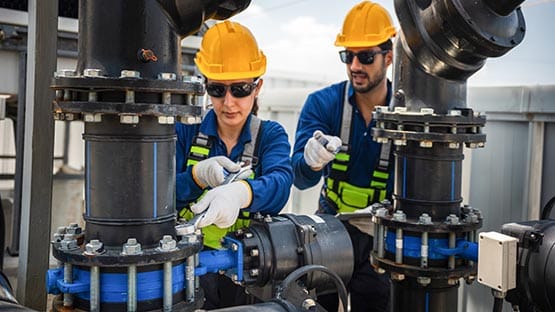
Behind every reliable tap in Waynesboro, every clean hospital sink in Charlottesville, and every smoothly running manufacturing line in the Shenandoah Valley, there’s a piece of equipment most people never think about: a pump. Industrial pumping systems move drinking water, treat wastewater, cool data centers, and keep food plants running. When they fail, the consequences ripple fast.
Virginia’s mix of small towns, growing suburbs, and heavy industry depends on these systems working quietly in the background. Understanding how they’re built and maintained helps explain why infrastructure spending decisions at the local and state level matter so much to everyday life.
The hidden backbone of local water service
Most Virginians get their water from public utilities that rely on a chain of pumps, pipes, and treatment plants. The U.S. Environmental Protection Agency maintains the federal Safe Drinking Water Act framework that sets quality standards utilities have to meet. Hitting those standards means more than just good chemistry. It means moving water at the right pressure, at the right time, without cavitation or pump failures that can shut a system down.
For a town the size of Waynesboro, a single failed lift station can put a neighborhood on a boil-water notice within hours. That’s why utility engineers obsess over redundancy, suction conditions, and the wear curves of every major pump on the system.
What actually goes wrong with industrial pumps
Pumps don’t fail randomly. They fail for a handful of well-understood reasons, and most are preventable with the right design choices upfront. Here are the issues that show up again and again in plant audits:
- When suction pressure drops too low, vapor bubbles form and collapse inside the pump, chewing up impellers. Engineers manage this risk by carefully evaluating net positive suction head, which is one of the most misunderstood specs in the industry.
- Seal failure. Mechanical seals are often the first part to go, especially when fluids carry abrasives or run hot. Catching a weeping seal early can save a full motor rebuild later.
- Even a small offset between the pump and motor shaft puts strain on bearings and couplings. Laser alignment tools have made this cheap to fix and expensive to ignore.
- Wrong pump for the job. Oversized pumps short-cycle and burn through energy. Undersized ones run flat out and overheat. Sizing is engineering, not guesswork.
Why this matters for Virginia’s economy
The Shenandoah Valley and Central Virginia have been quietly attracting industrial investment for years. Data centers in Northern Virginia, food processing in the Valley, and growing biotech around Charlottesville all depend on reliable process water and cooling systems. Advanced manufacturing has emerged as a key growth sector for the state, and every one of those facilities runs on pumps.
When a poultry plant in Rockingham County or a brewery in Nelson County designs a new line, the pumping package isn’t an afterthought. It’s a line item that affects uptime, energy bills, and worker safety for the next two decades.
What plant managers and utility operators should ask
If you’re responsible for any system that moves liquid at scale, a few questions separate a system that lasts from one that limps. Ask them before signing off on a design:
- Has NPSH been calculated for the worst-case operating condition? Not the nominal one. The hot summer day with low tank level is when pumps cavitate.
- What’s the expected duty cycle? A pump that runs 24/7 needs different bearings and seals than one that kicks on twice a day.
- Who handles aftermarket parts and field service? A great pump with a six-week lead time on a replacement seal isn’t great anymore once it’s down.
- Is there a monitoring plan? Vibration sensors and simple pressure gauges catch problems weeks before they become emergencies.
The bigger picture
Federal infrastructure money has been flowing into Virginia water systems through the Bipartisan Infrastructure Law, which directs billions toward drinking water, wastewater, and lead pipe replacement nationwide. Localities that plan well, specify equipment carefully, and partner with experienced engineering firms will stretch those dollars further than those that don’t.
It’s not the flashiest story in local news. But the next time you hear about a water main project in Staunton, a new industrial tenant in Augusta County, or a treatment plant upgrade somewhere along the I-81 corridor, remember what’s actually being bought. The quiet machinery that keeps a community livable, one gallon at a time.
This content is provided for informational purposes only and is not a substitute for professional advice. AFP editorial staff were not involved in the creation of this content.


 Share
Share