The World Cup is arriving on home soil, marking a watershed moment for American soccer. Of the three host nations, the United States has the clearest pathway to a deep run.
This is more than an opportunity to prove they belong on the global stage. A successful tournament could accelerate the sport’s growth domestically and provide validation for a program still recovering from the humiliation of failing to qualify in 2018.
While Mexico and Canada will have their own stories to tell, many who’ve studied the North American game at home and from afar see a winnable group for the US. Australia, Panama, and Turkey present an achievable route out of the first round, one where simply having a golden era of players should help them coast the early waters.
This version of the USMNT is more experienced than in Qatar 2022, when they fell to a Netherlands side that nearly reached the semi-finals themselves. This time, the margin for error is different. This time, the opportunity is real.
What happens over the next month will depend on a number of factors. For those watching casually or religiously assessing online sports betting across soccer’s biggest event, Mauricio Pochettino’s side are the real deal, or at least America’s closest version to it since they have played the sport. Here’s what to expect from the USMNT at the 2026 World Cup.
Coaching upgrades
Without any disrespect meant, Pochettino represents a clear tactical upgrade on Gregg Berhalter. The difference isn’t merely pedigree but structure.
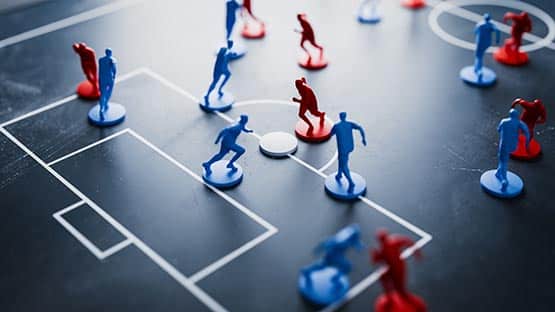
The former Tottenham Hotspur coach has a system built on coordinated pressing with defined triggers and compactness between the lines.
The USMNT should win the ball higher up the field than they did in Qatar, and when they do, their transition play should be significantly sharper.
Berhalter’s sides often felt disjointed in transition, reliant on individual brilliance rather than systematic movement. Pochettino’s teams operate with choreography. They press as a unit, they recover as a unit, and they attack as a unit.
Equally important is the shared responsibility going forward. Christian Pulisic doesn’t carry the burden alone anymore, and thankfully so given his goal drought in Serie A.
Ricardo Pepi arrived in 2026 after a title-winning season with PSV, bringing efficiency in front of goal. Haji Wright’s promotion to the Premier League signals he has graduated from prospect to established talent.
If you were to nitpick, though, you would question the system’s sustainability. Can it handle the ebbs and flows of tournament soccer? Friendly performances are different from knockout football. The physical toll of tournament intensity, combined with the psychological weight of playing at home, could test this squad in ways previous cycles weren’t.
Tested against elite
This USMNT squad is more battle-tested than any previous cycle. Regular friendlies against top-tier opposition have normalized playing against the world’s best teams. The narrow loss to Germany at Soldier Field demonstrated competitive quality. It also exposed a critical gap and Poch’s poor record against European sides.
The USMNT played well in phases. They created opportunities. They weren’t outclassed. Yet they lost because they failed in decisive moments against a team with superior positional discipline. This is where Pochettino’s European record becomes concerning.
His results against top European sides have been inconsistent. Performances haven’t consistently translated into results.
Turkey becomes a crucial litmus test. The final group match against a European-style opponent with comparable talent will show whether the USMNT have actually closed the gap or simply become more competitive without actually winning. To make a deep run, this team must prove it can beat teams at its own level, not just steamroll weaker opposition.
All about identity
The USMNT aren’t built to control games in the Spanish or Dutch mold. Attempting that would be a strategic error. Any chance of a deep run is about getting the best of being an American, and they have the perfect coach to unlock that kind of passion and mix it with better tactics so it’s not just bringing a knife to a gunfight.
Pochettino’s teams historically thrive in high-energy, aggressive systems rather than slow, possession-heavy structures. It’s how greats like Marcelo Bielsa have thrived at club and international level.
The USMNT strength aligns with this. They’re faster, more athletic, more willing to press relentlessly. A hostile, energized home crowd can amplify this further, transforming matches into transitional, high-tempo contests where the Americans’ physical attributes shine.
There’s a trade-off. This style creates defensive exposure. Teams that invite pressure and transition quickly are vulnerable to coordinated attacks from organized opponents. Defending deeper and more compactly sacrifices the intensity that defines this team. It becomes a square peg in a round hole situation.
Success likely comes from doubling down on identity rather than diluting it. Embrace the aggression, the pace, the emotional side of the game.
Control the tempo through intensity rather than possession. Use the home crowd as that tactical weapon. Against weaker opposition, in the heat, it should feel suffocating.
Final say
The USMNT have constructed a team capable of competing at the World Cup. Pochettino provides tactical sophistication. The squad contains genuine quality. The draw is favorable. Yet the tournament will be won or lost on whether this team can execute its identity with tactical discipline.
They aren’t Spain. They shouldn’t try to be. If Pochettino allows them to be aggressive, intelligent, and relentless without sacrificing structure, the USMNT will surprise people. If he tries to over-coach them into a system that doesn’t suit their strengths, they’ll fall short.
The difference between a group stage exit and a quarter-final run may hinge on that single decision.
This content is provided for informational purposes only and is not a substitute for professional advice. AFP editorial staff were not involved in the creation of this content.

 Share
Share