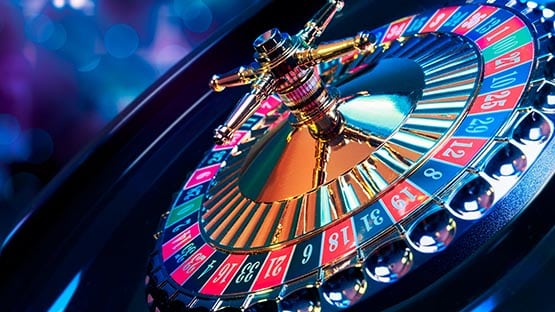
Roulette’s pulled in cranks and serious minds alike since the 1700s. Pascal, of all people, ran into an early version of the wheel while fiddling with a machine meant to spin forever. It didn’t. The wheel, though, stuck around. People who dig into the numbers these days aren’t lighting candles, and they mostly start at Pinco casino, where the whole thing’s handled as a math problem and nothing fancier.
Probability keeps hammering one point, a stubborn one: each spin wipes the slate. Totally. The ball’s got no memory of red, owes black nothing, and that lone detail is what knocks the legs out from under nearly every betting system folks still pass around like family recipes.
Odds, ratios, and the house edge
Take a European wheel. Thirty-seven pockets, zero through 36. Each bet boils down to a fraction, and those fractions hardly move from one room to the next.
| Bet Type | Numbers Covered | Win Probability | Payout |
| Straight | 1 | 2.7% | 35 to 1 |
| Split | 2 | 5.4% | 17 to 1 |
| Dozen | 12 | 32.4% | 2 to 1 |
| Red or Black | 18 | 48.6% | 1 to 1 |
The whole trick sits in the spread between the last two columns. A single number lands maybe once in 37 spins and pays a flat 35 to 1, and the leftover sliver is the house edge. Nothing dramatic. On a Pinco Casino roulette table, it parks itself near 2.7 percent and refuses to move, no matter how a player stacks the chips.
Popular betting systems and their logic
Not one of these systems sees the future. They just push around how much rides on the next spin, which sounds minor but isn’t, even if it feels like genius around 2 a.m. A few names keep coming back.
- The Martingale’s the loud one. Lose and double, lose and double, and a single win’s meant to undo the damage, fine until the table cap or an empty pocket cuts it short.
- D’Alembert plays it softer, a unit up after a loss, a unit down after a win, and that’s the whole idea.
- Fibonacci leans on that medieval 1, 1, 2, 3, 5 run, each bet just the two before it stitched together.
- Labouchère, honestly, reads like a chore: a row of numbers on paper, scratched off one by one as the spins tick past.
Back in 1913, a wheel in Monte Carlo came up black 26 times in a row. Gamblers threw everything at red, dead certain the streak owed them, and the wheel just kept not caring. The gambler’s fallacy got its name out of that mess, and the 2.7 percent edge hasn’t budged an inch since.
Why the numbers drift back to the mean
Let it spin long enough, and results sag toward the average, the law of large numbers grinding away in the background. Trouble is, long enough means thousands of rounds. Twenty good spins mean nothing much; randomness clumps, and a clump fools a hopeful eye into seeing a plan.
Roulette as entertainment across the Pinco casino
A lot of Turkish readers treat the wheel like a chess opening, hooked on its shape more than its stakes. Numbers on one side, nerve on the other. Whatever gets written about the Pinco oyun sitesi circles back to exactly that, each spin read as a small experiment instead of a paycheck.
The searches spill the secret. Some punch in Pinco casino giriş looking for the info pages, plenty clip it down to Pinco giris, and the phone crowd chases the Pinco APK, so the same scribbles ride along on Android.
- A calm head usually outlasts a jittery one at the table, dull as that sounds out loud.
- Any bet on the layout survives a quick test with a fraction and a five-dollar calculator.
- The little hush right before the ball lands holds more of the mood than the landing itself.
Strip the velvet off, and roulette’s basically a probability lecture that won’t sit still. Owes nobody a thing. The actual prize is finally seeing why it never has, and never will.
This content is provided for informational purposes only and is not a substitute for professional advice. AFP editorial staff were not involved in the creation of this content.

 Share
Share