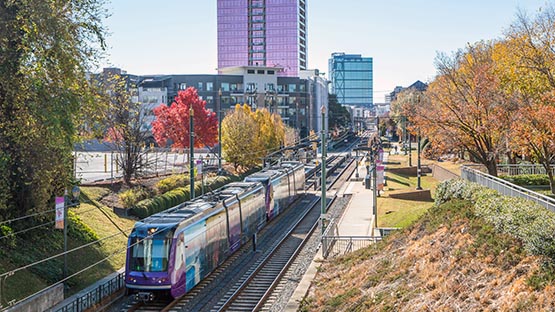
As one of the country’s fastest-growing metropolitan regions, Charlotte has a powerful, energetic vibe. Of course, with so much growth and change happening so fast in our rapidly developing cities, there is often a sense of tension between all of this new development and the existing blueprint for the region’s growth and development. Do not get me wrong, jobs, economic growth, new opportunities for businesses and individuals to develop and grow are all good things.
However, managing growth in fast-growing metros, whether urban or suburban, involves trying to keep up with the expanding needs of a booming metropolitan area.
Rapidly growing cities need more than just managing growth in a city that is growing faster than the blueprint to develop it. It takes more than just looking at the numbers of growth in a city. The numbers only tell part of the story and miss out on the real problems facing growth in a city. Growth in a city needs to be managed by balancing growth with the development needed to support it.
When a city is experiencing rapid growth, managing the growth is more important than the growth itself. To manage growth, it is necessary to understand how it is affecting the city’s transportation, housing, utilities, and supply systems and to develop strategies to address its effects.
Aligning infrastructure with population influxes
Highway lanes are often thought of as the fix for areas of high traffic, but in reality, adding more lanes can have a negative impact. In many cases where there are already high volumes of traffic on secondary roads, adding more lanes can actually make traffic worse.
So, where do we go from here?
Forward-thinking urban leadership will move to create an integrated regional mobility system that includes road expansion, improved public transport, and smarter ways to manage traffic.
Utilities, on the other hand, face severe challenges. In many regions, the same number of people need to be served, but the infrastructure is not scaled to accommodate this level of growth. Therefore, as development occurs, utility companies must continually expand to support growing pockets of density as well as new suburban development. Project timelines for these organizations are frequently delayed by the same issues that can stymie developers. Interactions with developers, both large and small, prior to commencement of a development project by municipal utility providers (as well as developers with their utility providers) represent an essential component of effective urban growth management.
Navigating the demand for skilled operational support
Physical infrastructure is just half the problem of expanding a city. There is a huge amount of work, and a corresponding need for skilled hands, involved in actually constructing the buildings and facilities for a growing population. This can put a huge strain on local labor forces, as well as on the ability of general contractors and project managers to source the right people for their jobs.
It takes real hands to build a city. Real sweat. Real expertise.
Lastly, in markets like Charlotte across the Southeast, as they continue to boom, there is a growing challenge in constructing our infrastructure, such as housing in high-growth markets, for general contractors and project managers. These stakeholders must compete for the services of experienced handi-craftsmen, who in turn are in short supply in most areas, further exacerbating related challenges that already are causing significant problems and resulting in great expense.
Leaders in commercial and residential development can rely on the local workforce for only so long. By the time a developer breaks ground on a new complex, for example, it can take several months to a year or more to hire the right number of carpenters, painters, electricians, and plumbers, to name a few. This is especially challenging in hub markets like Charlotte, where several high-end commercial and residential development projects can break ground at around the same time, creating a huge challenge for teams that are relying on local contractors to get the work done on time. By partnering with a staffing partner to recruit skilled labor, commercial construction developers can build their teams more quickly and continue to deliver on their promises to their investors and customers.
Preserving community identity and livability
As the city is transformed by the concrete and steel of new buildings, it is possible for a city to lose much of the unique culture and character that caused the city to grow in the first place. The quality of life in a growing city is key to the continued growth of high-earning professionals and their families. These individuals are moving to dynamic cities for reasons other than economic opportunity. They are looking for vibrant downtowns, access to green space, and unique cultures found in the individual neighborhoods within a city.
Many growing metropolitan regions struggle to ensure that uncontrolled development does not result in the displacement of long-standing local businesses and loss of the area’s history. Incorporating historical architecture and public spaces into a growing metropolitan area’s plans can be difficult, but Smart Zoning can play an important role. Smart Zoning addresses community issues by establishing the type of development permitted on a specific parcel of property, and it can support mixed-use development such as retail, commercial, and residential spaces that are high-density but remain human-scaled and walkable.
Balancing housing supply and affordability
One of the greatest challenges of metropolitan growth is creating sufficient, affordable housing for those who work in the very region in which they reside. Growing, high-paying industries are drawing increasing numbers of professionals to Metro Regions, significantly increasing the demand for and price of homes in areas where they already are expensive. Thus, the challenge is to keep basic service workers, including teachers and first responders, able to afford to live in the very Regions in which they work to keep the basic services running.
Affordable housing must be made a priority to keep rapid-growth metro areas competitive; otherwise, we risk becoming one of the many unaffordable cities in the world. Solving the housing puzzle will require the efforts of everyone involved in a Metro Area. Municipalities must make sure that processes are in place to streamline permitting for growth in the short term, in addition to implementing long-term strategies to create more affordable housing. Encouraging developers to create a diverse mix of housing will keep down costs by creating options. Also, there must be real incentives for the construction of affordable housing. In the short term, creating more housing will be the most effective way to curb price increases and make for a sustainable economy.
Building resilience for the long haul
In the end, managing rapid expansion of a metropolitan area for the long haul is about strategy. Some metropolitan areas have been growing for decades and are successful because they treat growth as an opportunity to build and sustain a host of physical and human-based systems and policies that form the basis of a successful, growing city.
This content is provided for informational purposes only and is not a substitute for professional advice. AFP editorial staff were not involved in the creation of this content.

 Share
Share